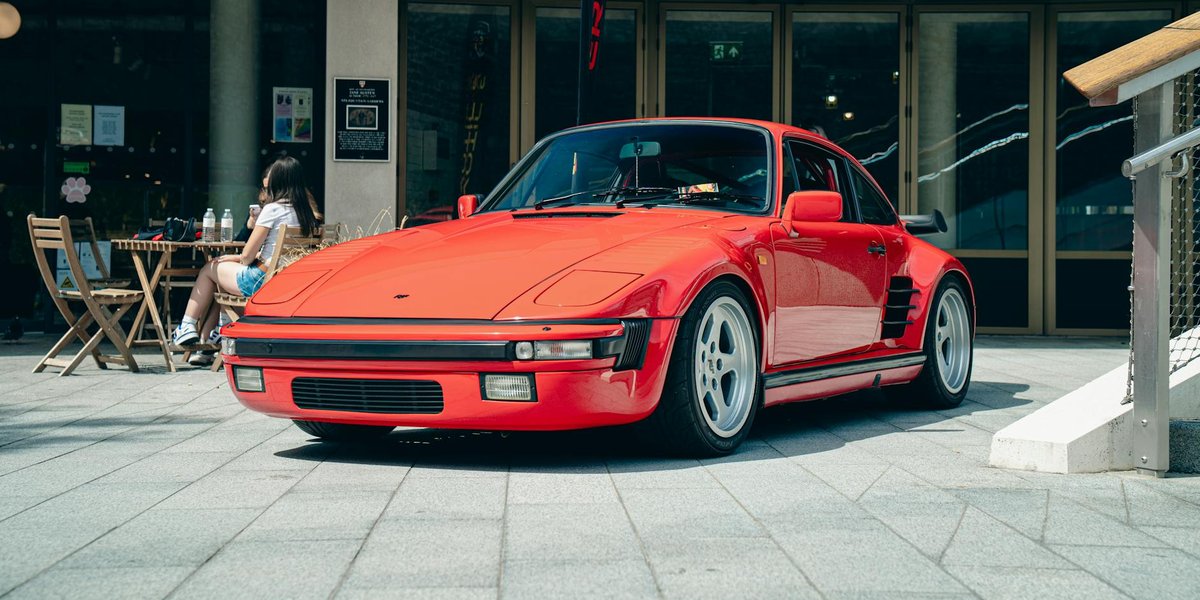
1986 was the year Porsche’s catalog made the least sense and the most. You could walk into a dealer and buy a front-engine, water-cooled four-cylinder (the 944), a front-engine V8 grand tourer (the 928 S), and the air-cooled rear-engine 911 that purists insisted was the only “real” Porsche. Then, off in the engineering wing, the 959 was being finished — a twin-turbo, all-wheel-drive supercar that made everything else in the room look like it belonged to the previous decade. Which it did.
If you’re shopping a 1986 Porsche today, or you’ve just inherited Grandpa’s Guards Red coupe and want to know what you’ve got, this is the model-by-model breakdown — specs, the 1986-specific changes, what each one is worth now, and the exact things that separate a good buy from a five-figure mistake.
Table of Contents
- The 1986 lineup at a glance
- 911 Carrera 3.2 — the one most people want
- 911 Turbo (930) — back on sale
- 928 S — the V8 grand tourer
- 944 — the volume seller
- 924 / 924S — the entry point
- 959 — the headline debut
- What to check before you buy any of them
- FAQ
The 1986 lineup at a glance
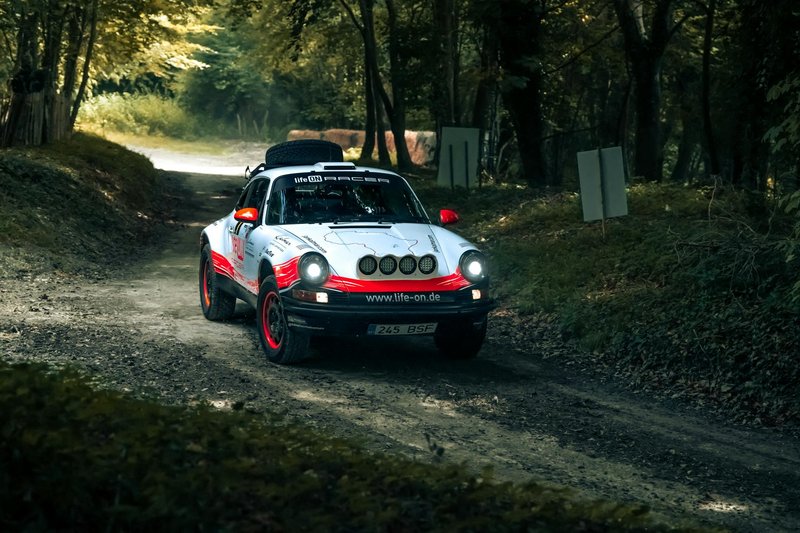
Six model families were on the 1986 roster, and they barely shared a part between them. Here’s how they stack up.
| Model | Engine | Power (US) | Body styles | Today’s value (good–excellent) |
|---|---|---|---|---|
| 911 Carrera 3.2 | 3.2L flat-six | 207 hp | Coupe, Targa, Cabriolet | $45k–$95k |
| 911 Turbo (930) | 3.3L turbo flat-six | 282 hp | Coupe | $90k–$210k |
| 928 S | 5.0L V8 | 288 hp | Coupe | $18k–$45k |
| 944 | 2.5L inline-four | 143 hp | Coupe | $12k–$28k |
| 924S | 2.5L inline-four | 147 hp | Coupe | $10k–$22k |
| 959 | 2.85L twin-turbo flat-six | 444 hp | Coupe | $1.4M+ |
Power figures are US-spec, which ran lower than European versions thanks to emissions hardware and the catalytic converters required across the range. A 1986 Euro Carrera made 231 hp; the US car gave up two dozen horses to the smog gear.
911 Carrera 3.2 — the one most people want
This is the Porsche people picture when they say “1986 911.” The Carrera 3.2 ran from 1984 to 1989, and the 1986 model year sits right in the sweet spot — early enough to be analog and pure, late enough to have most of the bugs sorted.
The 3.2-liter air-cooled flat-six made 207 horsepower in US trim, fed by Bosch Motronic engine management that was genuinely good for the era — it ditched the old K-Jetronic mechanical injection of the SC for a digital system that improved both fuel economy and cold starting. Zero to sixty came in about 6.1 seconds, which doesn’t sound dramatic now but felt urgent in 1986 with the engine snarling six inches behind your head.
Three body styles. The coupe is the connoisseur’s pick and the stiffest chassis. The Targa gives you the removable roof panel without the structural compromise of a full convertible. The Cabriolet — fully introduced for the 1983 model year — got revised electric top latches and remains the one to buy if you actually want to drop the top, though purists dock it points for added weight.
One critical detail for 1986 buyers: this is the 915 transmission era. The Carrera didn’t get the much-loved G50 gearbox until the 1987 model year. The 915 has a notchy, deliberate shift that some drivers love and others find vague when cold. It’s not a flaw — it’s a feel — but it changes the driving experience enough that it’s worth a test drive before you commit. If you specifically want the slicker shift, you’re looking at a 1987-or-later car.
What to look for: Air-cooled 911s are tough, but check for oil leaks at the cam towers and the dreaded chain-tensioner issue — pre-1984 cars were notorious for it, and while the 3.2 got improved tensioners, a car with unknown history should have them inspected. Rust lives in the front trunk floor, the battery boxes, and the rocker panels. The Porsche Club of America’s model guide is the single best free reference for buying one of these.
Value: A driver-grade 1986 Carrera coupe sits around $45k–$60k; clean, low-mileage, documented examples push toward $90k and beyond. Cabriolets and Targas generally trade a touch below comparable coupes.
911 Turbo (930) — back on sale
Here’s a piece of trivia that trips up a lot of people: you could not buy a new Porsche Turbo in the United States from 1980 through 1985. Porsche pulled the 930 from the US market because it couldn’t meet tightening emissions rules without a costly redesign. For 1986, it came back — and the comeback is the whole story of this model year.
The returning 930 used the 3.3-liter turbocharged flat-six making 282 horsepower for the US market, paired with an air-to-air intercooler sitting under that unmistakable whale-tail spoiler. It kept the four-speed gearbox (the five-speed didn’t arrive until 1989), partly because the torque was so brutal that adding gears felt unnecessary.
The 930’s defining characteristic is turbo lag, and 1986 cars have it in full theatrical form. Nothing happens, nothing happens, you start to wonder if the turbo works — then boost arrives all at once and the rear tires light up. The combination of that power delivery and the trailing-throttle handling of an early 911 is exactly why these earned the “widowmaker” nickname. Respect it and it’s one of the great driving experiences of the 1980s.
What to look for: Turbos lead hard lives and get modified. You want a stock, unmolested car with service records. Check the wastegate and boost behavior on a test drive, inspect for cracked exhaust manifolds, and budget for the fact that a turbo rebuild costs serious money.
Value: The 1986 return-year cars carry a premium precisely because they restarted the US lineage. Good examples start around $90k; excellent, documented, low-mileage 930s reach $180k–$210k.
928 S — the V8 grand tourer
Porsche genuinely believed the 928 would replace the 911. It didn’t, and history vindicated the 911, but that doesn’t make the 928 S a bad car — it makes it the most underrated Porsche of 1986.
The 1986 928 S ran a 5.0-liter V8 producing 288 horsepower, with four-valve heads on US cars by this point. This was a front-engine, transaxle-balanced grand tourer designed to cross continents at autobahn speed in air-conditioned comfort. It’s heavy, it’s plush, it’s a completely different mission from the 911, and on a long highway run it’s arguably the better car.
The styling has aged into something genuinely cool — those flush, body-color bumpers and pop-up headlamps look more modern now than they did then. The 928 even won European Car of the Year in 1978, the only sports car ever to do so.
What to look for: This is the one where a cheap purchase becomes an expensive lesson. The timing belt is an interference design — if it snaps, the engine destroys itself — so you need documented proof of a recent belt-and-water-pump service. Check the electrics (everything on a 928 is powered and complicated) and the condition of the climate control. A neglected 928 will bankrupt you in slow motion.
Value: The bargain of the 1986 lineup. Solid drivers start around $18k; the best documented S models reach $40k–$45k.
944 — the volume seller
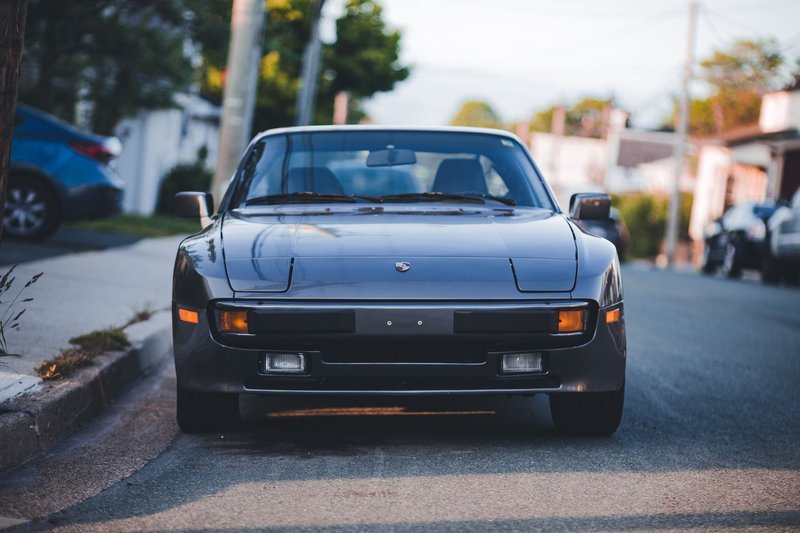
If the 911 was the dream, the 944 was the Porsche people actually bought. It was the brand’s volume car in 1986, the one that put a Stuttgart crest in driveways that could never stretch to a 911.
The 1986 944 used a 2.5-liter inline-four making 143 horsepower — and that four-cylinder is more interesting than it sounds. It’s essentially one bank of the 928’s V8, fitted with twin balance shafts (licensed from Mitsubishi) to cancel the vibration that normally plagues big fours. The result is a smooth, torquey engine in a car with near-perfect front-to-rear weight distribution thanks to the rear-mounted transaxle.
Drive one and the appeal is obvious: it handles. The 944 was never about straight-line speed; it was about balance, steering feel, and being tossable on a back road. For 1986 it also gained the wider, more aggressive body that many enthusiasts consider the best-looking version, and it stands among the most rewarding of the 1980s sports cars for exactly that reason.
What to look for: The timing belt is, again, the headline concern — interference engine, snapped belt, dead motor. Demand service records. Watch for the common failure of the rubber timing-belt and balance-shaft components, clutch wear, and tired suspension bushings. Mechanically these are robust when maintained; the trap is deferred maintenance hiding behind a low price.
Value: The most attainable real Porsche of the year. Driver-grade cars run $12k–$18k; clean, well-kept examples reach $25k–$28k.
924 / 924S — the entry point
The 924 was on its way out by 1986, and the story here is a swap. The original 924 used an Audi-derived 2.0-liter engine that enthusiasts politely described as “adequate.” For 1986, Porsche introduced the 924S, which dropped the 944’s 2.5-liter engine into the older, lighter 924 body.
That made the 924S a genuinely clever car: nearly the same drivetrain as a 944, in a lighter package, at a lower price. It made about 147 horsepower and, because it weighed less than the 944, didn’t feel much slower despite costing less.
What to look for: Same engine, same timing-belt vigilance as the 944. Earlier base 924s are slower and less desirable; if you’re buying a 1986 924, the S badge is the one worth having. Check for rust and confirm the interior trim — notoriously brittle 1980s plastics — is intact.
Value: The cheapest way into a 1986 Porsche. Drivers start around $10k; the best 924S examples reach $20k–$22k.
959 — the headline debut
And then there’s the 959. Everything above is a car you might realistically buy. The 959 is the reason 1986 matters in Porsche history.
It arrived as a technological statement — a twin-turbo, 2.85-liter flat-six making 444 horsepower, driving all four wheels through a computer-controlled system that could shuffle torque front to rear. It had adjustable ride height, a sequential twin-turbo setup to fight lag, hollow magnesium wheels, and a body that was the result of serious wind-tunnel work. Top speed was around 197 mph, making it one of the fastest production cars in the world.
It was built to homologate Porsche’s Group B rally and racing ambitions, and it previewed technology — all-wheel drive, sequential turbocharging, active suspension — that wouldn’t reach mainstream cars for years. Only around 290-some were ultimately produced, and they famously could not be legally imported to the US for years, which is partly why Bill Gates and Paul Allen’s 959s sat in customs storage until the “Show or Display” law finally freed them.
Value: You don’t shop for a 959 the way you shop for a 944. When they trade, they trade at $1.4 million and up, and condition, originality, and provenance swing the number by hundreds of thousands.
What to check before you buy any of them
The models above span four completely different engine architectures, but a 1986 Porsche purchase comes down to the same short list every time.
- Timing belt service (928, 944, 924S). All three are interference engines. A snapped belt means catastrophic damage. No documented recent belt-and-water-pump service, no deal — or negotiate the cost of doing it immediately off the price.
- Rust (especially the 911). Check the front trunk floor, battery boxes, rocker panels, and around the windshield. Air-cooled 911 bodywork is expensive to fix right.
- Service history over cosmetics. A scruffy car with a folder of receipts beats a shiny one with no records. These are 40-year-old cars; you’re buying the maintenance, not the paint.
- Originality and matching numbers. For the Turbo and any collector-grade Carrera, modifications and engine swaps tank the value. Verify the numbers.
- Drive it cold and hot. Listen for the 915 gearbox’s cold notchiness on the Carrera, feel the turbo come on in the 930, and confirm the 928’s climate and electrics all work before you fall in love.
For live pricing and current listings, marketplaces like Cars.com’s classic Porsche listings and specialist air-cooled dealers give you a real-time read on what sellers are actually asking versus what cars trade for.
FAQ
How many models did Porsche sell in 1986? Six model families: the 911 Carrera 3.2 (coupe, Targa, Cabriolet), the returning 911 Turbo (930), the 928 S, the 944, the 924/924S, and — as the headline debut — the 959.
What’s the most valuable 1986 Porsche? The 959, by an enormous margin. It changes hands at over $1.4 million. Among cars you’d realistically buy, the 911 Turbo (930) is the value leader, reaching $200k-plus for top examples.
Why was the 1986 911 Turbo a big deal? Because Porsche hadn’t sold a new Turbo in the US since 1980. The 1986 model year marked its return after a five-year absence, which is why those return-year 930s carry a premium today.
Is the 1986 944 a good first Porsche? Yes — it’s the most attainable real Porsche of the year, it handles beautifully thanks to its transaxle balance, and parts are reasonable. Just confirm the timing belt has been serviced, because it’s an interference engine.
Which 1986 Porsche is the cheapest to buy? The 924S, starting around $10k for a driver. It shares the 944’s drivetrain in a lighter, less expensive body, which makes it the smart-money entry point.
Did the 1986 Carrera have the G50 gearbox? No. The 1986 Carrera 3.2 still used the older 915 transmission. The smoother G50 didn’t arrive until the 1987 model year — a key detail if shift feel matters to you.
Marco Delantero
More from Marco DelanteroHow we reviewed this article
This article was researched against manufacturer records and editorially reviewed before publishing. We accept no payment for coverage.