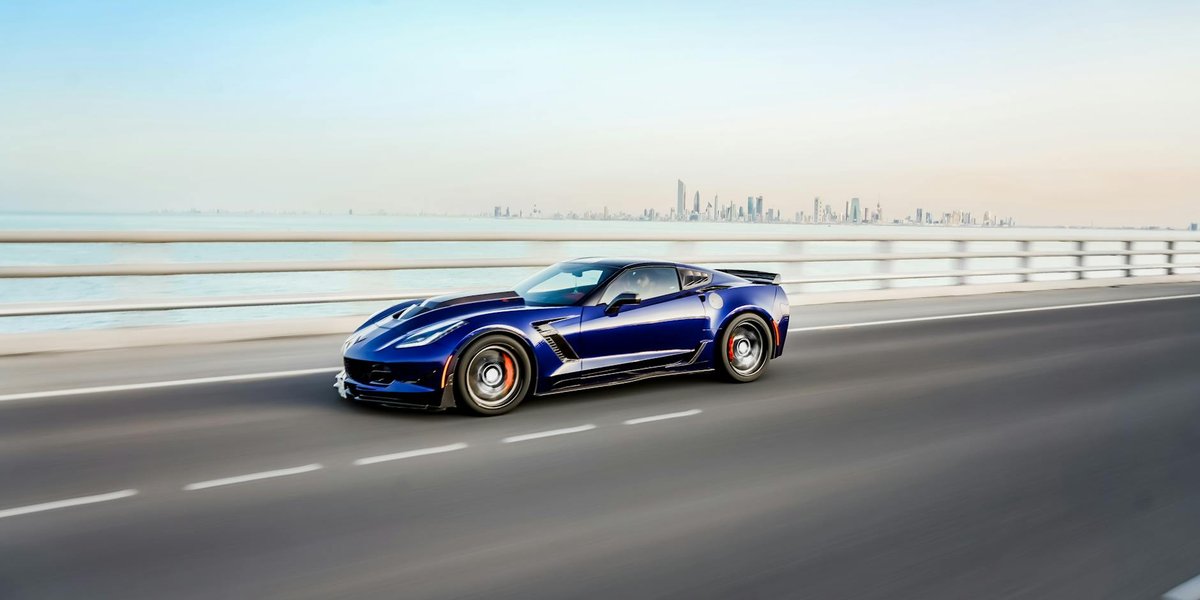
The 2017 Corvette is the model year people argue about, and for good reason. It’s the year Chevy slotted in the Grand Sport, giving the C7 a three-model lineup that finally made sense: a fast everyday car, a track-bred handler, and a supercharged monster. If you’re shopping the used market right now, the hard part isn’t finding a 2017 Corvette. It’s figuring out which of the three you actually want, because the badges look similar and the price gaps are real.
Here’s the whole lineup, broken down by what each model is for, what it costs used, and where the rare ones hide.
Table of Contents
- The TLDR: which 2017 Corvette to buy
- The three models at a glance
- Stingray: the one most people should buy
- Grand Sport: the enthusiast’s pick
- Z06: the supercharged one with an asterisk
- Trim levels decoded (1LT, 2LT, 3LT)
- Performance packages: Z51, Z07, and the Carbon 65
- Coupe vs. convertible
- Used prices in 2026
- Reliability and common issues
- Production numbers and the rare ones
The TLDR: which 2017 Corvette to buy
- Buy the Stingray if you want a usable, quick, comparatively affordable sports car. 455 hp, lives happily as a weekend or even daily driver, and the cheapest entry into C7 ownership.
- Buy the Grand Sport if you care about how a car handles more than how fast it hits 60. It’s the Z06’s wide body and chassis with the Stingray’s naturally aspirated engine, no supercharger to overheat. Most enthusiasts land here.
- Buy the Z06 if you want the fastest C7 and you’ve read up on its cooling quirks. 650 hp, brutal, and the one to research hardest before signing anything.
If you only remember one thing: the Grand Sport is the sweet spot for most buyers, and the Z06 is the one that needs homework.
The three models at a glance
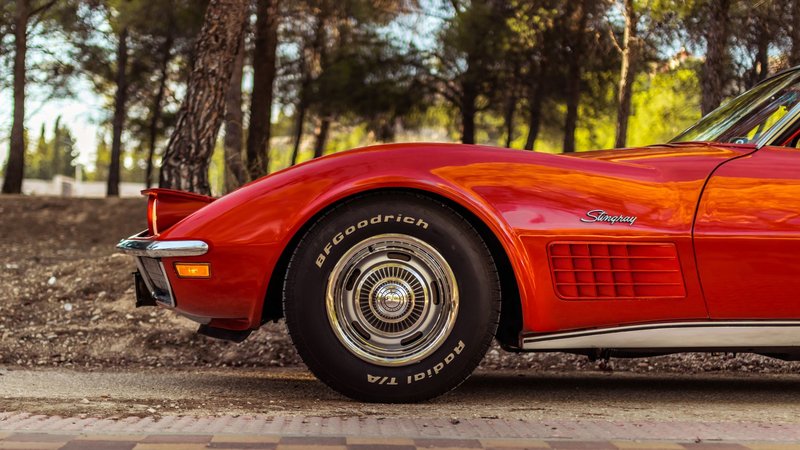
All three 2017 Corvettes ride on the same C7 aluminum chassis and share an interior, but the mechanical gaps are wide.
| Model | Engine | Horsepower | Torque | Drivetrain |
|---|---|---|---|---|
| Stingray | 6.2L LT1 V8 (NA) | 455 hp (460 w/ NPP exhaust) | 460 lb-ft | RWD |
| Grand Sport | 6.2L LT1 V8 (NA) | 460 hp | 465 lb-ft | RWD |
| Z06 | 6.2L LT4 V8 (supercharged) | 650 hp | 650 lb-ft | RWD |
The Stingray and Grand Sport share the same naturally aspirated LT1 engine. The difference between them is the chassis, not the motor. The Z06 is where everything changes: a supercharged LT4 making 650 horsepower, the widest body of the three, and the most aggressive aero.
Both manual (7-speed) and automatic (8-speed) transmissions were offered across the lineup. The 8-speed auto is genuinely good here, and on the Z06 it’s arguably the smarter buy for reasons we’ll get to.
Stingray: the one most people should buy
The Stingray is the base Corvette, and “base” is doing a lot of unfair work in that sentence. The 6.2-liter LT1 makes 455 horsepower, or 460 if it’s fitted with the optional performance exhaust. That’s enough to run 0-60 in the high-3-second range with the automatic and a good launch.
What makes the Stingray the default recommendation isn’t the spec sheet — it’s the value. It’s the cheapest way into a C7, and the naturally aspirated engine has none of the cooling drama that haunts the Z06. You can drive it hard on a hot day without watching the temperature gauge like a hawk.
Add the Z51 performance package (more on that below) and you get most of the way to a serious track car while keeping the everyday usability. For a lot of buyers, a Z51-equipped Stingray is all the Corvette they’ll ever need.
Grand Sport: the enthusiast’s pick
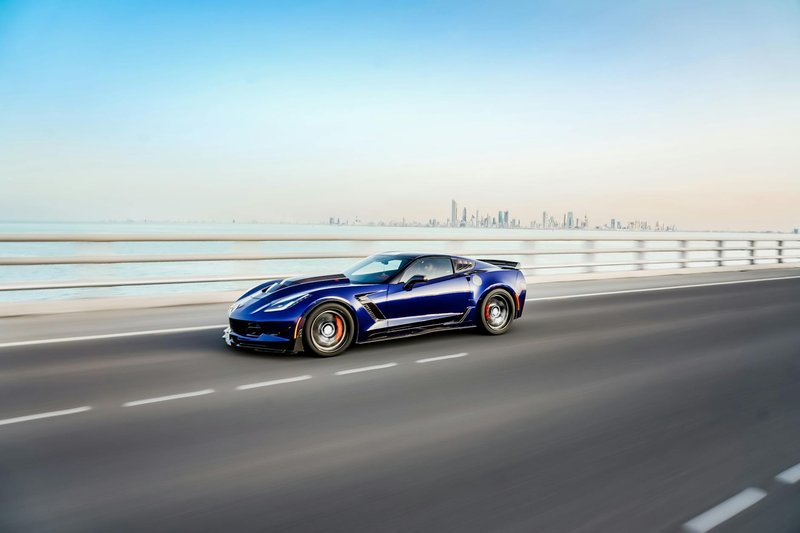
The Grand Sport returned for 2017 after sitting out the early C7 years, and it’s the model the enthusiast crowd quietly considers the best of the bunch. The recipe is simple and clever: take the Z06’s wide body, fender flares, suspension geometry, brakes, and the Z07-style aero options, then drop in the Stingray’s naturally aspirated LT1 instead of the supercharged engine.
What you get is a Corvette that handles like the track car without the supercharger that gives the Z06 its heat problems. It has the grip, the wider stance, the bigger rubber, and the magnetic ride control, but it never gets heat-soaked on a long session. On a road course, a well-driven Grand Sport keeps pace with cars that out-power it on paper, because it never backs off to protect itself.
It was an instant hit. The Grand Sport made up roughly 30 percent of the 32,782 Corvettes built for 2017 — the single most popular configuration of the year. That popularity tells you something: buyers who knew the lineup kept picking it.
Z06: the supercharged one with an asterisk
The Z06 is the headliner. A supercharged 6.2-liter LT4 making 650 horsepower and 650 lb-ft of torque, capable of 0-60 in around 2.95 seconds and a sub-11-second quarter mile. On a drag strip or a short blast, nothing else in the lineup is close.
The asterisk is heat. The C7 Z06 became known for thermal management problems under sustained hard use — track sessions where the supercharged engine and the cooling system couldn’t keep up, leading to power reduction (limp mode) as the car protected itself. It’s the most-discussed flaw of the car, and it’s why so many serious track drivers chose the Grand Sport instead.
That doesn’t make the Z06 a bad buy. It makes it a buy you research. The automatic-equipped cars manage heat better than the manuals, the issue is most pronounced in extended track sessions rather than street driving, and plenty of owners run them hard with aftermarket cooling upgrades. If you want the fastest 2017 Corvette and you go in informed, it delivers. Just don’t buy one expecting it to be a Grand Sport with more power — they’re different tools.
Trim levels decoded (1LT, 2LT, 3LT)
Every 2017 Corvette comes in one of three trim levels, and the numbers only describe equipment, not performance. A 1LT Stingray and a 3LT Stingray have the identical engine.
- 1LT — the base trim. Full performance, all the essentials, cloth-and-leather seating, the standard 8-inch infotainment. Nothing missing mechanically.
- 2LT — adds the head-up display, heated and ventilated seats, the Bose premium audio, memory settings, and the side blind-zone alert. The comfort sweet spot.
- 3LT — the top trim. Adds premium Napa leather throughout, a suede-wrapped interior, and the full luxury treatment.
The Z06 uses the same structure with a “Z” designation: 1LZ, 2LZ, and 3LZ, mapping to the same equipment tiers as the Stingray’s 1LT/2LT/3LT.
For a used buyer, the practical advice is to shop on configuration and condition first, trim second. A clean 1LT with the Z51 package is a better buy than a tired 3LT without it. The mechanical bits matter more than the leather grade.
Performance packages: Z51, Z07, and the Carbon 65
This is where 2017 Corvettes get genuinely different from each other.
Z51 (Stingray) — the package that turns the Stingray into a track-capable car. It adds an electronic limited-slip differential, dry-sump oiling, larger brakes, an aero kit, performance gear ratios, and additional cooling. If you’re cross-shopping Stingrays, prioritize the ones with Z51. It’s the single most important option box.
Z07 (Z06) — the Z06’s track package. Carbon-ceramic Brembo brakes, the most aggressive adjustable aero (including a clear “wickerbill” and adjustable splitter), and Michelin Pilot Sport Cup 2 tires. A Z07-equipped Z06 is the most hardcore street-legal 2017 Corvette you can buy.
Carbon 65 Edition — the rare one. Built to celebrate Corvette’s 65th anniversary, offered on Grand Sport 3LT and Z06 3LZ models, finished in Ceramic Matrix Gray with a visible carbon-fiber hood and aero kit, plus blue accents. Only 650 were made. If you see one, it’s a collector car, and it’s priced accordingly.
Coupe vs. convertible
Every model — Stingray, Grand Sport, Z06 — came as a coupe or a convertible. The C7 coupe has a removable targa roof panel, so it gives you most of the open-air experience without committing to the soft-top. The convertible adds a power-folding fabric roof that operates at low speed.
Mechanically they’re near-identical; the C7 was engineered with the convertible in mind from the start, so there’s no meaningful chassis-rigidity penalty for going topless. Pick based on preference and price. Coupes are slightly more common on the used market and often a touch cheaper.
Used prices in 2026
Roughly where the 2017 Corvette market sits today, condition and mileage depending:
| Model | Typical used range |
|---|---|
| Stingray (1LT–3LT) | ~$45,000 – $58,000 |
| Grand Sport | ~$55,000 – $70,000 |
| Z06 (1LZ–3LZ) | ~$60,000 – $83,000 |
A few things move these numbers more than the badge: the Z51/Z07 packages add value and demand, manual transmissions command a premium with enthusiasts, low-mileage garage queens sit at the top of each range, and the rare editions (Carbon 65, Indy Pace Car) live in their own market. Mileage matters less than service history on these cars — a documented, well-maintained 30,000-mile example beats a mystery 8,000-mile one.
Reliability and common issues
The C7 generation is one of the more dependable modern performance cars, but a few items are worth knowing before you buy.
- Z06 heat soak / power reduction — covered above. The defining Z06 issue. Inspect for it, ask the seller about track use, and budget for cooling upgrades if you plan to track it.
- Wheel and tire wear — the staggered, wide rubber (especially on Grand Sport and Z06) is expensive to replace. Check tire age and tread before you buy.
- Interior wear — early C7 interiors can show seat bolster and trim wear faster than the mileage suggests. A factor on higher-trim cars.
- Stop/start and battery quirks — minor, but worth a test drive to confirm normal behavior.
None of these are dealbreakers. A pre-purchase inspection from a Corvette-literate shop is cheap insurance on any of the three.
Production numbers and the rare ones
Chevrolet built 32,782 Corvettes for the 2017 model year. The breakdown tells the story of the lineup: the Grand Sport’s roughly 30 percent share made it the most popular single model, the Stingray filled out the volume, and the Z06 was the lower-volume halo.
The genuinely collectible 2017s:
- Carbon 65 Edition — 650 units across Grand Sport and Z06.
- 2017 Indy 500 Pace Car — the Grand Sport served as the official pace car for the 101st Indianapolis 500, and a limited pace car edition was produced to mark it.
2017 also carries weight as one of the final years of C7 production before the mid-engine C8 changed everything in 2020. That makes the well-specified, well-kept 2017s — particularly the Grand Sport and the special editions — the kind of front-engine Corvettes collectors are already watching.
Net it out: the Stingray is the value play, the Grand Sport is the one most enthusiasts should buy, and the Z06 is the fastest if you respect its limits. Shop the packages, not just the badge, and let a clean service history outweigh a low odometer every time.

Marco Delantero
More from Marco DelanteroHow we reviewed this article
This article was researched against manufacturer records and editorially reviewed before publishing. We accept no payment for coverage.