Here’s the thing most “1969 Nissan” searches miss: in 1969, Nissan barely sold anything under the Nissan name. Outside Japan, almost every car wore a Datsun badge. So when you go looking for 1969 Nissan models, what you actually want is the 1969 Datsun lineup, plus a couple of cars that stayed Nissan-badged in the home market.
It was a landmark year. The Datsun 240Z launched in late 1969 and changed how the world thought about Japanese cars. But the 240Z gets so much oxygen that the rest of the lineup — some of it genuinely great — disappears from the conversation. The 510 sedan, the Fairlady roadster, the Bluebird, the upmarket Laurel. Each one matters, and each one is now worth real money to the right buyer.
This is the whole 1969 model-year roundup: what Nissan and Datsun were selling, what was under the hood, what it cost new, and what it’s worth in the classic market today.
Contents
- Datsun vs Nissan: the badging confusion, sorted
- Datsun 240Z / Fairlady Z
- Datsun 510 (Bluebird 1600)
- Datsun 1600 & 2000 Roadster (Fairlady)
- Datsun Bluebird (510 series)
- Datsun Sunny (1000/1200)
- Nissan Laurel
- 1969 specs at a glance
- What they’re worth now
Datsun vs Nissan: the badging confusion, sorted
Nissan Motor Co. built the cars. Datsun was the brand it sold them under, especially for export and for smaller, affordable models. The name goes back to the 1930s — originally “DAT-son,” from the initials of the company’s early backers, later softened to Datsun.
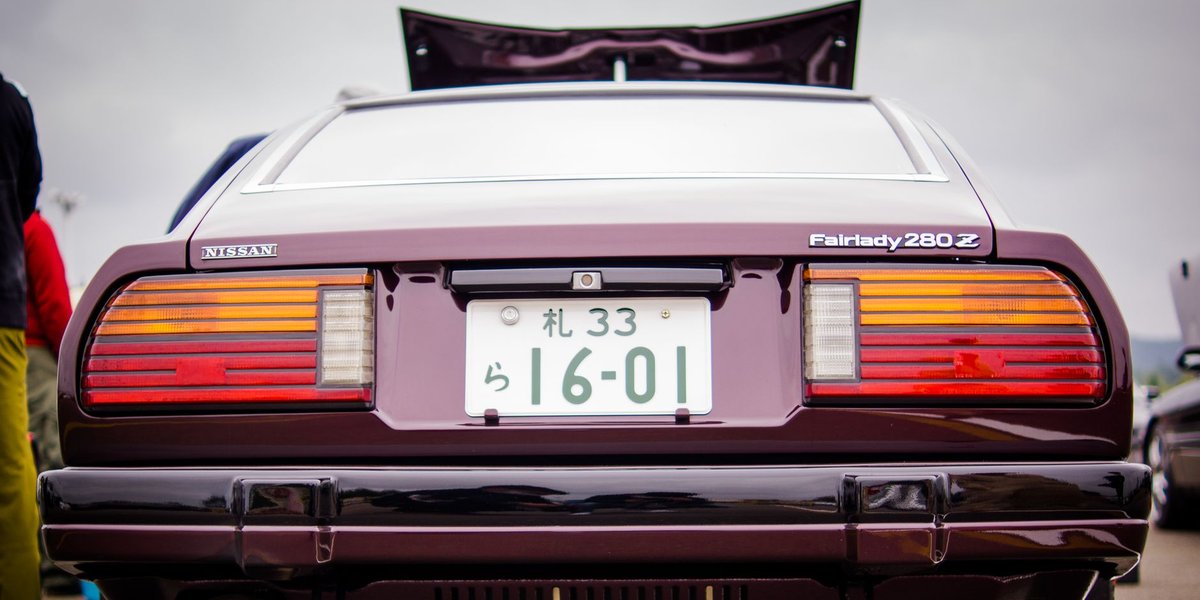
By 1969 the split worked roughly like this: mass-market and sporty export cars were Datsuns (240Z, 510, Sunny, the roadsters), while a few larger, more premium models aimed at the Japanese domestic market — like the new Laurel — carried the Nissan name. Plenty of cars wore both depending on the market: the 240Z was the Fairlady Z in Japan, the 510 was the Bluebird at home.
Nissan didn’t fully retire the Datsun brand worldwide until the mid-1980s. So a “1969 Nissan” and a “1969 Datsun” are usually the same car seen from two different countries. Keep that in mind when you’re cross-shopping listings — the VIN and the chassis code tell the real story, not the badge.
Datsun 240Z / Fairlady Z — the one that changed everything
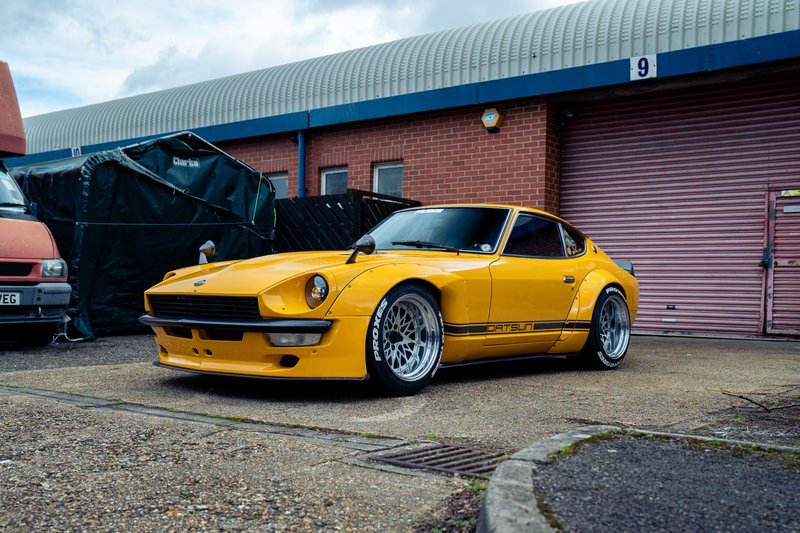
The headline act. Nissan unveiled the Datsun 240Z (S30) in October 1969, and it landed like a thrown gauntlet. A long-hood, fastback two-seater with independent rear suspension and a smooth inline-six, priced at a level that made European sports cars look like a tax on the wealthy.
The engine was the L24, a 2.4-liter SOHC straight-six making around 151 horsepower. Zero to sixty came in roughly eight seconds — quick for 1969, and quicker than a Jaguar E-Type costing twice as much. The U.S. sticker was about $3,500, against $5,000-plus for the Jaguar and most Porsches. That price-to-performance gap is the entire reason the Z exists in the cultural memory it does.
In Japan it was sold as the Fairlady Z, including a high-revving 2.0-liter version (the Fairlady Z432) built around the Skyline GT-R’s S20 engine. The export 240Z is the one that built the legend, though — it became, for a stretch, the best-selling sports car in the world. It still tops most rankings of the best JDM cars ever built, sharing that company with Skylines and Supras.
For the full origin story, the Z-car history at Britannica’s automobile coverage gives useful context on where Japanese sports cars sat in the late-’60s market.
Why it matters: the 240Z proved a Japanese car could be desirable, not just sensible. Everything from the Miata to the modern Nissan Z traces back to this car.
Datsun 510 — the “poor man’s BMW”
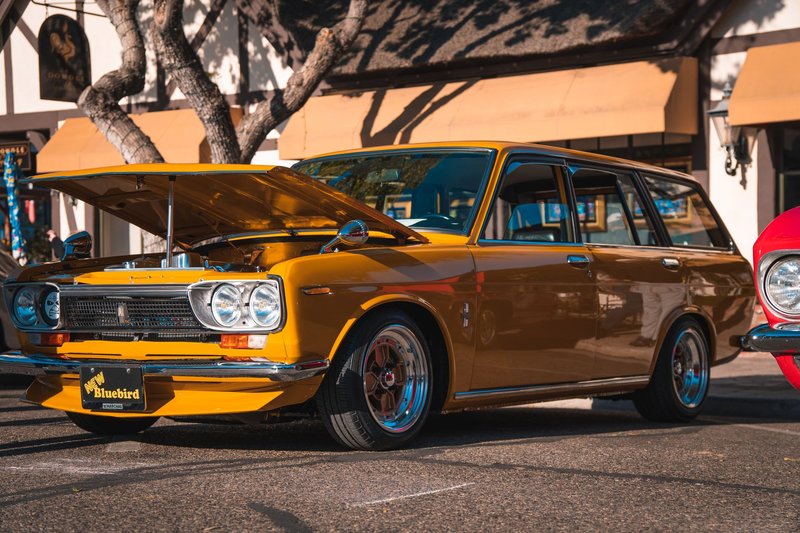
If the 240Z is the star, the Datsun 510 is the cult hero. Sold from 1968, it hit full stride in 1969 and earned a nickname it has never shaken: the poor man’s BMW. The compliment was deserved — independent rear suspension, a willing overhead-cam four, and a chassis that begged to be thrown into corners.
Power came from the L16, a 1.6-liter SOHC four making around 96 horsepower. Light weight did the rest. The 510 became a giant-killer in SCCA Trans-Am racing under Pete Brock’s BRE team, beating Alfa Romeos and BMWs and turning a humble economy sedan into a motorsport icon.
It came as a two-door, four-door, and wagon, and it sold for well under $2,000 new. That accessibility is exactly why so many got modified, rallied, and raced into oblivion — clean original examples are now genuinely hard to find. It’s one of the cars that shows up again and again on any serious rundown of old JDM cars worth chasing today.
Why it matters: the 510 is the proof that Nissan understood driving dynamics, not just value. It’s the spiritual ancestor of the affordable sport sedan.
Datsun 1600 & 2000 Roadster (Fairlady) — the bridge before the Z
The roadster that the 240Z made everyone forget. Before the Z, Nissan’s sports car was the Datsun Roadster — the SP/SR-series Fairlady — an open two-seater that looked a lot like an MGB and undercut it on price and reliability.
By 1969 you could get two flavors. The Datsun 1600 (SP311) used a 1.6-liter four, around 96 horsepower. The hotter Datsun 2000 (SR311) ran a 2.0-liter four with a five-speed gearbox, making about 135 horsepower in its strongest tune — seriously fast for a small roadster of the era, with a top speed near 125 mph.
These sold in modest numbers and were largely overshadowed the moment the 240Z arrived. That obscurity is part of the appeal now: a 2000 Roadster is rarer than a 240Z and arguably a more analog, raw driving experience.
Why it matters: the Fairlady Roadster is the missing link. It set the “Fairlady” name and the sports-car ambition that the Z inherited and amplified.
Datsun Bluebird — the 510 by another name
In Japan, the car the world knew as the 510 was the Datsun Bluebird (510 series). Same fundamentals — the trim, engine options, and market positioning shifted for the domestic buyer.
The Bluebird was Nissan’s bread-and-butter family car, and the 510-generation Bluebird is where the nameplate became genuinely good to drive rather than just dependable. Engine options spanned roughly 1.3 to 1.6 liters depending on market and trim. It’s the same story as the 510: a practical sedan with surprising chops.
Worth knowing if you’re shopping internationally — a “Bluebird” listing from Japan and a “510” listing from the U.S. can be the same chassis. Don’t pay an import premium for what’s effectively a domestic car you could find closer to home.
Datsun Sunny (1000/1200) — the volume car
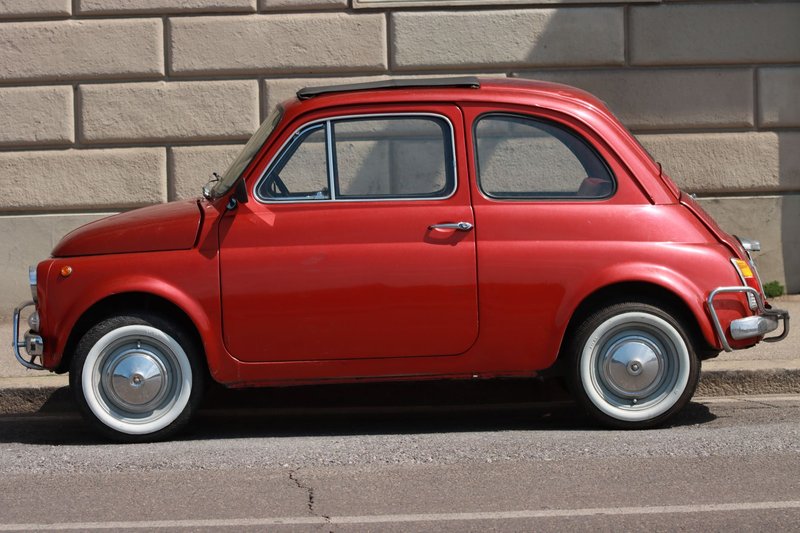
Every lineup needs the car that pays the bills, and in 1969 that was the Datsun Sunny. Small, cheap, and built in enormous numbers, the Sunny (B10, with the B110/1200 arriving around the turn of the decade) was Nissan’s answer to the Toyota Corolla in the brutal entry-level segment.
Power was modest — around a 1.0-liter four, later 1.2 — making roughly 60 horsepower. The point was never performance. It was reliability, fuel economy, and a price almost anyone could reach. The Sunny did exactly that, and it sold like crazy across Asia and in export markets.
Why it matters: the Sunny isn’t a collector darling, but it’s the commercial foundation that funded the exciting stuff. And early B110 Sunny coupes have a small, devoted following today, especially among fans who slot in the 510’s hotter engines.
Nissan Laurel — the badge that stayed Nissan
The outlier, and the one that justifies the “1969 Nissan” phrasing. Launched in 1968 and selling through 1969, the Nissan Laurel (C30) was pitched above the Bluebird as a near-luxury compact for the Japanese market — and it wore the Nissan name, not Datsun, from the start.
It used overhead-cam fours in the 1.8-liter range and aimed at buyers who wanted something plusher than a Bluebird without stepping up to a full executive sedan. The Laurel essentially created a new niche for Nissan, one it would keep mining for decades.
Why it matters: the Laurel shows Nissan’s ambition to move upmarket under its own name. It’s also a reminder that the Datsun/Nissan split was about positioning, not just geography.
1969 Nissan & Datsun: specs at a glance
| Model | Engine | Approx. HP | Body | Original price (US, approx.) |
|---|---|---|---|---|
| Datsun 240Z | 2.4L L24 inline-six | ~151 | 2-door fastback | $3,500 |
| Datsun 510 / Bluebird | 1.6L L16 four | ~96 | Sedan / coupe / wagon | <$2,000 |
| Datsun 1600 Roadster | 1.6L four | ~96 | Convertible | ~$2,500 |
| Datsun 2000 Roadster | 2.0L four | ~135 | Convertible | ~$3,000 |
| Datsun Sunny | 1.0L four | ~60 | Sedan / coupe | <$1,800 |
| Nissan Laurel | 1.8L four | ~98 | Sedan / coupe | JDM only |
Figures vary by market and trim; treat these as ballpark references for comparison, not exact factory numbers. If you want to see how these stack up against the rest of the model year, the broader list of 1969 car models puts the Datsun lineup alongside the muscle cars and luxury sedans it was quietly outclassing on value.
What they’re worth now
The classic market has caught up with these cars, hard — especially over the past decade. Rough current ranges for clean, running examples:
- Datsun 240Z — the blue chip. Driver-quality cars run roughly $25,000–$45,000, with concours and matching-numbers Series I examples pushing well past $60,000. Early 1969-built (“Series I”) cars carry a premium for their unique details.
- Datsun 510 — once cheap, now climbing fast. Solid drivers sit around $15,000–$30,000, with race-history or BRE-tribute cars going higher. Rust-free originals are the hard part.
- Datsun 2000 Roadster (SR311) — the sleeper investment. Good examples land in the $30,000–$50,000 range; the rarer they get, the steeper the climb. The 1600 sits a notch below.
- Datsun Sunny / B110 — affordable entry into classic Datsun ownership, generally under $15,000, though clean coupes are creeping up.
- Nissan Laurel — thin market outside Japan; values depend heavily on import condition and rarity, and it’s a JDM-import play more than a mainstream classic.
If you’re buying, the real money is in condition and originality, not just the model. A rust-free, matching-numbers 510 can outvalue a tired 240Z. And because so many of these were modified in period, an unmolested original — any of them — commands a premium that keeps growing.
The 1969 lineup is where Nissan stopped being “the cheap reliable option” and started being a brand car people actually wanted. The 240Z gets the credit, but the whole roster earned it.

Marco Delantero
More from Marco DelanteroHow we reviewed this article
This article was researched against manufacturer records and editorially reviewed before publishing. We accept no payment for coverage.