Ask anyone who was paying attention in 1980 and they’ll tell you American muscle was dead. Emissions regs had strangled the V8, insurance companies had declared war on horsepower, and the cars limping out of Detroit made 150 hp and called it a day. A Corvette ran the quarter mile slower than a modern minivan.
Then something funny happened. Fuel injection arrived. Turbochargers showed up where nobody expected them. And by the back half of the decade, Detroit was building cars that would have humiliated their 1970 ancestors at the dragstrip. The 80s muscle car is real, it’s underrated, and right now a lot of these cars are sitting in the sweet spot between “nostalgic toy” and “serious investment.”
This is a ranked list of the 15 that matter — the icons, the sleepers, and a couple of weird ones the other lists pretend never existed. For each, you get the numbers that count, what it’s worth today, and whether it’s actually worth buying.
Table of Contents
- The Quick Verdict
- 15. Dodge Omni GLH
- 14. Merkur XR4Ti
- 13. Ford Taurus SHO
- 12. Pontiac Fiero GT
- 11. Chevrolet Monte Carlo SS
- 10. Oldsmobile 442
- 9. Dodge Daytona Shelby Z
- 8. Buick Regal T-Type
- 7. Chevrolet Corvette C4
- 6. Pontiac Firebird Trans Am GTA
- 5. Ford Mustang SVO
- 4. Chevrolet Camaro IROC-Z
- 3. Ford Mustang 5.0 GT (Fox Body)
- 2. Buick Grand National
- 1. Buick GNX
- Buying an 80s Muscle Car: What to Know
The Quick Verdict
If you want the bottom line: the Buick GNX is the king of the decade, full stop — but with only 547 built and prices north of $200,000, it’s a museum piece now. The smart-money buy is the regular Buick Grand National, which delivers 90% of the legend for a fraction of the price. And if you want a muscle car you can actually drive, modify, and find parts for at any auto store in America, the Fox body Mustang 5.0 GT is the no-brainer. It’s the most fun-per-dollar on this entire list.
Now the full ranking.
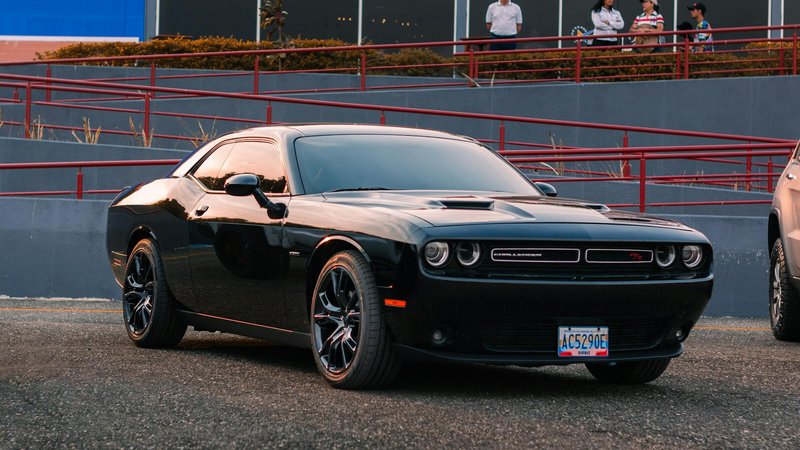
15. Dodge Omni GLH
Carroll Shelby took a Dodge economy hatchback and turned it into a giant-killer. GLH officially stood for “Goes Like Hell,” which tells you exactly how seriously anyone took it — and exactly how fast it actually was. The turbocharged version made 146 hp in a car that weighed about 2,200 pounds, which meant it could embarrass V8 cars off the line and out-corner almost everything.
It’s a front-wheel-drive four-cylinder hatchback, so the purists will sneer. Let them. The Omni GLH is one of the most usable, throwable, genuinely entertaining performance cars of the decade, and survivors are rare because most got driven into the ground.
| Spec | Detail |
|---|---|
| Engine | 2.2L turbo I4 |
| Horsepower | 146 hp |
| 0–60 mph | ~8.5 sec |
| Production | 1984–1986 |
| Value today | $8,000–$18,000 |
14. Merkur XR4Ti
Ford imported the European Sierra, slapped a turbocharged 2.3L four under the hood, gave it a bizarre biplane rear wing, and sold it through Lincoln-Mercury dealers as the “Merkur.” Almost nobody knew how to pronounce it (it’s “mer-COOR”), and it flopped commercially.
That flop is exactly why it’s interesting now. It shares its turbo engine with the Mustang SVO, handles better than most American cars of the era, and it’s a proper rear-drive sleeper that nobody recognizes at a car show. Cheap to buy, expensive to find parts for. A project car for people who like being different.
| Spec | Detail |
|---|---|
| Engine | 2.3L turbo I4 |
| Horsepower | 175 hp |
| 0–60 mph | ~7.5 sec |
| Production | 1985–1989 |
| Value today | $6,000–$15,000 |
13. Ford Taurus SHO
The “Super High Output” Taurus is the ultimate sleeper. From the outside it’s a family sedan your accountant might drive. Underneath sits a 220-hp V6 designed and built by Yamaha, a screaming twin-cam engine that revved to 7,000 rpm and only came mated to a five-speed manual for the first few years.
A four-door sedan that could run with a Mustang and seat the whole family. The SHO is climbing in value as enthusiasts who grew up in the 90s start chasing them, and a clean manual example is harder to find every year.
| Spec | Detail |
|---|---|
| Engine | 3.0L Yamaha V6 |
| Horsepower | 220 hp |
| 0–60 mph | ~6.6 sec |
| Production | 1989 (launch) |
| Value today | $7,000–$16,000 |
12. Pontiac Fiero GT
The Fiero gets unfairly mocked, mostly because early four-cylinder versions caught fire and Pontiac killed the car right as it got good. The 1988 GT, with its 2.8L V6, fully revised suspension, and proper mid-engine balance, was finally the sports car the concept always promised.
It’s a mid-engine American two-seater that cost a fraction of anything from Europe. The 1988 model year is the one to chase — Pontiac fixed nearly everything, then discontinued it. Values reflect that: clean ’88 GTs command a real premium over the earlier cars. It was one of the boldest swings in Pontiac’s long back catalog of models, and few of them aged into collectibility as quietly as this one.
| Spec | Detail |
|---|---|
| Engine | 2.8L V6 |
| Horsepower | 140 hp |
| 0–60 mph | ~7.8 sec |
| Production | 1985–1988 (GT) |
| Value today | $9,000–$20,000 |
11. Chevrolet Monte Carlo SS
The Monte Carlo SS is old-school muscle wearing 80s clothes: a big personal-luxury coupe with a 305 V8, rear-wheel drive, and a long nose built for NASCAR aero homologation. It made a modest 180 hp, but the appeal was always the attitude — and the Aerocoupe version with its sloped rear glass is one of the rarest, most collectible body styles of the era.
This is the muscle car for someone who wants V8 rumble, a comfortable cruiser, and that unmistakable boxy 80s GM silhouette. Parts are everywhere and the small-block Chevy is the most-supported engine in American history.
| Spec | Detail |
|---|---|
| Engine | 5.0L (305) V8 |
| Horsepower | 180 hp |
| 0–60 mph | ~8.0 sec |
| Production | 1983–1988 |
| Value today | $12,000–$28,000 |
10. Oldsmobile 442
The 442 nameplate carried serious muscle pedigree from the 60s, and Oldsmobile revived it on the G-body platform. The 80s version is more boulevard cruiser than stoplight terror — the 307 V8 made around 170 hp — but it looks fantastic and rides like a luxury coupe.
The real prize is the 1983–1984 Hurst/Olds, with its lightning-bolt graphics and the Lightning Rod shifter, a three-lever automatic shifter setup that’s pure 80s excess and exists on no other car. Buy one of those and you’ve got a genuine conversation piece.
| Spec | Detail |
|---|---|
| Engine | 5.0L (307) V8 |
| Horsepower | 170 hp |
| 0–60 mph | ~9.0 sec |
| Production | 1985–1987 |
| Value today | $14,000–$30,000 |
9. Dodge Daytona Shelby Z
Carroll Shelby’s fingerprints are all over the 80s Mopar lineup, and the Daytona Shelby Z is the sharp end of it. The turbocharged 2.2L made up to 174 hp, the chassis got real suspension work, and the pop-up headlights and aggressive body kit gave it presence the economy-car platform had no right to.
It’s front-wheel drive, which costs it points with traditionalists, but it’s fast, distinctive, and cheap. The later Turbo II and Turbo III variants (the Turbo III made 224 hp via a Lotus-developed cylinder head) are the ones collectors actually want.
| Spec | Detail |
|---|---|
| Engine | 2.2L turbo I4 |
| Horsepower | 174 hp |
| 0–60 mph | ~7.0 sec |
| Production | 1987–1991 |
| Value today | $8,000–$18,000 |
8. Buick Regal T-Type
Before the all-black Grand National became a legend, there was the T-Type — same turbocharged 3.8L V6 architecture, but available in colors other than menacing black. The T-Type is the value play for anyone who wants Grand National performance and Grand National street cred without paying the Grand National tax.
Mechanically these cars share the turbo V6 that made Buick the unlikely performance king of the decade. A clean T-Type is genuinely quick, surprisingly cheap relative to its famous sibling, and the supporting parts community is enormous.
| Spec | Detail |
|---|---|
| Engine | 3.8L turbo V6 |
| Horsepower | 200–245 hp |
| 0–60 mph | ~6.5 sec |
| Production | 1983–1987 |
| Value today | $20,000–$40,000 |
7. Chevrolet Corvette C4
The C4 Corvette dragged America’s sports car into the modern era. Early 1984 cars were underpowered and rode like a go-kart, but by 1986 the L98 350 was making 240 hp, and the handling — thanks to that controversial digital dash and razor-sharp chassis — was genuinely world-class for the money.
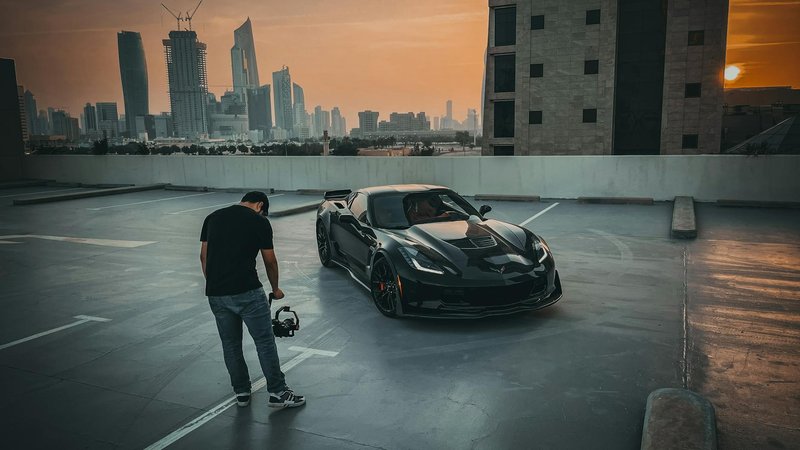
The C4 is the most affordable way into Corvette ownership today, and it’s an honest performance bargain. Skip the gimmicky early cars; an ’86-and-later coupe gives you the most car for the least money on this list, dollar for horsepower. If you’re cross-shopping the era, it helps to see where it sits among the full run of 1980s Corvette models, because the power and handling gains within the C4 generation alone were dramatic year to year.
| Spec | Detail |
|---|---|
| Engine | 5.7L (350) V8 |
| Horsepower | 240 hp |
| 0–60 mph | ~6.0 sec |
| Production | 1984–1989 (C4, 80s) |
| Value today | $10,000–$22,000 |
6. Pontiac Firebird Trans Am GTA
The GTA was the top-tier Trans Am — the one with the 5.7L V8 borrowed from the Corvette, the gold honeycomb wheels, and the WS6 performance suspension. It’s the Firebird at its most aggressive, and it looks like it drove straight out of a synthwave album cover.
This is the car for someone who wants maximum 80s presence: T-tops, screaming chicken vibes (even without the literal hood bird), and a V8 with real grunt. The GTA is the collectible Firebird of the era, and clean low-mile examples are appreciating steadily.
| Spec | Detail |
|---|---|
| Engine | 5.7L (350) V8 |
| Horsepower | 235 hp |
| 0–60 mph | ~6.3 sec |
| Production | 1987–1989 |
| Value today | $15,000–$32,000 |
5. Ford Mustang SVO
While the 5.0 GT got all the glory, Ford’s Special Vehicle Operations built a different kind of Mustang: a turbocharged four-cylinder with a unique suspension, four-wheel disc brakes (rare for the era), and the most sophisticated chassis any Fox-body ever received. The “biplane” rear wing and offset hood scoop set it apart instantly.
The SVO was a hard sell when new — it cost more than the V8 GT and made similar power from half the cylinders. That’s exactly why it’s a connoisseur’s pick today. The 1986 model, with its 205-hp intercooled engine, is the one to find.
| Spec | Detail |
|---|---|
| Engine | 2.3L turbo I4 |
| Horsepower | 205 hp |
| 0–60 mph | ~7.0 sec |
| Production | 1984–1986 |
| Value today | $14,000–$28,000 |
4. Chevrolet Camaro IROC-Z
Named after the International Race of Champions series, the IROC-Z was the Camaro everyone wanted. The tuned-port-injected 350 V8 made up to 245 hp, the suspension was sorted, and the look — those iconic “IROC-Z” decals down the side — defined an entire era of American performance.
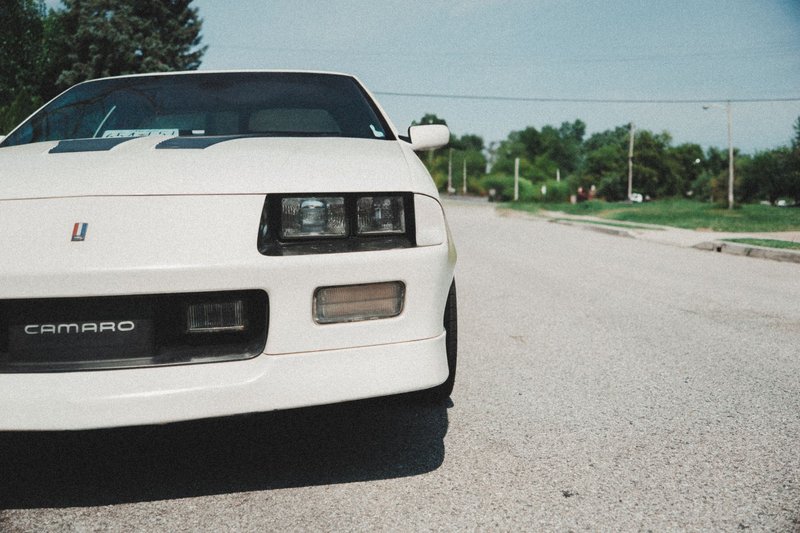
It’s one of the most recognizable cars of the 80s, parts are plentiful, and the small-block under the hood is endlessly tunable. The IROC-Z is the people’s muscle car of the decade: fast, affordable, and instantly cool. According to the Smithsonian’s coverage of automotive history, the third-gen Camaro remains one of the most culturally enduring American designs of the period.
| Spec | Detail |
|---|---|
| Engine | 5.7L (350) V8 |
| Horsepower | 245 hp |
| 0–60 mph | ~6.0 sec |
| Production | 1985–1990 |
| Value today | $15,000–$35,000 |
3. Ford Mustang 5.0 GT (Fox Body)
If the 80s muscle car had a default answer, this is it. The Fox-body Mustang GT, with its 5.0L V8 making 225 hp by 1987, weighed under 3,200 pounds and ran the quarter mile in the low 14s — faster than muscle cars twice its displacement from the 70s. It was cheap when new, cheap to modify, and it turned a whole generation into gearheads.
The aftermarket for the 5.0 is bottomless. You can build one into anything from a stock-looking cruiser to a 10-second drag car using parts available off the shelf. According to the Library of Congress automotive archives, the Fox-body’s role in democratizing performance is why it remains the most-modified American car ever built. Prices are climbing fast as the early cars cross into genuine classic territory.
| Spec | Detail |
|---|---|
| Engine | 5.0L V8 |
| Horsepower | 225 hp |
| 0–60 mph | ~6.5 sec |
| Production | 1982–1993 (5.0 GT) |
| Value today | $12,000–$30,000 |
2. Buick Grand National
A black, turbocharged, rear-wheel-drive coupe that beat Ferraris off the line and looked like the Batmobile’s economy sibling. The Grand National’s 3.8L turbo V6 was conservatively rated at 245 hp, but everyone knew the real number was higher — Buick was sandbagging to keep the insurance companies calm.
This is the car that proved a V6 could humiliate V8s, the unlikeliest performance hero of the decade. It came only in black, which only added to the mystique. Values have appreciated dramatically over the past decade, and a documented, low-mileage GN is now a blue-chip collector car.
| Spec | Detail |
|---|---|
| Engine | 3.8L turbo V6 |
| Horsepower | 245 hp (underrated) |
| 0–60 mph | ~4.9 sec |
| Production | 1984–1987 |
| Value today | $40,000–$80,000 |
1. Buick GNX
The “Grand National Experimental” is the decade’s final word and its undisputed champion. Buick partnered with McLaren Performance Technologies and ASC to build a swan-song version of the Grand National with a bigger turbo, a reworked intercooler, and a stronger drivetrain. The official rating was 276 hp and 360 lb-ft, but the GNX would run the quarter in the high 12s — quicker than a contemporary Ferrari Testarossa or Lamborghini Countach. It earned its place near the top of the fastest cars of the 1980s, a list otherwise dominated by exotic European machinery costing several times as much.
Only 547 were built, each with sequential numbering and fender flares hiding a beefed-up suspension. The GNX took everything the malaise era said was impossible and detonated it. It’s the most valuable mass-market American car of the 80s, and prices have soared past $200,000 for pristine examples. You won’t be daily-driving one, but it’s the car the entire decade was building toward.
| Spec | Detail |
|---|---|
| Engine | 3.8L turbo V6 (modified) |
| Horsepower | 276 hp (underrated) |
| 0–60 mph | ~4.6 sec |
| Production | 1987 (547 built) |
| Value today | $150,000–$250,000+ |
Buying an 80s Muscle Car: What to Know
The single biggest variable with any of these cars is whether it’s been maintained or neglected, because parts availability swings wildly across this list.
Buy the small-block cars if you want simplicity. Anything with a Chevy 350 or Ford 5.0 — the Camaro, the Corvette, the Mustang, the Monte Carlo — has bottomless parts support. You can rebuild these engines with a phone call and a credit card. These are the cars to buy if you actually want to drive and wrench, not just collect.
The turbo Buicks are an investment, not a hobby car. The Grand National and GNX have appreciated hard, and their turbo V6 components are specialized. Buy one documented and sorted, or budget for a specialist. The good news is the Buick turbo-regal community is fanatically organized, so the knowledge exists — it just isn’t at your corner shop.
The four-cylinder turbos are the bargains nobody’s chasing yet. The Mustang SVO, Merkur XR4Ti, and Shelby Dodges are cheap right now because they’re weird. Parts can be a hunt, especially for the Merkur. But these are the cars most likely to appreciate as the obvious icons price people out.
Always check for rust and verify the drivetrain matches the badge. 80s GM G-bodies and Fox-body Mustangs both rust in predictable places (rear frame rails, strut towers, trunk floors). And because these cars are easy to clone, a “Grand National” or “IROC-Z” might be a base car wearing the wrong badges — get the build sheet or the VIN decoded before you pay collector money.
The 80s muscle car was a comeback story, and right now most of these cars sit at the bottom of their value curve relative to the 60s and 70s legends. The icons are climbing, the sleepers are waking up, and the weird ones are still cheap. Pick the one that matches how you actually want to use it, and buy the best example you can afford — condition beats everything else on this list.

Marco Delantero
More from Marco DelanteroHow we reviewed this article
This article was researched against manufacturer records and editorially reviewed before publishing. We accept no payment for coverage.