Here’s the thing nobody wants to say out loud: the term “muscle car” didn’t exist in the 1940s. It wasn’t coined until the mid-1960s, after the 1964 Pontiac GTO showed up and lit the fuse. So if you’re searching for “40s muscle cars” expecting a lineup of tire-shredding monsters with hood scoops and 400 horsepower, you’re going to be disappointed by most articles, which quietly admit this and then sprint to the 1960s as fast as they can.
This isn’t that article.
The 1940s deserve better than being treated as a preamble. The decade gave American performance its DNA: the overhead-valve V8 that would power everything that came after, a hot-rod culture born in dry lake beds and bootlegger back roads, and one specific Oldsmobile that most historians point to as the true ancestor of the breed. Let’s actually own the decade.
Table of Contents
- TLDR: The Short Version
- Why “40s Muscle Cars” Is a Trick Question
- The 1949 Oldsmobile Rocket 88: The One That Counts
- Chrysler Saratoga: The Hemi’s Quiet Cousin
- Lincoln and Cadillac: Power Behind the Luxury
- The Flathead V8 Hot Rod Revolution
- Bootleggers, Moonshine, and the Birth of Drag Racing
- Spec Comparison: The Real 1940s Performers
- So What Was the First Muscle Car?
- Buying a 1940s Performance Classic Today
TLDR: The Short Version
There were no “muscle cars” in the 1940s in the strict sense — the formula (mid-size body, oversized V8, cheap) wouldn’t exist until 1964. But the decade produced the genuine ancestor: the 1949 Oldsmobile Rocket 88, which dropped a high-compression overhead-valve V8 into a lighter body and dominated early NASCAR. Add the Chrysler Saratoga, the rise of flathead V8 hot-rodding, and the moonshine runners who’d later invent stock car racing, and you’ve got the real story. The Rocket 88 is the answer to “what was the first muscle car?” — and almost everyone who studies this agrees.
Why “40s Muscle Cars” Is a Trick Question
A muscle car, by the definition that stuck, is a specific recipe: take an intermediate-size, mass-market body, stuff in the biggest V8 you can, and sell it cheap to a young buyer who wants to go fast. The GTO nailed that in 1964 by putting a 389 into the mid-size Tempest.
In 1947, that recipe was impossible. American cars were either big and heavy, or small and gutless. Most of them still ran flathead engines — sidevalve designs where the valves sat beside the cylinders, choking airflow and capping compression. They were reliable and cheap to build, but they wheezed above 100 horsepower.
The 1940s also opened with a problem: World War II. From early 1942 through late 1945, Detroit built no civilian cars at all. The factories made tanks, aircraft engines, and jeeps. So the decade’s automotive story is really squeezed into 1940–41 and then 1946–49, and the back half is where everything interesting happens.
That postwar window matters because it’s when engineers who’d spent four years building 2,000-horsepower aircraft engines came home and looked at the wheezing flatheads under American hoods. They knew exactly what was possible.
The 1949 Oldsmobile Rocket 88: The One That Counts
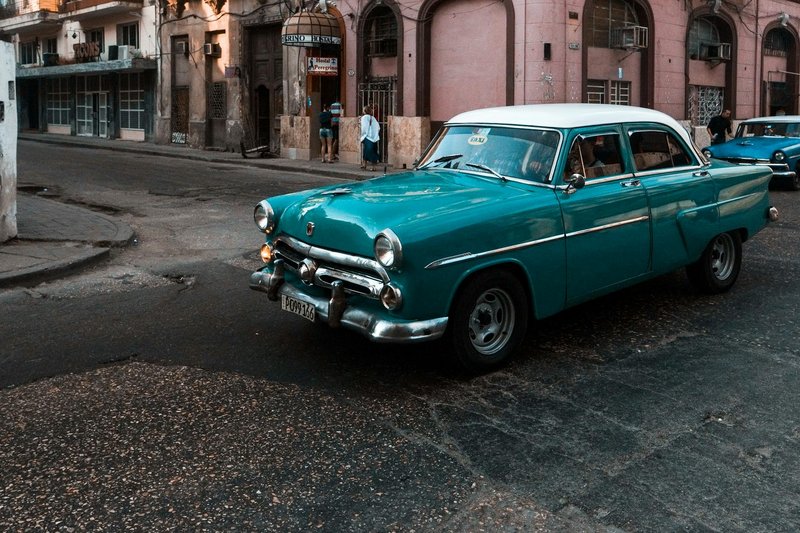
If the 1940s produced anything that earns the proto-muscle-car label, it’s this. Oldsmobile took its new 303-cubic-inch “Rocket” V8 — a modern overhead-valve design making 135 horsepower — and dropped it into the lighter, smaller Series 76 body shell. The result, the Rocket 88, was the closest thing to “big engine, small body, sold to the masses” that anyone had built.
The numbers don’t sound scary now. But in 1949, 135 horsepower in a 3,500-pound car was a genuine performance statement, good for a top speed around 97 mph when most family sedans struggled to crack 80. More importantly, the overhead-valve architecture had headroom. You could raise compression, breathe better, and make more power — exactly the path the 1950s would take.
Then it went racing and made the case undeniable. The Rocket 88 won six of the nine NASCAR Grand National races in the 1950 season and took the inaugural championship, dominating a series that was supposed to feature showroom-stock cars. When your “stock” sedan is beating everything on the track, the message lands. Even the Smithsonian’s account of early stock car racing traces this era as the moment American performance cars went from novelty to national obsession.
The Rocket 88 also did something cultural: it inspired what many historians call the first rock and roll record, Jackie Brenton’s “Rocket 88” from 1951. A car fast enough to write a song about. That’s not nothing.
Chrysler Saratoga: The Hemi’s Quiet Cousin
Chrysler’s answer arrived right at the decade’s edge and gets almost no coverage, which is a shame. The Saratoga name had floated around Chrysler’s lineup through the 1940s, but the version that matters paired a mid-tier body with Chrysler’s emerging engineering muscle: the FirePower hemispherical-head V8.
The “Hemi” head — combustion chambers shaped like half a sphere — let the engine breathe and burn more efficiently than any flathead could dream of. When Chrysler put its 331-cubic-inch FirePower into the lighter Saratoga body, it created a sleeper. The Saratoga out-accelerated cars that cost twice as much and, like the Olds, proved itself in stock car competition against more expensive machinery.
The Saratoga is the textbook “big engine, lighter body” play, executed by a different company in the same window. The fact that it’s barely mentioned in most “40s muscle cars” roundups is exactly the gap worth filling.
Lincoln and Cadillac: Power Behind the Luxury
The luxury brands were quietly part of this story too. Cadillac introduced its own overhead-valve V8 in 1949 — a 331-cubic-inch unit that, like the Olds Rocket, abandoned the flathead and chased higher compression. It made Cadillacs genuinely quick for the era, and hot-rodders would later raid junkyards for these engines specifically.
Lincoln’s performance reputation came a hair later, but the Lincoln Capri that emerged at the turn of the decade carried the lineage forward, eventually dominating the brutal Carrera Panamericana road races in Mexico in the early 1950s. The seeds were planted in the late-1940s engineering push, when Ford’s luxury division decided that big American cars should also be fast ones. Many of these quick luxury models wore sleek two-door bodywork, and if you want to see how that styling played out across the decade, our rundown of the era’s most notable 1940s coupes shows just how varied the field was.
These weren’t muscle cars. Nobody sold them cheap to teenagers. But they’re part of why the overhead-valve V8 became the standard, and the standard is what made muscle cars possible.
The Flathead V8 Hot Rod Revolution
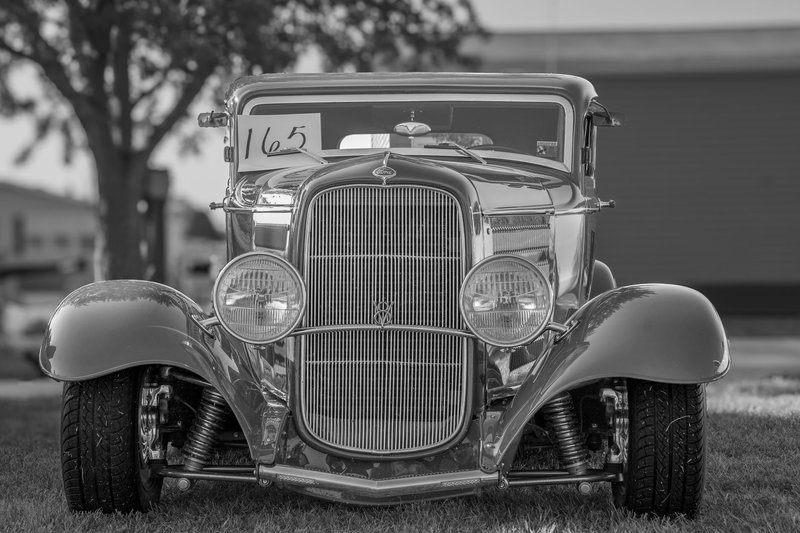
Here’s the part the factory history misses entirely. The real performance revolution of the 1940s didn’t happen in Detroit boardrooms — it happened in California garages.
The Ford flathead V8, introduced back in 1932, put eight cylinders in the hands of ordinary people for the first time. By the 1940s, surplus parts were cheap, returning servicemen had mechanical training, and the dry lake beds north of Los Angeles offered miles of flat, empty space. So they started modifying.
The hot-rod playbook was born here: strip the weight, swap in multiple carburetors, mill the heads to raise compression, add aftermarket cams. Speed shops like those run by Vic Edelbrock and the Iskenderian camshaft outfit turned the wheezing flathead into something that could push a stripped-down roadster past 120 mph at the lakes. The Southern California Timing Association formalized the racing in 1937, and after the war it exploded.
This matters because muscle cars weren’t just a factory idea — they were a cultural demand. Detroit eventually built what young buyers were already building themselves. The flathead hot-rodders proved there was an enormous appetite for cheap American speed, and the 1940s is when that appetite became impossible to ignore.
Bootleggers, Moonshine, and the Birth of Drag Racing
The other origin story runs through the Appalachian back roads. Prohibition technically ended in 1933, but the moonshine trade kept running through dry counties for decades, and the men hauling illegal liquor needed cars that looked stock but could outrun the law.
So they did exactly what the hot-rodders did, for higher stakes. A bootlegger’s car was a sleeper by necessity: factory-looking sedan on the outside, beefed-up suspension and a heavily worked flathead underneath, often with hidden tanks for the cargo. These drivers became some of the best in the country at driving fast cars on bad roads, and many of them — Junior Johnson being the famous example — went straight from outrunning revenuers to racing on the early NASCAR circuits.
The first organized drag strip didn’t open until 1950 (the Santa Ana Drags in California), but the practice of two cars lining up on a straight road to settle who was faster was pure 1940s street culture. The decade built the infrastructure of American performance — the engines, the tuners, the drivers, and the demand — even if it didn’t yet build the muscle car itself.
Spec Comparison: The Real 1940s Performers
The genuine performance contenders of the decade, side by side:
| Car | Year | Engine | Horsepower | Approx. Top Speed | Why It Matters |
|---|---|---|---|---|---|
| Oldsmobile Rocket 88 | 1949 | 303 ci OHV V8 | 135 hp | ~97 mph | Big engine, light body; dominated early NASCAR |
| Chrysler Saratoga | 1949–50 | 331 ci FirePower Hemi V8 | ~180 hp | ~100+ mph | Hemi power in a mid-tier body; the original sleeper |
| Cadillac Series 62 | 1949 | 331 ci OHV V8 | 160 hp | ~100 mph | Killed the flathead at the luxury end |
| Ford Custom (hot-rodded) | 1946–48 | 239 ci Flathead V8 (modified) | 100+ hp (heavily varied) | 100+ mph tuned | The people’s performance engine |
| Lincoln (early Capri lineage) | 1949–early 50s | OHV V8 | ~150 hp | ~100 mph | Carrera Panamericana dominance |
Horsepower figures from this era used gross ratings and varied by source and state of tune, so treat them as ballpark. The point stands: by 1949, the overhead-valve V8 had arrived and the flathead’s days were numbered.
So What Was the First Muscle Car?
The honest verdict: the 1949 Oldsmobile Rocket 88 is the closest thing the 1940s produced, and it’s the car most automotive historians name when forced to pick a proto-muscle-car. It hit the core formula — a powerful, modern V8 in a relatively light, affordable body — years before anyone had a name for it.
But the title “first true muscle car” still belongs to the 1964 Pontiac GTO, because the GTO completed the recipe the Rocket 88 only started: a deliberately marketed, mid-size, big-V8 car sold cheap to young buyers as a performance machine. The Petersen Automotive Museum and most serious classic-car authorities draw the line there.
So the cleanest way to say it: the Rocket 88 was the grandfather, the GTO was the firstborn. The 1940s didn’t have muscle cars. It had everything that would create them — the engine architecture, the racing proof, the hot-rod culture, and the buyer demand. That’s a more interesting story than pretending a 1947 Buick was secretly a Hellcat.
Buying a 1940s Performance Classic Today
If reading this gave you the itch to actually own a piece of the era, a few honest notes from the collector world.
Rocket 88s are the blue-chip pick — and priced like it. A clean, running 1949–50 Olds 88 will run well into five figures, and concours examples climb higher. They’re desirable precisely because of the history, so you pay for the name. Parts support is decent thanks to the shared GM platform and a strong owners’ community.
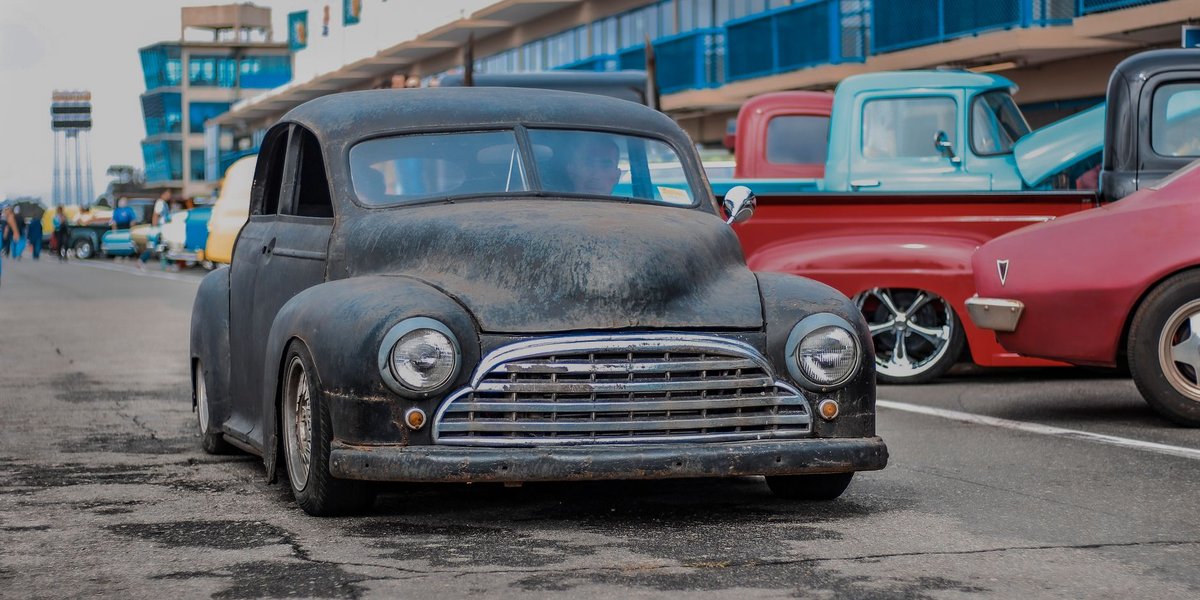
Flathead Fords are the affordable entry point. A 1946–48 Ford or Mercury is the most accessible way into the decade. The flathead V8 is one of the best-documented engines in existence, aftermarket and reproduction parts are everywhere, and a driver-quality car can still be found at sane money. If you want to build a period-correct hot rod, this is the canvas everyone uses.
Inspect for the things that kill these cars. Frame rust on cars that lived in salt states, cracked flathead blocks from freeze damage (a notorious flathead weakness), and missing trim that’s nearly impossible to source. A pre-purchase inspection by someone who knows prewar-era cars is worth every penny.
Buy the best example you can afford. Restoration on a 75-year-old car costs more than the gap between a rough one and a good one, every single time. A solid #3 driver beats a #5 project you’ll never finish.
The 1940s won’t give you a muscle car. It’ll give you something better: the actual machine that started it all, the engine architecture that powered the entire golden age, and the kind of provenance you can’t fake. The decade that everyone treats as a footnote is where American performance was actually born.

Marco Delantero
More from Marco DelanteroHow we reviewed this article
This article was researched against manufacturer records and editorially reviewed before publishing. We accept no payment for coverage.