Table of contents
- TLDR
- Why 1963 mattered for Ferrari
- The 1963 Ferrari models at a glance
- Road cars
- Competition cars
- Special variants and coachbuilt cars
- How to identify a 1963 Ferrari
- Collector significance today
- Final thoughts
TLDR
The 1963 Ferrari models sit right at the hinge point between Ferrari’s early-’60s dominance and the more mature GT cars that followed. If you want the headline names, they’re the 250 GTO, 250 GT/L Lusso, 330 America, and the first-wave 275 GTB development. For racing, 1963 is also a big year for the 250 P and the 250-series competition cars that kept Ferrari at the front of endurance racing.
If you’re trying to understand the lineup quickly:
- Road focus: 250 GT/L Lusso, 330 America, 250 GT 2+2
- Race focus: 250 GTO, 250 P, 250 LM prototypes and development cars
- Collector focus: 250 GTO is the giant, but Lusso and 275-era cars are the ones many enthusiasts can still realistically dream about
Why 1963 mattered for Ferrari
1963 wasn’t just “another Ferrari year.” It was the moment when the company was straddling two eras at once.
On one side, Ferrari still leaned heavily on its famous 3.0-liter V12 250-series cars. On the other, the brand was already moving toward larger GT cars and a fresh design language that would define the mid- and late-1960s. The result was a lineup that feels transitional in the best possible way: elegant road cars, brutal competition machines, and a few models that would become absolute legends.
Ferrari’s racing importance in 1963 also can’t be separated from the road cars. The company’s identity was still tightly tied to motorsport, and the lessons from endurance racing fed straight back into the showroom cars. That’s why the 1963 Ferrari models are such a useful snapshot of the marque. You can see the handoff happening in real time. For broader context on 1960s performance cars, see The Complete List of 1960s Sports Cars.
For a broader historical reference, Ferrari’s own company history and the Ferrari 250 series pages are useful starting points, though they naturally focus on the factory’s preferred version of the story.
The 1963 Ferrari models at a glance
| Model | Engine | Body style | Production note | Why it matters |
|---|---|---|---|---|
| Ferrari 250 GTO | 3.0L Colombo V12 | Competition coupé | 36 built | The defining Ferrari of the era |
| Ferrari 250 GT/L Lusso | 3.0L Colombo V12 | Grand touring coupé | About 350 built | One of the prettiest road Ferraris |
| Ferrari 330 America | 4.0L V12 | Grand touring coupé | Low volume | A bridge between 250s and 330s |
| Ferrari 250 GT 2+2 | 3.0L Colombo V12 | 4-seat GT | High volume for Ferrari | The practical V12 Ferrari |
| Ferrari 250 P | 3.0L V12 mid-engine | Prototype racer | Very limited | Ferrari’s racing evolution in motion |
| Ferrari 275 GTB debut cars | 3.3L V12 | GT coupé | Introduced in 1964, developed in 1963 | The next-generation Ferrari taking shape |
| Ferrari 250 LM early development | 3.3L V12 | Mid-engine racer | Prototype/preview phase | A key transition car for Ferrari racing |
Road cars
Ferrari 250 GT/L Lusso
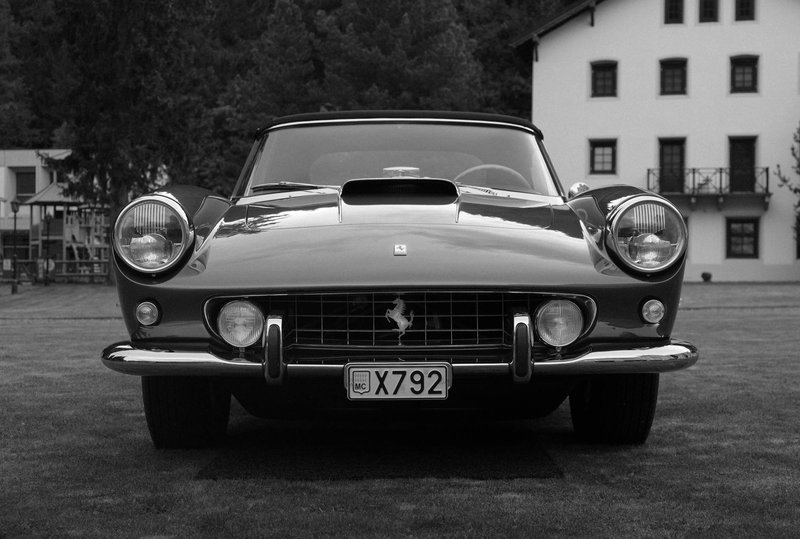
If one 1963 Ferrari road car gets the “I know cars, not just badges” vote, it’s the 250 GT/L Lusso. The shape is elegant without looking fragile, and that’s a hard balance to pull off. Pininfarina gave it smooth, restrained proportions, and the result is one of those Ferraris that looks expensive even standing still.
Mechanically, the Lusso stayed within Ferrari’s proven formula: a 3.0-liter Colombo V12 up front, paired with a 4-speed manual gearbox in most cars. It wasn’t the wildest Ferrari on the road. That was never the point. It was the one you’d drive across a country without feeling like the car was apologizing for itself.
The Lusso matters because it sits at the end of the classic 250 road-car story. It’s still old-school Ferrari engineering, but the styling is more mature, more polished. Collectors love it for exactly that reason.
Ferrari 330 America
The 330 America is one of the easiest cars in this group to misunderstand. At a glance, it can look like “just another early-’60s Ferrari coupé.” In reality, it was Ferrari starting to scale up displacement and shift the brand toward the bigger V12 GTs that would come later.
The 330 America used a 4.0-liter V12, which gave it more torque and a different personality from the 250 series. That extra size mattered. Ferrari was responding to buyers who wanted more comfort and more relaxed highway ability without giving up the badge or the sound.
It’s not the poster child of 1963 Ferrari models, but it’s historically useful because it shows Ferrari widening the lane. Not every owner wanted a razor-edged competition-derived machine. Some wanted a fast grand tourer with serious presence.
Ferrari 250 GT 2+2
The 250 GT 2+2 was Ferrari making a practical car, which in Ferrari terms means “less impractical than usual.” It offered four seats, a front-mounted V12, and enough refinement to make it one of the brand’s most sensible offerings of the period.
This is the Ferrari you point to when someone says all early Ferraris were hard-edged race cars with license plates. No. Some were still expensive, still dramatic, and still mechanical in the best way, but they were also intended to be used by people with families, luggage, and a tolerance for spirited maintenance schedules.
The 2+2 doesn’t always get the love of the Lusso or the GTO, but it was important to Ferrari’s business and brand growth.
Competition cars
Ferrari 250 GTO
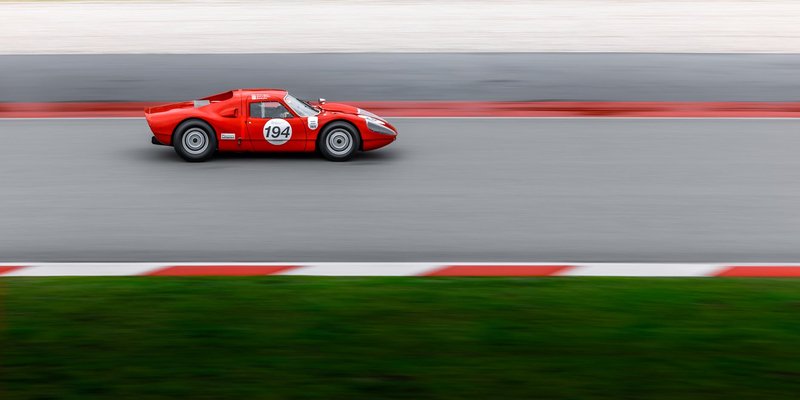
No surprise here: the 250 GTO is the star of the 1963 Ferrari models conversation.
It used the familiar 3.0-liter Colombo V12, but the real story was the body and the purpose. The GTO was built for homologation and racing, with a shape honed in the wind tunnel and on the track, not in a styling studio trying to make everyone feel comfortable at a cocktail party. The long nose, tucked tail, and functional stance all make sense once you know what it was built to do.
Ferrari’s own GTO history is famously selective, but the basic facts are well established: only 36 were made, and they remain among the most prized cars on the planet. The GTO also had an unusually direct connection between road-car hardware and competition success, which is why it’s such a sacred object for collectors and historians alike.
For a broader look at the era’s notable sports cars, see The 10 Best Sports Cars of the 1960s. The GTO’s legend wasn’t built by auction houses alone; it earned its reputation on the track first.
Ferrari 250 P
The 250 P marked a real step toward Ferrari’s mid-engine prototype future. In 1963, it represented the factory leaning harder into a layout that would become central to racing performance. Put simply: better weight distribution, better handling balance, and a cleaner path to modern prototype design.
The 250 P used a mid-mounted V12 and showed that Ferrari’s competition department was not content to rest on the front-engine 250 formula forever. The name may say “250,” but the thinking was already moving forward.
If the GTO is the great public icon of 1963 Ferrari models, the 250 P is the engineers’ favorite.
Ferrari 250 LM development cars
The 250 LM is associated more strongly with 1964, but the development work belongs to this period. That matters because Ferrari’s competition direction was changing fast. The mid-engine architecture was becoming more than an experiment; it was the future.
For Ferrari fans, the value in tracking these development cars is that they show how little of this transition happened overnight. The company didn’t wake up one morning and decide to abandon the old ways. It built, raced, refined, and only then let the new format take over.
Special variants and coachbuilt cars
Ferrari 250 GTE-derived and special-bodied cars
Not every 1963 Ferrari fits neatly into a clean model chart. Some cars were coachbuilt or modified in ways that blur the line between factory production and special commission. In the early 1960s, Ferrari buyers could still work through outside coachbuilders and create something with a much more individualized character than the later mass-produced exotics allowed.
That mix of factory discipline and coachbuilt variety is a big part of Ferrari’s charm. You’re not just looking at a model year. You’re looking at a network of bodies, chassis, trim choices, and mechanical evolution that made each car a little different.
The 1963 Ferrari racing ecosystem
The lineup also needs to be understood as an ecosystem, not a spreadsheet.
Ferrari used the same broad family of engines, chassis concepts, and engineering ideas across road and race cars. A 250-series V12 in a GT road car and a 250-series V12 in a race car were related enough to make the brand coherent, but different enough to give each car a distinct job. That family resemblance is part of what makes 1963 such a strong Ferrari year. The cars weren’t random. They were all orbiting the same engineering center.
How to identify a 1963 Ferrari
If you’re looking at a claimed 1963 Ferrari model, a few details matter fast.
Check the engine family
The easiest starting point is displacement and layout.
- 3.0L Colombo V12: common in the 250-series cars
- 4.0L V12: points toward the 330 America and related larger GTs
- Mid-engine V12 prototype layout: usually competition-oriented and not a standard road car
Look at the body proportions
Ferrari’s 1963 road cars often show:
- long hood, short rear deck proportions
- compact greenhouse
- restrained chrome compared with American cars of the same era
- coachbuilt cues around grille shape, roofline, and rear treatment
Verify chassis and body history
With classic Ferraris, chassis history is everything. A car’s original specification, later conversions, accident repairs, and coachbuilder changes can alter its identity in ways that matter a lot. The Classic Driver database and reputable auction catalogues are often better for cross-checking provenance than generic car listings.
Don’t trust glossy photos alone
A Ferrari can look correct from ten feet away and still be a mismatch underneath. Serial numbers, period documentation, and restoration history are the real filters. With cars this valuable, that’s not nitpicking. That’s survival.
Collector significance today
The collector market has made its feelings on the 250 GTO abundantly clear. It occupies a stratosphere of its own. But the rest of the 1963 Ferrari models matter too, because they tell you what the market values beyond pure rarity.
The 250 GT/L Lusso remains one of the most admired “usable classic” Ferraris. The 330 America offers a bigger, more mature grand touring experience. The 250 GT 2+2 has its own appeal for buyers who want a classic V12 Ferrari without stepping directly into the world of multi-million-dollar race legends.
What ties them together is balance. 1963 was the year Ferrari’s cars still felt close to the company’s racing roots, but they were becoming more livable, more styled, and more clearly segmented by purpose. That’s a sweet spot. It’s why the cars are studied, restored, raced in historic events, and argued about endlessly by people who know the difference between “rare” and “important.”
Final thoughts
The 1963 Ferrari models capture Ferrari at a crossroads. The 250 GTO gave the year its mythic aura, but the rest of the lineup tells the fuller story: the 250 GT/L Lusso refining the GT formula, the 330 America pointing toward larger-displacement luxury performance, and the competition cars showing where racing technology was headed next.
If you’re building a mental map of Ferrari history, 1963 is one of the years that matters. Not because everything changed all at once, but because you can see the old Ferrari and the future Ferrari sharing the same garage.
And that’s the fun of it. A year like 1963 gives you the whole drama in miniature — beautiful road cars, ferocious race cars, and a brand in the middle of becoming the legend everyone still talks about.

Marco Delantero
More from Marco DelanteroHow we reviewed this article
This article was researched against manufacturer records and editorially reviewed before publishing. We accept no payment for coverage.