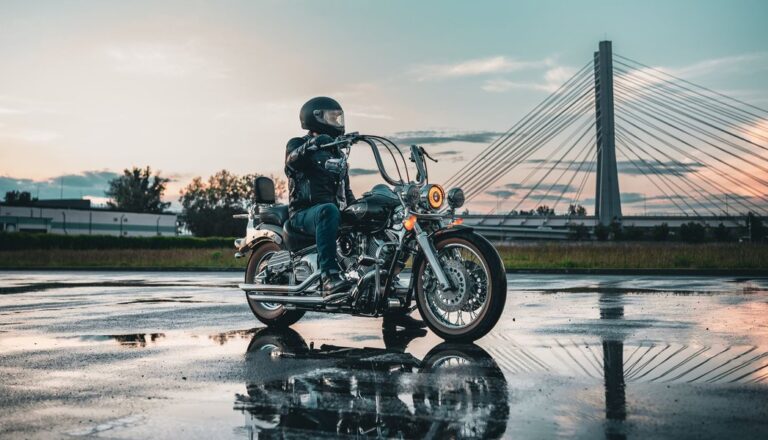
Postwar California in the late 1940s and 1950s gave rise to the cruiser aesthetic: low seats, long lines, and a riding culture centered on relaxed weekend cruises. Riders today face a straightforward problem: daily commutes, weekend trips, and personal style all push you toward different machines. Choosing between a cruiser and a naked bike comes down to priorities: comfort and low-end torque versus agility and everyday versatility — and both have clear, tangible advantages depending on how and where you ride. For anyone weighing cruiser vs naked bike, the decision usually comes down to four categories: ergonomics, handling, cost/practicality, and culture/style.
Comfort & Ergonomics
Ergonomics determines whether a bike feels like a companion or a chore after an hour in the saddle. Cruisers place the rider low with forward controls and relaxed reach, while nakeds favor a neutral, upright rider triangle with wider bars and centered footpegs. Below are two concrete advantages that show how those geometry choices matter for commuters and weekend tourers.
1. Cruiser advantage: Superior long-ride comfort and low seat height
Cruisers typically deliver more relaxed long-ride comfort thanks to low seats and forward controls, which reduce stretch to the bars and let the rider settle into a steady posture. Many modern cruisers sit under 30 inches (about 760 mm) of seat height; for example, several Harley-Davidson Softail models have seat heights in the mid‑600 mm range (roughly 25–26 inches), and the Honda Rebel 500 lists a seat height near 690 mm (about 27.2 inches).
That low center of gravity and stepped seating lowers fatigue on highways and helps shorter riders plant both feet at stops. The Royal Enfield Meteor 350, with a seat height around 765 mm (30.1 inches), shows how accessible modern cruisers can be while preserving that relaxed posture for long days in the saddle.
Trade-offs: cruisers are often heavier and have reduced cornering clearance compared with nakeds, so while they win on comfort and highway stability, they demand a more cautious approach in twisty terrain.
2. Naked advantage: Upright posture for better control in traffic
Naked bikes give a more neutral, upright stance that improves sightlines and quick maneuvering. Wider handlebars and a shorter reach put the rider in a more commanding position for urban riding and tight lane changes.
For concrete context, the Yamaha MT-07 has a seat height around 805 mm (~31.7 in) and a relatively upright rider triangle, while the KTM 390 Duke commonly lists a seat near 830 mm (~32.7 in) with narrow, responsive geometry. That extra bar leverage makes low-speed balance and quick steering inputs easier than the forward feet/forward controls layout of many cruisers.
In practice, that translates to reduced knee strain during stop-and-go commutes and crisper control when filtering (where legal) or dodging sudden obstacles.
Performance & Handling
Performance splits into two axes: cruisers favor torquey, low‑rev power delivery and relaxed highway manners, while nakeds prioritize light weight and sharper handling thanks to sport‑inspired chassis geometry. Below are two advantages — one for nakeds, one for cruisers — with numbers and examples you can measure against.
3. Naked advantage: Lighter weight and sharper handling
Naked bikes are generally lighter with shorter wheelbases and steeper rake angles, which delivers quicker direction changes and more confidence in corners. Typical small‑to‑middleweight nakeds fall in the 160–200 kg curb weight range (350–440 lb) depending on equipment, while many full‑size cruisers weigh 220–350 kg (485–770 lb).
Examples: the KTM 390 Duke is prized for its low mass and nimble chassis, making tight canyon roads and urban twisties feel manageable, while the Yamaha MT-09 demonstrates that even larger nakeds retain a lively, communicative front end because of sportier geometry.
Chassis features — steeper rake, shorter trail, and compact swingarms — all add up to faster turn‑in and a more playful ride, which matters if you favor aggressive weekend rides or a dynamic commute.
4. Cruiser advantage: Strong low-end torque and relaxed highway manners
Cruisers prioritize engines that make usable torque low in the rev range, so you can pass at highway speeds without constantly working the gearbox. Many V‑twins and big‑displacement cruisers deliver peak torque down low: mid‑size cruisers often make 80–120 Nm (60–90 lb‑ft) at accessible revs, while large cruisers can produce 120–160 Nm (90–120 lb‑ft) or more, depending on displacement and tuning.
Concrete examples include Harley‑Davidson Softail models and Indian Chief variants that use long gearing and broad torque curves to keep highway cruising calm and efficient. For two‑up riding or touring with luggage, that low‑rpm shove matters far more than headline horsepower numbers.
In short: if you prefer effortless overtakes and relaxed freeway miles, cruiser power delivery is engineered for that role.
Cost, Fuel Economy & Practicality
Money and practicality sway many purchases. Look at purchase price, insurance, fuel use, maintenance intervals, and how easy it is to add luggage or passenger comforts. The two advantages below cover the tradeoffs between cruisers’ tour readiness and nakeds’ economical daily use.
5. Cruiser advantage: Easier to outfit for touring and two-up riding
Cruisers often come with or can accept a wide array of touring accessories: hard saddlebags, large windshields, passenger backrests, and factory or bolt‑on touring packs. Those parts are plentiful from both OEM and aftermarket suppliers, so configuring a long‑range cruiser is straightforward.
Practical numbers: with standard fuel tanks and relaxed economy, many cruisers can achieve ranges of 200–300 miles (320–480 km) between fill‑ups; adding aerodynamic windshields and luggage doesn’t just increase comfort — it can translate into fewer stops on long runs.
Examples: a Harley‑Davidson equipped with saddlebags and a touring windshield or a Honda Shadow fitted with a passenger backrest makes two‑up weekend touring far less taxing than trying to retrofit a sportbike‑style machine.
6. Naked advantage: Lower purchase/maintenance costs and better fuel economy for daily use
Many naked bikes, especially entry‑level models, are cheaper to buy, insure, and maintain. MSRPs for small nakeds commonly sit in the $5,000–$8,000 range (model and market dependent), and routine service items are often lighter and less expensive than on big V‑twin cruisers.
Fuel economy examples: small‑displacement nakeds such as the KTM 390 Duke often return combined figures equivalent to the mid‑to‑high 40s–60s mpg (U.S.), roughly 3.5–5.0 L/100 km, while middleweight nakeds like the Honda CB500F still beat most large cruisers on consumption. Lower running costs matter if you commute daily.
Maintenance simplicity (chain vs belt/shaft drives, smaller clutch assemblies, easier access to routine service points) also adds up to lower annual ownership costs for many naked‑bike riders.
Style, Culture & Rider Fit
>Beyond numbers lie identity and resale. Style affects how much you enjoy ownership and how easy it is to find a buyer later. Below are two social and market advantages: cruisers’ heritage and nakeds’ modern, adaptable persona.
7. Cruiser advantage: Strong identity, resale niche, and club culture
Cruisers carry a clear visual language and a loyal buyer base, which supports resale and a vibrant club scene. Large cruiser events — Daytona Bike Week in March, for example — draw roughly half a million visitors historically, showing the depth of cruiser culture in certain regions.
That recognizable style makes it easier to sell a used cruiser to another enthusiast, and restoration/custom shops keep parts and expertise flowing for older models. Brands like Harley‑Davidson have decades of owner clubs and OEM accessory catalogs that preserve value for popular models.
Owning a cruiser often means immediate access to group rides, rallies, and a community that values the same aesthetic and riding habits.
8. Naked advantage: Modern styling, customization, and broad versatility
Naked bikes are a blank canvas: sporty yet practical, and highly moddable. Aftermarket support for exhausts, tail tidy kits, bar‑end mirrors, and performance tuning is strong for popular models such as the Yamaha MT‑07 and KTM/Honda nakeds.
That versatility suits riders who want one machine to handle commuting, weekend sport rides, and a café‑style custom project without committing to cruiser culture. The streetfighter/naked scene also benefits from many inexpensive bolt‑on upgrades that change both looks and performance.
Whether you want a daily commuter with sporty manners or a lightly modified weekend bike, nakeds tend to deliver the most flexible platform for adapting to different roles.
Summary
Match the bike to your primary use and priorities: ergonomics often matter more than peak power for everyday comfort, while weight and geometry strongly influence how fun a bike is to ride hard.
- Ergonomics: cruisers win for relaxed long miles and low seat heights; nakeds win for upright control in traffic.
- Handling: nakeds are lighter and more agile (ideal for twisties and spirited commutes); cruisers provide broad low‑end torque for effortless highway cruising.
- Cost & practicality: cruisers are easy to outfit for two‑up and long‑distance trips; nakeds tend to cost less to buy, insure, and run for daily use.
- Culture & resale: cruisers have a defined heritage and event scene that helps resale; nakeds offer modern customization and one‑bike versatility.
Try both: take a short city ride and a longer highway loop on each type to sample ergonomics, handling, and comfort. Consult manufacturer specs for seat heights and torque curves, then choose the machine that fits how you actually ride.
Other Motorcycle Type Comparisons

Sarah Thornton
More from Sarah ThorntonHow we reviewed this article
This article was researched against manufacturer records and editorially reviewed before publishing. We accept no payment for coverage.