A surprising number of luxury buyers discover their badge of comfort comes with frequent, costly repairs—owner complaint databases and reliability surveys show several Cadillac models with notably high problem counts. Reliability matters for luxury cars because these vehicles were sold on refinement and convenience; when major systems fail, owners face depreciation, large out-of-pocket bills, and sometimes safety risks from stalled or degraded systems. Expect higher diagnostic bills when electronics act up and long tow times when powertrain failures leave you stranded. This piece identifies the eight least reliable cadillac cars most often flagged by owners and reviewers, groups them by failure type (powertrain, electronics, and ownership-cost pitfalls), and gives practical detail on common failure modes, documented complaint sources (NHTSA, J.D. Power, Consumer Reports, CarComplaints), and rough repair-cost ranges—many readers report major fixes costing from roughly $2,000 to $6,000. Verify any model-year-specific counts or recall numbers with NHTSA, J.D. Power, Consumer Reports, or CarComplaints before making a purchase decision.
Mechanical & Powertrain Problem Models
Powertrain failures are the most disruptive ownership events: a seized transmission or overheated engine can leave you stranded, require towing, and trigger repair bills in the thousands. Major transmission rebuilds, torque-converter replacements, or long-block engine swaps commonly range from about $2,000 to $8,000+ depending on labor rates and whether used or remanufactured parts are used. Those headline numbers mask a cluster of smaller but persistent costs too—cooling-system repairs, clutch packs in automatics, and sensors that precipitate catastrophic failures if ignored.
When assembling evidence for powertrain trouble, look for elevated J.D. Power PP100 scores (higher is worse), NHTSA complaint totals by model-year, and concentrated threads on CarComplaints that show repeat failure patterns. Many of the problematic model years fall into tight ranges—so model-year specificity matters; check recalls or service bulletins for exact dates and affected VIN ranges. Anecdotal reports (owner forums and documented repair orders) often show out-of-pocket scenarios where warranty coverage has lapsed and bills reach the mid-thousands for transmission swaps or head-gasket-type repairs.
Below are three Cadillac models with recurring mechanical and drivetrain problems. For each, verify model-year complaint counts and recall data with NHTSA or the manufacturer.
1. Cadillac CTS (early first-generation models: 2003–2007)
Early CTS models are frequently cited for transmission and cooling-system failures that can escalate quickly. Owners report rough shifting followed by complete transmission failure in some 2004–2006 units (check NHTSA complaint counts and J.D. Power PP100 for those years), and cooling-system issues have led to overheating and head-gasket repairs in isolated cases.
The real-world impact ranges from inconvenient limp modes and stalled vehicles to full transmission replacements. Typical repair estimates for a failed transmission fall in the $2,500–$5,000 range depending on whether a remanufactured unit is used (owner reports on CarComplaints and forum threads corroborate this ballpark). Several owners also reference manufacturer service campaigns in the mid-2000s addressing cooling hoses or thermostat housings (verify with NHTSA/GM bulletins).
2. Cadillac SRX (first generation: 2004–2009)
The SRX was an early popular Cadillac crossover, and the high sales volume produced a correspondingly high number of mechanical complaints. Common themes include transmission shudder, premature transmission failure, and occasional timing-chain or coolant-leak reports that, when ignored, lead to engine damage (see NHTSA complaint totals for specific model years).
Owners report that major repairs—transmission overhauls or engine work—typically land in the $1,500–$4,000 range, though totals climb if ancillary components (AC, cooling, or driveshaft parts) are involved. GM service bulletins from the era addressed some clutch and torque-converter problems; check those TSB dates before purchase. Resale value suffers on SRX examples with documented repairs, and maintenance history matters more than usual when evaluating a used SRX.
3. Cadillac Catera (late 1990s–2001)
The Catera, built on Opel roots, carries a reputation for drivetrain and electrical gremlins in late-1990s and early-2000s owner reports. Common failures include engine-management sensors (MAF, coolant temp), and automatic transmission issues such as harsh shifts or slipping that can evolve into full replacements.
Because the Catera is older, parts availability and the cost of getting OE components can increase total repair bills; typical fixes run $1,000–$3,500 depending on whether a mechanic uses aftermarket or rebuilt parts. Archived Consumer Reports notes and owner-forum service threads document recurring sensor failures and transmission work (see archived sources and NHTSA complaint logs for counts by year).
Electrical, Electronics, and Software Trouble
Modern Cadillacs bundle comfort and convenience into complex electronic systems—infotainment stacks, body-control modules (BCMs), air-suspension controllers, and advanced sensor suites. When these modules fail, they can immobilize features (or the car), trigger false warnings that mask real problems, or create repeated shop visits for intermittent faults. Electronic repairs vary widely in cost: a simple software reflash or sensor replacement might be $200–$500, while a BCM, infotainment module, or air-suspension compressor can push bills into the $1,500–$4,000 range.
Documented recalls and NHTSA complaint totals are especially revealing for electronics—search for recall dates and complaint counts for infotainment or BCM-related failures. Manufacturer technical service bulletins (TSBs) often describe temporary software fixes or recommended module replacements; cite those when assessing a vehicle’s service record. Owner forums and CarComplaints threads frequently list repetitive diagnostics and short-term fixes that never fully address the root cause (see NHTSA/CarComplaints for complaint tallies by year).
Below are three Cadillac models where electrical and software faults are common and costly.
4. Cadillac XLR (2004–2009)
The XLR, Cadillac’s retractable-roof roadster, repeatedly shows up in owner reports for convertible-top motor failures and associated wiring problems. When the roof motor or its control module fails, owners can be left with a stuck roof or water intrusion that later causes cascading electrical damage (see NHTSA complaint entries for roof mechanisms).
Repair costs vary: a single motor replacement might be ~$1,000–$2,500, but water-damage repairs—including module replacements and wiring harness work—can push cumulative costs toward $4,000–$6,000. Specialist shops that handle convertible systems are fewer and charge premium labor rates, which increases out-of-pocket totals for owners of an XLR.
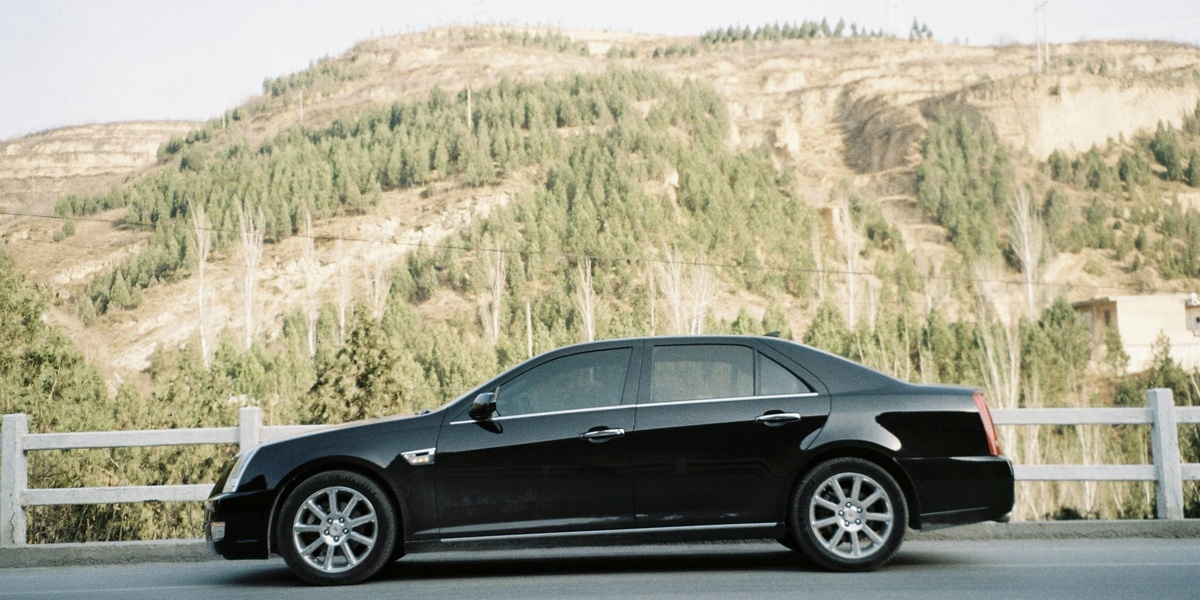
5. Cadillac STS (mid-2000s)
Mid-2000s STS models surface frequently for instrument-cluster failures, dash-electronics glitches, and intermittent sensor errors. These faults often present as flickering gauges, sudden warning lights, or intermittent CAN-bus communication errors that are expensive to diagnose.
Diagnostic times add expense: finding an intermittent fault can cost several hundred dollars in shop time, and replacing an instrument cluster or BCM can range from $300 for minor repairs to $3,500 for module replacements with programming (see NHTSA complaint counts and CarComplaints threads documenting repeat fixes). Owners report temporary dealer flashes that don’t permanently resolve the issue unless modules are replaced.
6. Cadillac Escalade (early 2000s: 2002–2006)
Early-2000s Escalades frequently show electrical complaints—air-suspension compressor failures, faulty ride-height sensors, and related BCM issues—as well as transfer-case and transmission problems in higher-mileage examples. NHTSA complaint tallies for some model years reflect both comfort-system failures and drivetrain reports.
Air-suspension repairs are particularly costly: replacing compressors, valves, and modules often runs $1,000–$4,000, and if drivetrain components like the transfer case or transmission require work, totals can climb to $7,000 or more. Families relying on older Escalades should budget for higher maintenance and check NHTSA recalls or GM service bulletins for known issues before buying.
Design, HVAC, and Ownership Cost Pitfalls
Beyond engines and electronics, some Cadillacs carry design choices or component selections that raise long-term ownership costs. Fragile HVAC parts, rust-prone body areas on certain model years, proprietary trim pieces, and expensive suspension components can all erode the value proposition. HVAC failures are particularly annoying: a blown blower motor or heater core leads to loss of comfort and high shop time; parts and labor can range from $500 for a blower motor to $2,000+ for a heater-core replacement.
Design decisions also affect resale: models with expensive-to-replace interior trim or integrated airbags often see depressed values because buyers factor in future repair bills. Older Cadillacs can face parts-obsolescence premiums, where scarce OEM parts carry high aftermarket prices or necessitate expensive salvage sourcing. When evaluating a used Cadillac, check whether prior owners kept service records, watch for patchwork repairs, and inspect HVAC operation and interior condition closely.
Below are two older Cadillac nameplates where design or parts-availability issues commonly increase ownership costs.
7. Cadillac DeVille (late 1990s–2005)
Later-model DeVilles commonly report chronic HVAC, suspension, and electronics wear. Typical failures include failing blower motors, heater-core leaks, and worn air-ride/suspension components that compromise ride comfort and safety. Owners’ service records and repair orders often show repeated small-to-medium repairs that add up over a few years.
Practical buyer advice: inspect the HVAC for odd smells, check for coolant leaks under the dash (a sign of a failing heater core), and request odometer-backed service history. Repair ranges run roughly $500 for simpler HVAC work to $4,000 when suspension components and control modules need replacement. Cumulative wear on older full-size Cadillacs makes total cost-of-ownership over five years notably higher than similarly aged mainstream sedans (see owner-reported totals on forums and repair-order examples).
8. Cadillac Eldorado/Seville (older luxury models with parts/support issues)
Classic Cadillacs like the Eldorado and Seville can be rewarding to own, but parts scarcity and specialized mechanical systems increase maintenance costs. Certain trim pieces, climate-control internals, and suspension bushings may be out of production or available only through specialty suppliers, raising lead times and prices.
Expect restoration or repair scenarios where a single hard-to-find part—an OEM dash trim panel or specific actuator—carries a $200–$800 price tag, plus significant labor. For daily driving, buyers should prioritize models with recent, documented work or be prepared for restoration-level commitments. Shop estimates and salvage searches often determine whether a project car is a bargain or a money pit.
Summary
- Electronics and transmissions cause the largest ownership surprises; intermittent electronic faults often cost as much in diagnostics as they do in parts.
- Verify model-year-specific issues before buying—check NHTSA complaint counts, J.D. Power PP100 scores, and Consumer Reports notes (and request service records from sellers).
- Budget realistically: major transmission or engine work typically runs $2,000–$8,000, air-suspension or convertible-top repairs often hit $1,000–$6,000, and HVAC or trim replacements add several hundred to a few thousand dollars.
- Pre-purchase steps: get a mechanic inspection focused on cooling and transmission systems, search NHTSA/CarComplaints for concentrated complaint clusters by model year, and confirm recent software updates or TSBs documented by the dealer.

Marco Delantero
More from Marco DelanteroHow we reviewed this article
This article was researched against manufacturer records and editorially reviewed before publishing. We accept no payment for coverage.