The last months of World War II and the sudden switch from wartime output to peacetime demand left 1945 as a hinge year in automotive history: some factory lines still turned out military vehicles while designers began sketching the cars that would define the postwar era. That turbulence meant cars built or deployed in 1945 were often practical, readily available, and influential—roughly 600,000 wartime Jeeps had been produced during the conflict, for example—so a few simple, rugged platforms dominated everyday transport as factories shifted back to civilian work. This article profiles the ten most historically significant and influential cars tied to 1945 — vehicles that shaped everyday life, retooled industry thinking, or bridged wartime utility with peacetime comfort. The list mixes military workhorses, European survivors that resumed production amid ruin, and early postwar luxury models; each entry explains why the car mattered in 1945 and how it shaped the years that followed. Below are ten vehicles chosen because they represent utility, continuity, and early postwar design thinking across different markets.
American and Allied workhorses
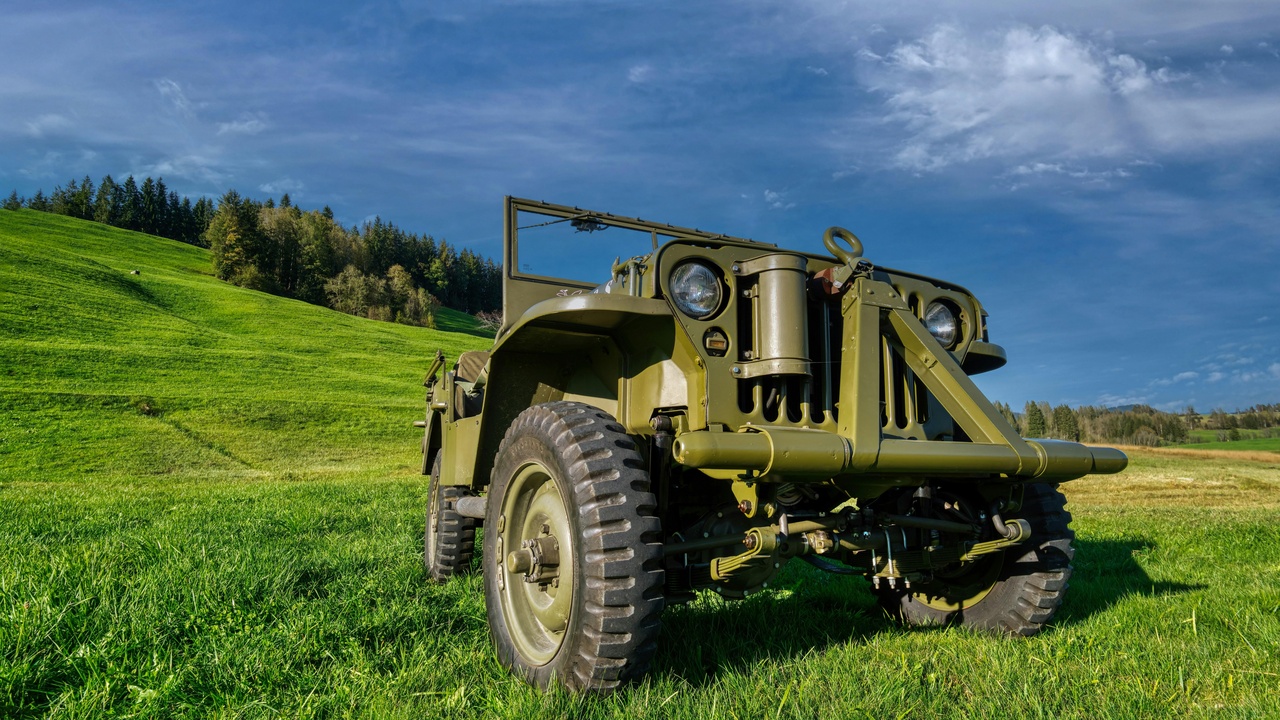
American industry in 1945 was still dominated by the logistics of war, but the writing on the wall was clear: manufacturers would soon return to civilian models. That transition left a distinctive imprint—simple, robust vehicles that could be produced in large numbers were the most visible representatives of 1945’s automotive landscape. Utility mattered more than style; trucks, light transports, and the ubiquitous military Jeep served combat, supply, and then civilian tasks when surplus units re-entered the market.
Mass production techniques and multiple suppliers kept the Allies mobile and created a postwar surplus that eased the shift to peacetime motoring. These machines were easy to repair, used basic mechanical layouts, and required few scarce materials—traits that mattered in 1945 and helped lay the groundwork for later civilian pickups, SUVs, and light commercial vehicles.
Returning servicemen often repurposed surplus vehicles for farming, hauling, or local transport, accelerating adoption of off-road-capable light vehicles in rural economies. Production figures and distribution patterns from the period show how wartime output directly influenced the civilian market that followed.
Alt text suggestion for the category image: “Willys MB Jeep used in Allied operations, 1945.”
1. Willys Jeep (Willys MB / early CJ lineup)
The Willys MB stands out as one of the most iconic vehicles tied to 1945 because it transformed from a battlefield necessity into a civilian workhorse almost overnight. Built by Willys-Overland (with license production by Ford), the Jeep’s simple, flat-fender design and rugged four-wheel-drive drivetrain made it easy to maintain in the field and equally useful on farms and construction sites after the war.
Wartime production totaled in the hundreds of thousands (roughly 600,000 combined MB and Ford GPW units are commonly cited), and in 1945 manufacturers and surplus dealers began clearing stock into civilian hands. Willys introduced the CJ-2A as a purpose-built civilian successor in 1945–46, bringing features like a tailgate and more civilian fittings. The CJ lineage is a direct ancestor of modern SUVs and off-road culture.
Practical impact was immediate: farmers, foresters, and municipal crews snapped up surplus Jeeps because they were cheap, versatile, and nearly indestructible. A short, authoritative way to think about the Willys MB: a wartime tool that seeded an entire class of postwar utility vehicles.
2. Ford GPW (the Ford-built Jeep)
Ford’s GPW represented the company’s licensed contribution to the Jeep program and demonstrates how industrial scale kept Allied forces moving in 1945. Built to the same specification as the Willys MB, the GPW was notable for having many stamped parts produced on Ford tooling, which sped assembly and reduced component variability across suppliers.
Ford produced a substantial portion of wartime Jeeps between 1941 and 1945, and the presence of two major manufacturers helped meet massive demand and simplify logistics in multiple theaters. That licensed, multi-source approach was a wartime necessity that later informed postwar practices in light-truck and commercial vehicle production.
The GPW proved reliable from North Africa to the Pacific, and Ford’s wartime experience translated into peacetime advantages in truck manufacturing and mass-produced light vehicles. The GPW story is an industrial lesson: interchangeable parts and supplier networks can speed recovery after total mobilization.
3. Hudson Commodore (late-war popularity and postwar influence)
The Hudson Commodore exemplifies how American prewar designs filled immediate postwar demand. By 1945 many buyers wanted familiar, comfortable sedans rather than strictly utility machines, and Hudson—like several other manufacturers—reintroduced updated prewar models to satisfy that market while full redesigns were still on the drawing board.
Commodores of the mid-1940s typically retained straight-eight engines and roomy interiors that appealed to returning families and middle managers. Restored production lines and pent-up consumer demand led to a quick rebound in sales in 1945–46, with buyers prioritizing comfort and perceived modernity even as resources remained constrained.
The practical effect: cars such as the Hudson Commodore helped re-establish a consumer marketplace and set buyer expectations for comfort, performance, and styling that influenced late-1940s American designs.
4. Packard Clipper (transitioning luxury and mass-market appeal)
Packard entered 1945 as a symbol of American luxury, but the Clipper shows how premium marques adapted to postwar realities. The Clipper’s clean lines and nearly contemporary styling—developed just before the war—made it attractive to buyers who wanted upscale features but also modern, efficient use of materials.
Packard’s reputation for refinement carried weight in 1945: diplomats, business leaders, and officials favored the marque for official transport. At the same time, Packard had to balance coachbuilt expectations with limited coachbuilder capacity and material restrictions.
Because the Clipper bridged prewar luxury and emerging consumer tastes, it played a role in shaping what buyers expected from high-end American cars in the immediate postwar years.
European survivors and reboots

Europe in 1945 faced devastated factories, disrupted supply chains, and altered borders. Yet a handful of prewar models either resumed production quickly or served as the templates for immediate postwar mobility. Those cars mattered because they kept people moving when rebuilding began, and because early export efforts used automotive sales to generate hard currency for reconstruction.
Restart dates varied—some plants under Allied control were back in production by late 1945, while others waited into 1946. Models that were simple to repair and used readily available parts became staples for taxis, postal services, and rural transport. Their survival influenced vehicle design and export strategies across 1946–1950.
Alt text suggestion for the category image: “Citroën Traction Avant driving on a postwar European street, 1945.”
5. Volkswagen Beetle (Type 1) — the Wolfsburg story
The Beetle’s postwar narrative begins in 1945 when British forces took control of the Wolfsburg factory and preserved the tooling that would later underpin a mass-mobility success story. Although the Type 1 was designed before the war, Allied oversight in late 1945 and into 1946 was pivotal to restarting production and organizing early distribution.
Production in 1945 was limited or interrupted, but the Beetle’s simple air-cooled engine and compact footprint made it an ideal candidate for affordable transport as Europe rebuilt. Over the following years the model evolved into a global symbol of inexpensive, reliable motoring.
The Wolfsburg episode highlights how political control and salvage of industrial capacity in 1945 could determine a model’s future—what began as a small-scale restart soon became one of the century’s most produced cars.
6. Citroën Traction Avant (survival and utility)
Citroën’s Traction Avant was a technological outlier in the 1930s and remained relevant in 1945 because of its unitary body and front-wheel-drive layout. Those features made the car comparatively light, stable, and economical to run in a period when materials and fuel were scarce.
Production had been interrupted by the war, but the Traction Avant resumed service quickly afterward and became a common choice for taxi fleets, police, and government use in France and neighboring countries. Its engineering advantages made it particularly useful in urban and rural environments during reconstruction.
As a result, Citroën’s prewar innovations continued to shape practical mobility in 1945 and helped set the stage for postwar French automotive design.
7. Mercedes-Benz 170V (the pragmatic postwar car)
The Mercedes-Benz 170V was a straightforward, durable prewar design that proved well suited to Germany’s immediate postwar needs. Its simple mechanical layout and relatively robust construction made it easy to maintain in an environment with scarce replacement parts.
After 1945, small-batch production and repairs at rebuilt coachworks kept enough 170Vs on the road to serve municipal functions, taxis, and private transport. The model’s continuity illustrates how older designs could bridge emergency mobility needs until full redevelopment of the industry was possible.
In short, the 170V shows that survivable, serviceable cars mattered as much as technical progress during reconstruction.
Luxury and coachbuilt standouts

Luxury marques faced material rationing and fewer customers in 1945, but they also held symbolic importance. Coachbuilt bodies, bespoke interiors, and hand-finished details signaled a return to peacetime dignity, and governments often turned to high-end cars for diplomatic and official duties. For coachbuilders and luxury manufacturers, 1945 was about preserving craft while planning the designs that would define late-1940s prestige motoring.
Because coachbuilding capacity was limited, many luxury bodies were conservative or derived from prewar patterns—but that continuity reinforced brand identity and helped re-establish markets for bespoke vehicles.
These high-end models mattered symbolically as much as mechanically; seen in parades, embassies, and state events, they communicated national resilience and industrial continuity.
8. Rolls-Royce Silver Wraith (postwar luxury reappearance)
The Rolls-Royce Silver Wraith resumed coachbuilt production just after the war and became a favored choice for diplomats, governors, and municipal dignitaries. Its presence in 1945–46 signaled a return of British craftsmanship and a willingness to supply official fleets despite material constraints.
Many Silver Wraiths wore coachbuilt bodies from Park Ward, Hooper, and other firms, and these bespoke examples were deployed for touring, state duties, and diplomatic missions. The model embodied continuity: enduring quality and a visual shorthand for restored civic life.
For observers in 1945, a Silver Wraith represented the idea that peacetime production and dignified public ceremony would return.
9. Alfa Romeo 6C 2500 (sporting pedigree survives the war)
The Alfa Romeo 6C 2500 carried forward Italy’s prewar sporting tradition into the postwar period. Built in coachbuilt variants by firms like Touring and Zagato, the 6C combined engineering seriousness with elegant bodies and continued to race in events as tracks and rallies restarted after 1945.
Its presence in 1945 signaled that Italy’s performance and coachbuilding sectors were ready to contribute to cultural as well as economic recovery. For enthusiasts and officials alike, the 6C was both a race-bred machine and a statement of artisanal resilience.
The 6C’s blend of chassis engineering and bespoke coachwork influenced the look and feel of Italian grand touring cars in the late 1940s and early 1950s.
10. Austin A40 (practical British postwar mobility)
The Austin A40 was emblematic of the small, practical cars Britain needed in 1945–46. Introduced as part of Austin Motor Company’s plans for postwar production, the A40 answered explicit demands for compact, efficient transport during rationing and limited-material conditions.
With modest engines and conservative packaging, the A40 fit narrow streets and tight budgets. Its launch—timed for the immediate postwar market—helped restore everyday mobility for families and tradespeople who had been without private cars for years.
As such, the A40 is a reminder that smaller models were central to rebuilding normal life in Britain after 1945.
Summary
- Wartime production priorities made 1945 an automotive pivot: mass-produced utility vehicles and surviving prewar designs dominated available transport and shaped immediate postwar choices.
- The ten vehicles profiled—spanning Jeeps, European survivors, and luxury coachbuilt cars—illustrate three forces at work in 1945: utility first, continuity where possible, and symbolic re-entry of prestige models into public life.
- Concrete outcomes included surplus military vehicles seeding civilian markets, prewar engineering carrying through reconstruction, and luxury marques reasserting national craft; these dynamics influenced design and industry strategy for years to come.
- Want to learn more? Visit local automotive museums, attend a restoration club meet, or consult manufacturer archives and period production records to see how the figures and factory timelines behind these models shaped the postwar world.

Marco Delantero
More from Marco DelanteroHow we reviewed this article
This article was researched against manufacturer records and editorially reviewed before publishing. We accept no payment for coverage.