
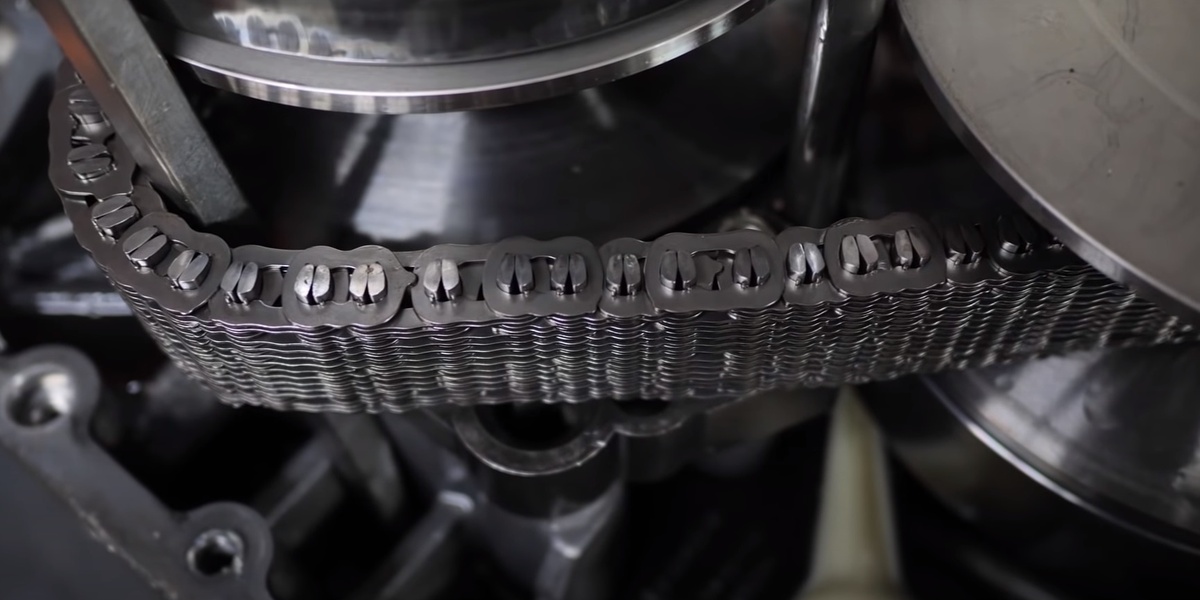
In 1958 DAF introduced the Variomatic, one of the first mass-market continuously variable transmissions, and what began as a quirky Dutch innovation has quietly spread into modern passenger cars. Which is better for your daily drive: CVT or the familiar automatic?
CVTs have matured from novelty to a mainstream alternative. This piece explains ten clear benefits that often make a continuously variable transmission the smarter choice for everyday driving, grouped into efficiency, ownership costs, and practical driving advantages.
Efficiency & Performance Advantages

How a transmission uses engine power directly affects fuel use and how a car feels on the road. This category looks at real-world economy, the feel of acceleration, and how CVTs let engines work in their sweet spot more often.
1. Improved Fuel Economy
CVTs often deliver better fuel economy than comparable torque-converter automatics; manufacturers and independent tests commonly report gains in the 4–10% range for gasoline models. That advantage comes from eliminating fixed gear steps and allowing the engine to run at the most efficient RPM for a given demand.
In daily commuting and highway cruising, a few percentage points compound over months and miles, trimming fuel bills. You’ll see this strategy in many Nissan compact models and Subaru choices, and in hybrids—Toyota’s eCVT logic plays a big role in the Prius’ high MPG.
2. Smoother, Shiftless Acceleration
A CVT provides seamless, continuous acceleration without discrete gear jumps, so you feel fewer jolts when merging or leaving a light. That smoothness improves comfort in stop-and-go traffic and makes low-speed traction modulation easier, which riders and taxi drivers appreciate.
Owners of Nissan Rogues and Corolla models with CVTs often comment on the lack of shift clunks during urban driving—you’ll notice fewer jolts during merges and lane changes.
3. Optimal Engine RPM and Powerband Use
Because a CVT decouples engine speed from wheel speed, the engine can stay at the RPM that best balances power and efficiency instead of jumping between gear ratios. That means the drivetrain can hold the engine near peak torque during acceleration or keep revs low while cruising.
That behavior helps small turbo engines maintain usable boost and gives hybrids the freedom to blend electric and gasoline power more smoothly—eCVT systems use the same principle to decouple speeds for efficiency and drivability.
4. Compact Packaging and Weight Benefits
CVTs avoid the multiple planetary gearsets common to modern automatics, which often have 6–10 speeds. Fewer discrete gearsets and a pulley-based layout can save space and simplify transverse-engine packaging in compact cars.
That packaging advantage helps designers fit engines and hybrid hardware in tight engine bays and can slightly reduce weight versus a complex multi-speed automatic—one reason CVTs are common in front-wheel-drive compacts from Nissan and Subaru.
Cost, Maintenance, and Longevity Advantages

This section covers total cost of ownership, service patterns, and how CVTs hold up over time. There are trade-offs—CVTs need their own fluids and attention—but those differences are manageable when owners follow OEM guidance.
5. Potential Lower Initial Manufacturing Cost for Small Cars
For many economy-focused models, CVTs can be less expensive to produce because they cut complex planetary gearsets and reduce part counts. That manufacturing simplicity helps automakers meet price and fuel-economy targets on entry-level trims.
Nissan has long deployed CVTs across its compact lineup to balance production cost and efficiency, making the transmission a practical choice where price sensitivity matters most.
6. Distinct But Manageable Maintenance Needs
CVTs require specialized transmission fluid and sometimes unique filters, but service intervals tend to be predictable. Many OEMs recommend CVT fluid changes in the roughly 30,000–60,000 mile range depending on duty cycle and model.
Following the owner’s manual and using approved fluids reduces the chance of expensive repairs; owners should avoid generic aftermarket fluids unless the maker lists them as acceptable.
7. Longevity Benefits in Urban Driving
CVTs can be especially durable in city driving because they eliminate repeated torque-converter clutch engagements and the wear associated with gear teeth meshing during frequent shifts. Fewer mechanical shock events can translate to gentler wear patterns in stop-and-go cycles.
That trait is one reason fleets and ride-hailing operators favor CVT-equipped compacts for urban routes, provided maintenance schedules are observed.
Driving Experience, Practicality & Environmental Benefits

Smoother acceleration and better fuel economy feed directly into lower emissions and easier hybrid control. This category highlights emissions benefits, hybrid compatibility, and how software keeps CVTs flexible for future updates.
8. Tangible Emissions Reductions
Lower fuel consumption from a CVT usually means proportionally lower CO2 — roughly speaking, a 5% fuel saving implies about a 5% reduction in tailpipe CO2. Using the 4–10% fuel-economy range shows how small improvements stack across a fleet.
When a large number of compact cars each trim a few percent of fuel use, manufacturers and fleet managers find it easier to meet regulatory and corporate average fuel economy goals.
9. Better Fit for Hybrids and Small Turbos
CVT architectures and eCVT variants pair naturally with hybrids and small-displacement turbo engines. Toyota introduced the Prius and its eCVT-based hybrid system in 1997, and that control logic has guided hybrid drivability ever since.
In practice, CVTs make blending electric and gasoline power smoother and let small turbo engines stay in an effective RPM window, improving everyday drivability in compact models.
10. Software-Controlled Behavior and Future-Proofing
Modern CVTs are heavily software-driven, so manufacturers can tune throttle response, introduce simulated gear steps, and adjust economy maps via firmware. That electronic control supports drive modes like Eco or Sport and adaptive learning over a vehicle’s life.
Software-driven calibration also makes it easier to integrate transmission behavior with advanced driver aids and, in some cases, to refine the driving experience through updates during a product cycle.
Summary
The DAF Variomatic of 1958 started a long arc that now places CVTs in mainstream compacts, hybrids, and many small-engine cars. Below are the key takeaways to keep in mind when you compare CVT and traditional automatics.
- Typical fuel-economy gains of roughly 4–10% for comparable gasoline models translate to proportional CO2 reductions and meaningful savings over time.
- CVTs give smoother, shiftless acceleration and keep the engine in optimal RPM bands, which improves comfort and small-engine drivability.
- Maintenance is different but predictable: many makers recommend CVT fluid service in a 30,000–60,000 mile window—follow the owner’s manual and approved fluids.
- CVTs are especially well suited to hybrids and small turbocharged engines (e.g., Toyota’s eCVT approach dating back to the Prius in 1997) and help manufacturers meet economy targets.
- Try a test drive in a CVT-equipped car to judge the feel yourself, and check your OEM service schedule before you buy.
Other Comparisons

Marco Delantero
More from Marco DelanteroHow we reviewed this article
This article was researched against manufacturer records and editorially reviewed before publishing. We accept no payment for coverage. Some guides contain affiliate links; see our affiliate disclosure.