The spec pages will tell you the 2019 Model S Long Range did 370 EPA miles. They won’t tell you that the Model S you’re looking at on Autotrader right now probably shows 330 on a full charge, that the Autopilot hardware in some 2019 cars can’t run current Full Self-Driving software, or that the cheapest 2019 Tesla worth owning isn’t the one most buyers chase. That’s the stuff that decides whether you’ve found a deal or a money pit.
2019 was a pivotal year for Tesla. The Model 3 had just gone mainstream, the Standard Range Plus arrived to hit that long-promised affordable price, and the Model S and X got the more efficient Raven powertrain mid-year. Three model lines, a dozen-plus trim variations, and a used market where prices have fallen hard. Here’s the whole lineup in one place, with a buyer’s eye on what actually matters six years later.
Table of Contents
- TL;DR: The Quick Verdict
- 2019 Tesla Lineup at a Glance
- 2019 Tesla Model 3
- 2019 Tesla Model S
- 2019 Tesla Model X
- Battery Degradation: What to Expect
- Autopilot vs. FSD: The Hardware Trap
- What to Inspect Before You Buy
- Which 2019 Tesla Is the Smart Buy?
TL;DR: The Quick Verdict
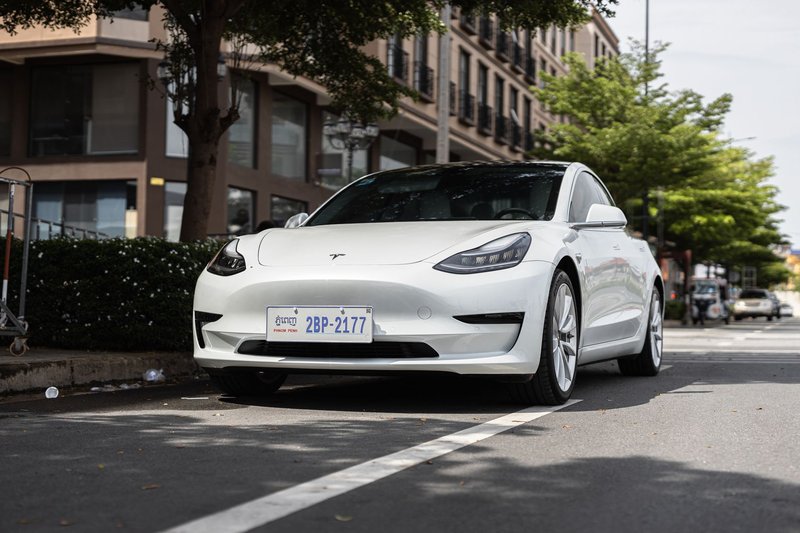
- Best overall used buy: 2019 Model 3 Long Range AWD. It’s the cheapest to run, the easiest to service, holds range well, and most cars have the newer HW3 Autopilot computer (or a free upgrade if FSD was bought). Expect roughly $16,000–$22,000 today.
- Best value-per-dollar luxury: 2019 Model S Long Range (Raven, built mid-2019 on). Big range, fast, and depreciation has done the hard work for you. Watch for the older HW2.5 computer and pricier repairs.
- Only buy if you need the seats: 2019 Model X. Falcon doors and seven seats are the whole point — they’re also the thing most likely to need expensive repair.
- Universal rule: range loss of 5–10% from new is normal and fine. More than 15% is a negotiating point or a walk-away.
2019 Tesla Lineup at a Glance
The portals cover these one model at a time. Here they are side by side.
| Model / Trim | EPA Range | 0–60 mph | Battery | Price When New | Typical Used Price (2026) |
|---|---|---|---|---|---|
| Model 3 Standard Range Plus | 240 mi | 5.3 s | ~54 kWh | $39,500 | $14,000–$18,000 |
| Model 3 Long Range AWD | 310 mi | 4.4 s | ~75 kWh | $47,000 | $16,000–$22,000 |
| Model 3 Performance | 310 mi | 3.2 s | ~75 kWh | $56,000 | $20,000–$26,000 |
| Model S Long Range (Raven) | 370 mi | 3.7 s | 100 kWh | $80,000 | $24,000–$32,000 |
| Model S Performance | 345 mi | 2.4 s | 100 kWh | $100,000+ | $30,000–$42,000 |
| Model X Long Range (Raven) | 325 mi | 4.4 s | 100 kWh | $85,000 | $30,000–$40,000 |
| Model X Performance | 305 mi | 2.7 s | 100 kWh | $105,000+ | $36,000–$48,000 |
Used prices vary a lot by mileage, battery health, and whether Full Self-Driving was purchased (FSD adds value and, in some cases, transfers with the car). Treat these as ranges, not quotes.
Two things jump out. First, the depreciation is brutal in the buyer’s favor — a Model S that stickered north of $80,000 now trades for the price of a base Camry. Second, the Model 3 barely depreciated by comparison, because it’s the one most people actually want to own day to day.
2019 Tesla Model 3
The Model 3 is the car that made Tesla a real automaker instead of a niche toymaker, and 2019 is the year the lineup settled into the version most people recognize. It also landed in one of the busiest model years of the decade — our rundown of the 2019 car models shows just how crowded the field was when the Model 3 went mainstream. Three trims to know.
Standard Range Plus was the headline — the “$35,000 Tesla” finally, sort of, arrived (it launched at $35K then quietly settled around $39,500). 240 miles of range, rear-wheel drive, and a single motor. It’s the cheapest way into a Tesla today and genuinely fine for commuting. The catch: rear-wheel drive plus instant torque is a handful in snow without good tires.
Long Range AWD is the sweet spot. 310 miles, dual motors, and the powertrain that ages best of the three. It’s the one to buy.
Performance adds the track-mode hardware, bigger brakes, and a 3.2-second 0–60. Fun, but you pay for it twice — once at purchase, again in tire wear.
A few 2019-specific notes. Early 2019 build quality was inconsistent — panel gaps and paint complaints were real, and they show up in owner reviews that still average around 4.2 out of 5 on Cars.com. Cars built later in the year generally got tighter. The Model 3 also earned a 5-star overall NHTSA rating, which the EV’s low center of gravity helps with in a real, physical way.
2019 Tesla Model S
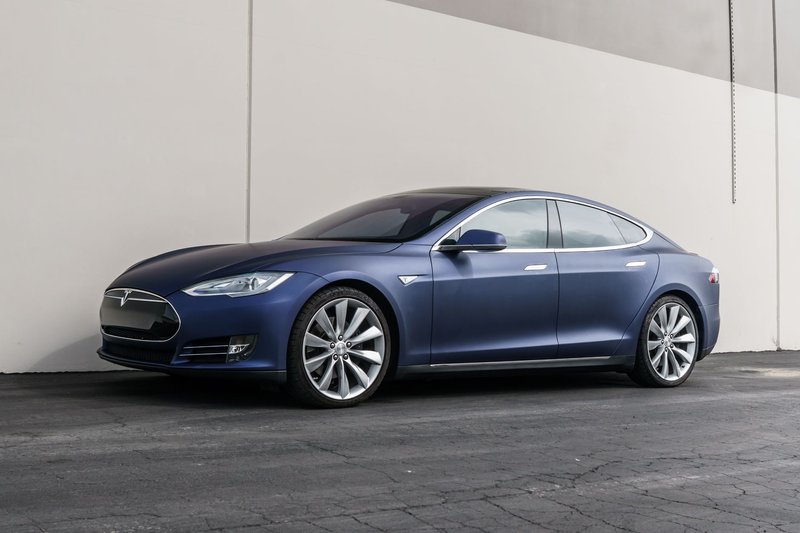
This is where depreciation gets interesting. The 2019 Model S launched in the $80,000–$135,000 range and now trades for a fraction of that. If you want the most car-for-money in the used Tesla market, this is it — with asterisks.
Mid-2019 brought the Raven update: a new permanent-magnet front motor (borrowed from the Model 3’s efficiency playbook), an adaptive air suspension, and a real range jump to 370 miles for the Long Range. A Raven car is meaningfully better than an early-2019 build, so the production date matters more here than on any other 2019 Tesla. Check the build date on the door jamb or in the car’s software — roughly April 2019 onward gets you Raven.
The Model S Performance with Ludicrous mode does 0–60 in 2.4 seconds, which is still genuinely quick by 2026 standards. But the reason to buy a used S isn’t the launch — it’s that you get a 370-mile luxury sedan for Model 3 money. It’s worth remembering how it stacked up against its contemporaries; against the rest of the 2010s luxury cars it competed with, the Model S was the rare one that paired traditional luxury with genuine performance. The trade-off is repair cost. Suspension, the big glass roof, and the 17-inch screen’s eMMC memory chip (a known failure point on older cars) all cost more to fix than anything on a Model 3.
2019 Tesla Model X
The Model X is the polarizing one. Seven seats, falcon-wing rear doors, and the same 100 kWh battery and Raven powertrain as the S. The 2019 Long Range does 325 miles; the Performance hits 60 in 2.7 seconds while carrying a family of seven, which remains a slightly absurd party trick.
Buy a Model X for one reason: you need three rows and you want them in an EV that was, in 2019, basically the only game in town. The falcon doors are the headline and the liability — the sensors, actuators, and seals that make them open over a curb or in a tight garage are also the parts most likely to need service. A used X with documented, recent door repairs is a better buy than one where everything is suspiciously original.
If you don’t specifically need the seats or the doors, the Model S gives you the same powertrain, more range, and fewer things to break, for less money.
Battery Degradation: What to Expect
This is the question every used-EV buyer should ask and most spec sheets won’t answer. Six years on, what’s left in the pack?
The good news: Tesla packs hold up well. Real-world data and owner trackers consistently show most 2019 cars retaining around 88–93% of original range after typical mileage, with the steepest loss happening in the first year and then flattening out. A 2019 Long Range Model 3 that showed 310 miles new might honestly show 285–295 today. That’s normal. The U.S. EPA notes that modern EV batteries are designed to outlast the useful life of the vehicle for most owners, and Tesla’s data has broadly borne that out.
How to read a specific car: charge it to 100% (or have the seller do it before you arrive) and look at the rated miles displayed. Compare that to the original EPA figure for the trim. Down 5–10%? Fine, expected. Down 15% or more, especially on lower mileage, suggests harder use — frequent Supercharging, lots of 100% charges, hot-climate baking — and it’s either a price negotiation or a reason to keep looking.
Also worth knowing: 2019 cars are at the tail end of Tesla’s 8-year battery warranty (8 years / 100,000–150,000 miles depending on model, with a 70% capacity retention guarantee). Check the in-service date — some cars still have a year or two of pack coverage left.
Autopilot vs. FSD: The Hardware Trap
Here’s the detail that trips up first-time Tesla buyers, and it’s specific to this era.
2019 cars shipped with one of two Autopilot computers: HW2.5 or HW3 (also called the FSD Computer). HW3 started rolling out in 2019, so a 2019 Tesla could have either. This matters because the newer driver-assist features and the “Full Self-Driving” software require HW3. A car with HW2.5 can’t run them, full stop.
The wrinkle: if the original owner paid for Full Self-Driving, Tesla provides the HW3 upgrade free. If they didn’t, the car keeps HW2.5. So when you’re shopping, you’re really asking two questions — does this car have HW3, and does it have the FSD software capability included?
Standard Autopilot (adaptive cruise + lane keeping) came on essentially all 2019 cars and works fine on either computer. Enhanced Autopilot / FSD is the paid tier, and its value to you depends entirely on the hardware. Don’t pay a Model-S-with-FSD premium for a car that turns out to be HW2.5 without the software. Confirm it in the car’s software menu before money changes hands.
What to Inspect Before You Buy
A used Tesla checklist looks different from a used gas car. Skip the oil-leak inspection; focus on these.
- Battery health — full charge, read the rated miles, compare to original EPA. (See above.)
- Autopilot hardware — HW2.5 vs HW3, and whether FSD capability is included. Check the software menu.
- The big screen — on Model S/X especially, tap through menus and watch for lag, yellow screen-edge banding, or a slow boot. The older eMMC memory issue lives here.
- Door and frunk alignment — early Model 3 panel gaps; Model X falcon-door operation (open and close them several times, listen for grinding).
- Tire wear — Performance trims and AWD cars eat tires; uneven wear hints at alignment or hard driving.
- Charge port and cable — confirm it Superchargers without faulting, and that the mobile connector is included.
- Service history in the app — Tesla logs service to the VIN; a clean, documented history is gold.
One more: confirm the car’s connectivity and account status will transfer cleanly. A car still linked to the previous owner’s Tesla account is a headache you can avoid by sorting it at sale.
Which 2019 Tesla Is the Smart Buy?
If you want one answer: the 2019 Model 3 Long Range AWD. It’s the cheapest to insure and service, it holds range and value better than the S or X, most are running newer hardware, and there’s simply less to go wrong. For a daily driver, nothing in the 2019 lineup beats it on cost-of-ownership.
If you want the most car your money can buy and you’ll tolerate higher repair bills, the 2019 Model S Long Range Raven is the steal of the bunch — a 370-mile luxury EV for the price of a modest commuter car. Just insist on a Raven build and budget for the occasional expensive fix.
And the Model X is a need-based purchase. Three rows and falcon doors, or skip it. Pay for those features only if they solve a real problem, because they’re also the features most likely to cost you later.
Across all three, the 2019 model year sits in a sweet spot: old enough that someone else ate the depreciation, new enough to have modern range and (often) modern hardware. Buy the battery and the computer, not the badge — and you’ll get one of the best EV deals on the used market.

Marco Delantero
More from Marco DelanteroHow we reviewed this article
This article was researched against manufacturer records and editorially reviewed before publishing. We accept no payment for coverage.