The 1990 Volkswagen lineup is the kind of thing the internet does badly. Search it and you get database grids: a list of names, a column of MSRPs, maybe a placeholder where the photo should be. Nobody tells you that 1990 was a hinge year for VW in America, that the Corrado quietly hid a supercharger, or that the model you can buy cheapest today is the one collectors are now kicking themselves for ignoring.
So here’s the real version. Every car Volkswagen sold in the US for the 1990 model year, what it cost new, what powered it, and where it sits in the collector market three and a half decades later.
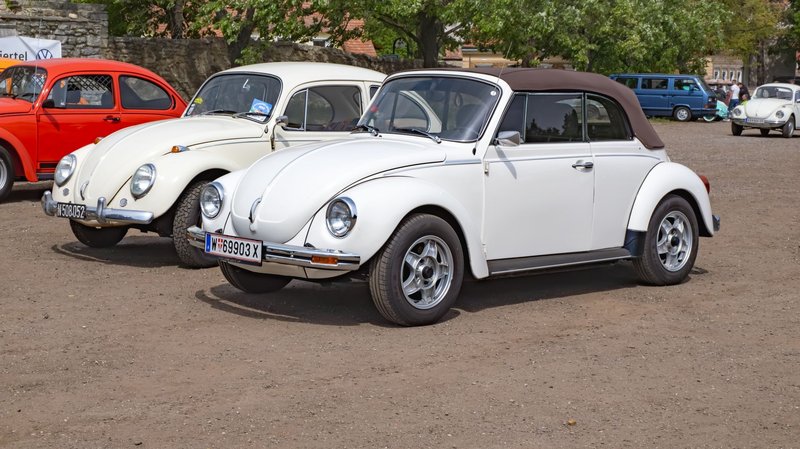
Table of Contents
- The TLDR
- Why 1990 Was a Transition Year
- The Full 1990 VW Lineup
- Corrado
- Golf and GTI
- Jetta
- Passat
- Cabriolet
- Fox
- Vanagon
- Price and Spec Comparison
- Which 1990 VWs Are Collectible Now
- Common Problems to Watch For
The TLDR
VW sold roughly nine distinct models in the US in 1990, spanning from the bargain Fox sedan (around $7,200) up to the Vanagon camper conversions (pushing $18,000). The standouts for enthusiasts: the Corrado G60 (supercharged coupe, the future classic), the GTI 16-valve (the hot hatch everyone loved), and the Vanagon Westfalia (camper money has gone nuts). The Fox and base Golf are the budget entries that still slip under the radar.
If you want one car off this list as a collector buy: the Corrado. If you want one as a usable cheap classic: a clean Mk2 Golf.
Why 1990 Was a Transition Year
Here’s the context the spec sheets skip. In 1990 Volkswagen was straddling two generations. The Golf, GTI, Jetta, and Cabriolet were all riding on the Mk2 (A2) platform that had defined the decade. Meanwhile the larger Passat had just jumped to its all-new B3 generation for 1990 in the US, dropping the old boxy shape for the smooth, grille-less “aero” face. And the Corrado had arrived as a fresh halo coupe.
So a 1990 VW dealership was a snapshot of two eras at once: the tail end of the beloved Mk2 cars and the leading edge of the rounder, more modern 1990s VW design language. That split is exactly why values today are all over the map.
The Full 1990 VW Lineup
Corrado
The Corrado was Volkswagen’s answer to a question nobody quite asked: what if the Scirocco’s replacement was faster, weirder, and more expensive? In 1990 the US car came with the G60, a 1.8-liter four fed by a G-lader scroll-type supercharger making roughly 158 horsepower. The name “G60” comes from that supercharger’s internal geometry, not the displacement.
The party trick was the rear spoiler that deployed automatically above 45 mph and tucked away below it. It looked like a hatchback and drove like something with a chip on its shoulder. New, it ran around $17,900, the most expensive VW car of the year. For a long time the Corrado was the forgotten VW. That’s over.
Golf and GTI
The Golf was the bread and butter, and in 1990 it was the Mk2 in its prime. Base Golfs came with an 8-valve 1.8-liter four, sensible and durable, in two- and four-door bodies starting around $9,000.
The GTI is where it gets interesting. The 1990 GTI offered the 16-valve version of the 1.8, bumping output to roughly 134 horsepower, with the close-ratio gearbox, firmer suspension, and the plaid seats that became a religion. It’s the car that taught a generation of Americans what a hot hatch was supposed to feel like: light, eager, mechanical. It earned its place among the best 1990s hot hatches, the cars that turned a humble body style into a performance icon. The original GTI’s reputation as the template for the segment is well documented in Britannica’s history of the Volkswagen Golf.
Jetta
Take a Golf, add a proper trunk, and you have the Jetta, which by 1990 was outselling its hatchback sibling in the US by a wide margin. Americans wanted the three-box sedan shape, and VW happily sold it to them with the same engine range, from the economy 8-valve up to a GLI trim that borrowed the GTI’s 16-valve heart.
Prices started in the low $10,000s. The Jetta is the quiet survivor of this list: plenty were built, plenty still run, and a clean GLI is a genuinely fun car that costs a fraction of a Corrado.
Passat
The 1990 Passat was the new kid. The B3 generation ditched the front grille entirely, cooling the radiator through a lower intake instead, which gave it that smooth, slightly anonymous nose. It was bigger, more refined, and aimed at families who’d otherwise shop Honda Accord. Sedan and wagon bodies were offered, with a 2.0-liter four, in the mid-teens price-wise.
It’s the least collectible car here, which is exactly why a good wagon is a sleeper for someone who wants a usable, comfortable classic that nobody else is bidding on.
Cabriolet
The Cabriolet is a time capsule. While the rest of the range moved forward, the convertible soldiered on using the first-generation (Mk1) Rabbit body, with its padded roll bar and chunky proportions, well into 1990. That body traced straight back to the 1980s hatchbacks that built VW’s reputation in the segment, which is exactly why it felt like a holdover by 1990. It had been in production essentially unchanged for years, and buyers loved it for exactly that. Powered by the 1.8-liter four, it sat around $15,000, premium money for an old design that refused to die.
Fox
The Fox was the cheap one. Built in Brazil and sold to undercut the Japanese economy cars, it came as a two-door, four-door, and a station wagon, with a 1.8-liter four and almost nothing else. Sticker prices started around $7,225, the bargain basement of the 1990 VW catalog.
It was never glamorous and it isn’t now, but the Fox wagon has a small, devoted following for its honest simplicity. The EPA’s fuel economy records still list the whole 1990 VW range if you want to compare period mileage figures.
Vanagon
The Vanagon closed out the lineup, the last of the rear-engine VW vans before the front-engine EuroVan took over. In 1990 it ran a 2.1-liter water-cooled flat-four (the “Wasserboxer”) mounted in the back. You could get it as a passenger Vanagon, a GL, or the holy grail Westfalia camper with the pop-top, fold-out bed, sink, and fridge.
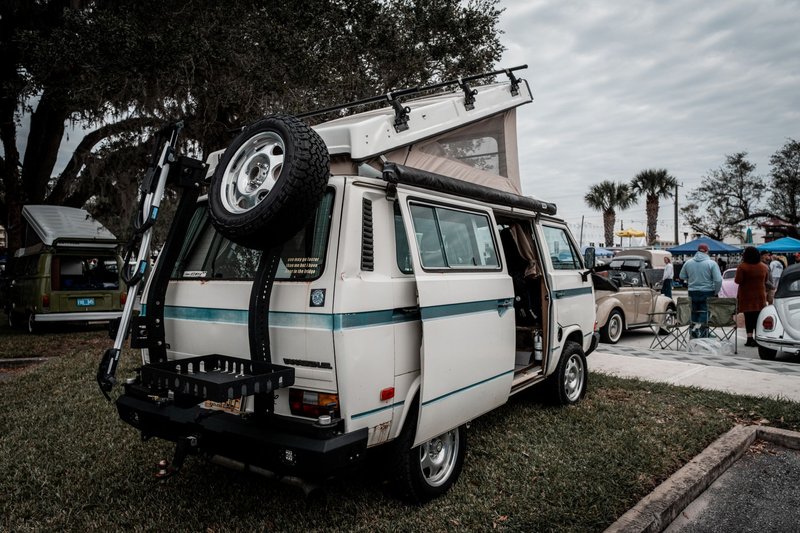
The commercial van version, built on the same platform, rounded out the roster. Camper-spec Vanagons were the most expensive vehicles VW sold in the US that year, and today they’re the runaway value champions of this entire list.
Price and Spec Comparison
| Model | Body Style | Engine | Approx. HP | MSRP (new) |
|---|---|---|---|---|
| Fox | Sedan / Wagon | 1.8L I4 8v | ~81 | ~$7,225 |
| Golf | Hatchback | 1.8L I4 8v | ~100 | ~$9,000 |
| GTI | Hatchback | 1.8L I4 16v | ~134 | ~$11,500 |
| Jetta | Sedan | 1.8L I4 8v/16v | ~100–134 | ~$10,500 |
| Cabriolet | Convertible | 1.8L I4 | ~94 | ~$15,000 |
| Passat | Sedan / Wagon | 2.0L I4 | ~134 | ~$14,800 |
| Corrado G60 | Coupe | 1.8L I4 supercharged | ~158 | ~$17,900 |
| Vanagon | Van / Camper | 2.1L flat-4 | ~95 | ~$15,000–$17,900 |
Figures are approximate; trim and option packages moved real-world prices and output around.
Which 1990 VWs Are Collectible Now
The market has sorted these cars into clear tiers.
Rising hard: The Corrado G60 is the obvious one. It was misunderstood when new and overlooked for two decades, which means survivors are thin on the ground and prices for clean, unmolested cars have climbed steadily. The supercharger and the trick spoiler give it a story collectors like to tell.
Already expensive: The Vanagon Westfalia broke away from the rest of the van market years ago. The camper boom plus a finite supply of pop-tops pushed good examples into territory that would have stunned a 1990 buyer. A well-kept Westfalia is no longer a cheap weekend project.
Underrated and climbing: The GTI 16-valve rides the wider Mk2 hot-hatch wave. Clean ones are getting harder to find as enthusiasts pull them off the road and restore them.
Still affordable: Base Golfs, Jettas, the Fox, and the Passat remain reachable. If you want a 1990 VW to actually drive without remortgaging anything, this is where you shop. The Jetta GLI in particular gives you most of the GTI experience for less attention and less money.
Common Problems to Watch For
Before you buy any 1990 VW, know where they rot and where they leak.
- Rust is the killer on the Mk2 cars: check the rear wheel arches, the bottoms of the doors, the battery tray, and the area under the windshield. Surface rust is annoying; structural rust ends projects.
- Vanagon Wasserboxer engines are notorious for head gasket and coolant issues. A van that’s overheated and warped its heads is a money pit. Ask for cooling-system history and watch the temperature gauge on a test drive.
- Corrado G60 superchargers need periodic rebuilds; a neglected G-lader can self-destruct. Find out when it was last serviced.
- Electrical gremlins are common across the range as wiring and connectors age. Test every window, every gauge, every light.
- Interior plastics and Cabriolet tops get brittle. Replacement trim for the older designs can be hard to source.
None of this should scare you off. These are simple, mechanical cars by modern standards, and parts support from the VW enthusiast community is genuinely excellent. Buy the cleanest, least-rusty example you can find, and the 1990 Volkswagen you pick will reward you far more than its database-grid reputation suggests.

Marco Delantero
More from Marco DelanteroHow we reviewed this article
This article was researched against manufacturer records and editorially reviewed before publishing. We accept no payment for coverage.