The mid-1970s saw McLaren juggling formula and oval racing, with engineering choices driven by very different track demands. That mix of short courses and high-speed ovals produced a small but distinct set of cars that still interest historians and enthusiasts.
There are 2 1975 McLaren Car Models, ranging from M16E,M23. For each entry, the data is organized with Role,Year(s),Key specs (engine cc, power hp) so you can quickly compare purpose, production span and basic performance figures—you’ll find below.
What are the main differences between the M16E and the M23?
The M16E was developed for Indy-style racing with chassis and aero tuned for high-speed ovals and typically used engines and setups suited to that environment, while the M23 was McLaren’s Formula One contender with a different chassis geometry, suspension and aerodynamic package aimed at road circuits. In short: different series, different design priorities, and therefore different handling and power delivery characteristics.
How do I interpret the Role, Year(s), and Key specs columns?
Role indicates the intended competition or function (e.g., Indycar, Formula One), Year(s) gives the model’s active seasons, and Key specs lists engine displacement and approximate power in the format (engine cc, power hp), letting you compare raw performance potential at a glance.
1975 Mclaren Car Models
| Model | Role | Year(s) | Key specs (engine cc, power hp) |
|---|---|---|---|
| M23 | Formula One | 1973–1978 | 2,993 cc, 490 hp |
| M16E | IndyCar / USAC | 1975–1976 | 2,650 cc, 900 hp |
Images and Descriptions
M23
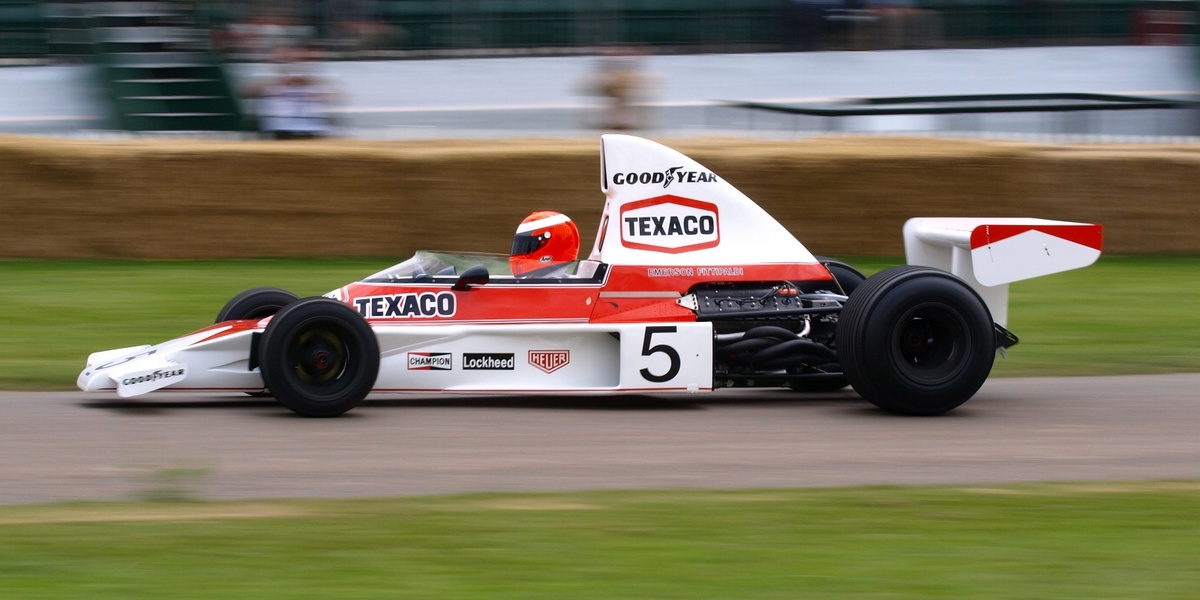
The legendary M23 was McLaren’s F1 entry for 1975. Piloted by Emerson Fittipaldi and Jochen Mass, the reliable Cosworth-powered car was a front-runner all season, with Fittipaldi finishing a close second in the World Drivers’ Championship, securing the team’s top-tier status.
M16E
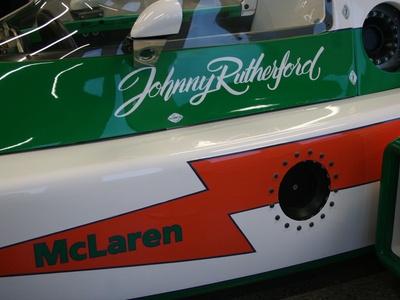
An evolution of the Indy 500-winning M16, the M16E was the works team’s 1975 entry in the USAC Championship. With Johnny Rutherford at the wheel, its powerful turbocharged Offenhauser engine carried it to second place at the Indianapolis 500, continuing McLaren’s American dominance.