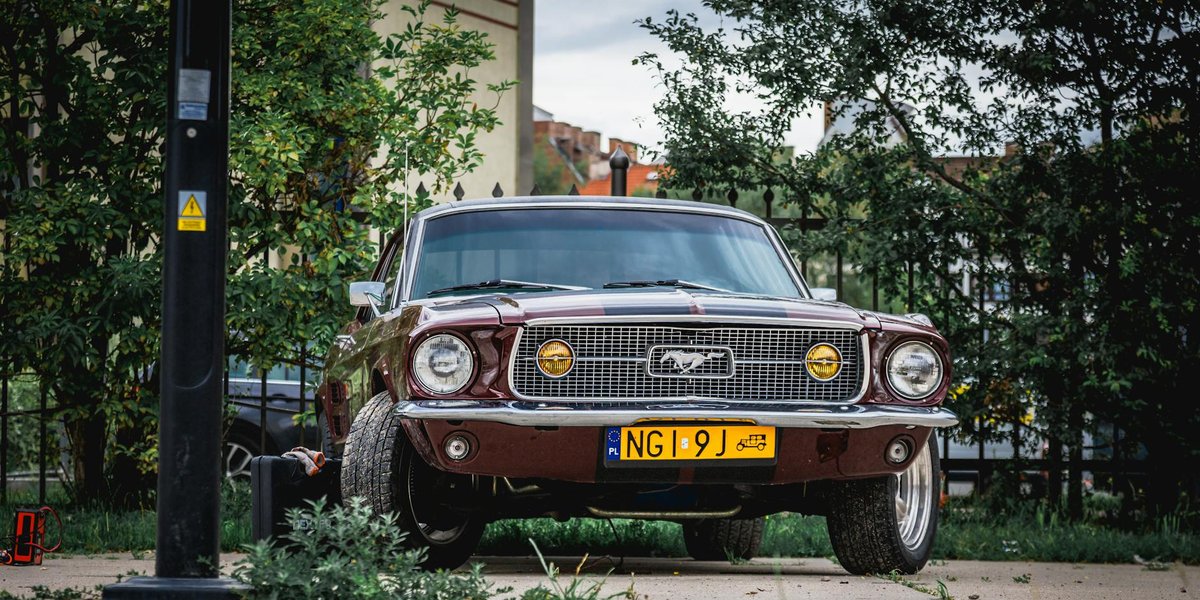
If you typed “1967 Mustang car models” into a search bar, you got two completely different worlds back: real cars worth six figures at auction, and plastic AMT kits worth twelve bucks. This is about the real cars. If you’re here for diecast, this isn’t your page — but if you want to actually understand what Ford built in 1967 and how to tell a genuine GT from a tarted-up base coupe, keep reading.
1967 was the year the Mustang grew up. The body got wider, the nose got meaner, and for the first time the engine bay could swallow a big-block. Ford moved 472,121 of them, and underneath that single nameplate sits a surprisingly deep menu of body styles, trim levels, and special editions — most of which the average “spec sheet” page lumps together and gets wrong.
Table of Contents
- The Quick Version
- Three Body Styles
- The Trim Levels: Base, GT, GTA, Sports Sprint
- The Shelbys: GT350 and GT500
- Regional Specials Nobody Catalogs Properly
- Engine Options at a Glance
- The Full Lineup, Ranked by Rarity and Value
- How to Spot a Real GT From a Clone
- Which 1967 Mustang Is Right for You
The Quick Version
There are really three things going on in 1967, and once you separate them the whole lineup makes sense:
- Body style — hardtop coupe, fastback (Ford called it the “2+2”), or convertible. Every Mustang is one of these three shells.
- Trim/option package — base, the GT equipment group, the GTA (a GT with an automatic), and the dealer-driven Sports Sprint promotion. These are option packages layered onto a body style, not separate cars.
- Shelby — the GT350 and GT500 are Mustang fastbacks rebuilt by Shelby American into something else entirely, with their own VINs and fiberglass.
So a “1967 Mustang GT fastback” is a fastback body with the GT package bolted on. A “1967 Shelby GT500” is a different animal sold through a different channel. Hold those two ideas apart and you’ll never get confused again.
Three Body Styles
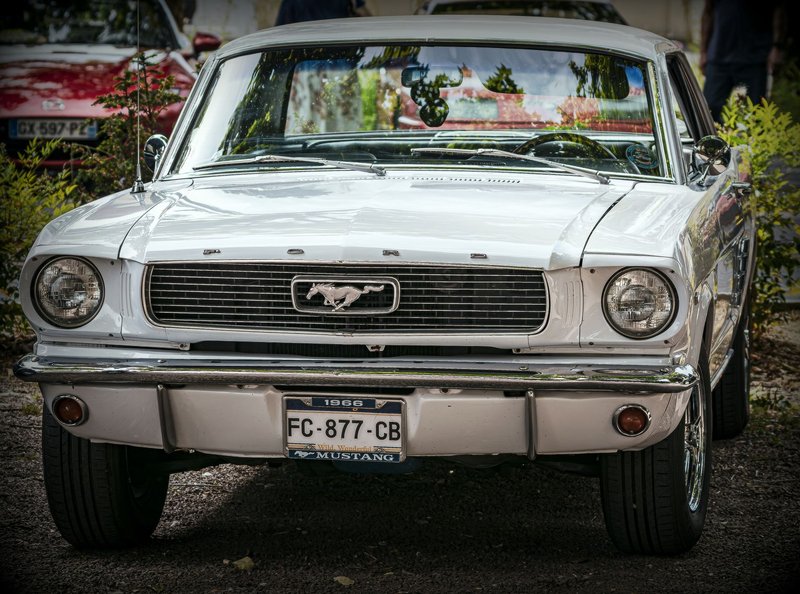
Every 1967 Mustang starts life as one of three shells, and the body style does more to set the price and the vibe than almost anything else.
Hardtop coupe. The volume seller by a mile — well over 350,000 of the year’s production. Notchback roofline, formal rear window, the shape most people picture when they hear “Mustang.” It’s the most affordable to buy today precisely because Ford made so many, which makes a base hardtop the smart entry point for a first classic.
Fastback (the “2+2”). The sloping roofline that runs unbroken from the windshield to the tail. This is the body Bullitt made famous (the movie car was a ’68, but the shape is shared), and it’s the one collectors chase hardest. Far fewer were built than hardtops, and the fastback is the only body Shelby would touch — so the silhouette carries a premium before you even get to the engine. The shape also earned the Mustang a permanent spot among the most iconic sports cars of the 1960s, which is part of why values have never really cooled.
Convertible. Power top, the open-air option, and the second-rarest of the three. Convertibles command strong money in clean condition, though a fastback in the same trim will usually out-value a ragtop today because of the racing pedigree attached to the roofline.
The Trim Levels: Base, GT, GTA, Sports Sprint
Here’s where the catalog pages tend to fall apart. These aren’t separate models — they’re option groups, and the difference between a base car and a GT is a checkbox at the dealer.
Base Mustang. A base hardtop started at $2,461. You got the 200-cubic-inch straight-six standard, with the 289 V8 available. Nice car, no pretensions. This is most of the 472,121.
GT Equipment Group. The performance dress-up package. Order the GT and you got the dual exhaust with bright trumpet tips, the fog lamps in the grille, GT badging and rocker stripes, a quicker steering ratio, power front disc brakes, and the upgraded suspension. Critically, the GT package required a four-barrel V8 — the 289 Hi-Po, the 390 big-block, or the like. No six-cylinder GTs exist from the factory, which is the first thing to remember when somebody’s selling you one.
GTA. This one trips people up constantly. The GTA is simply a GT ordered with the SelectShift Cruise-O-Matic automatic transmission — the “A” stands for automatic. It’s a 1967-only designation; Ford dropped the GTA badge after this single year. So if you see a 1967 GTA, that’s correct and period-accurate. If someone shows you a 1968 “GTA,” walk away.
Sports Sprint. A mid-year value promotion, not a performance trim. Ford bundled popular options — chrome air cleaner, whitewalls, wheel covers, and on V8 cars a hood with integrated turn-signal indicators — at a discount to move spring inventory. It’s an appearance-and-value package, and surviving documented Sports Sprints are a fun footnote for collectors who like the deep cuts.
The Shelbys: GT350 and GT500
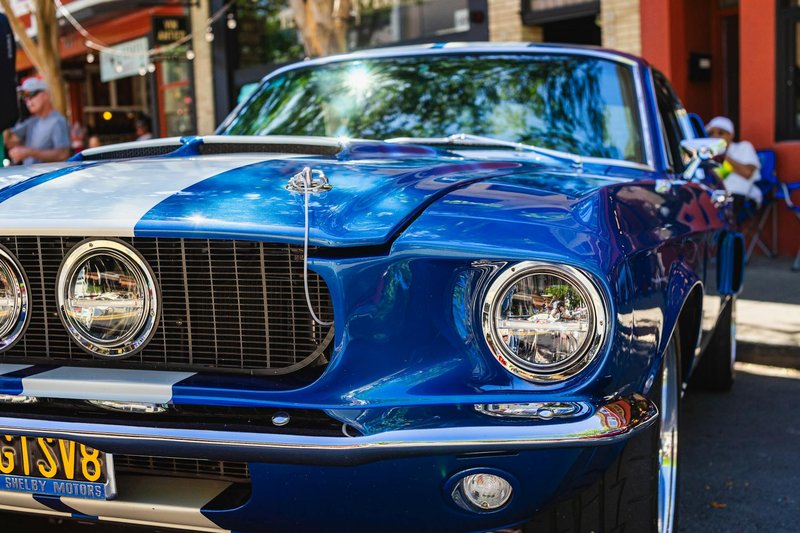
Carroll Shelby took 1967 fastbacks and turned them into the hottest Mustangs of the year. Both Shelbys wore unique fiberglass — a longer nose, a bigger grille opening, functional hood scoops, and those signature high-mounted taillights pulled from the Mercury Cougar parts bin. They got their own serial numbers and were sold as Shelbys, not Fords.
Shelby GT350. The continuation of the small-block screamer. Power came from the 289 High Performance V8, the “K-code” engine, rated at 306 horsepower with a four-barrel. The GT350 is the lighter, more nimble, more track-honest of the two — the one purists tend to prefer for how it drives rather than how it accelerates in a straight line.
Shelby GT500. The big one, new for 1967. Shelby dropped in the 428 FE big-block — a “Police Interceptor”-derived V8 conservatively rated at 355 horsepower (real-world output was higher). The GT500 was the most expensive Mustang you could buy, listing around $4,195 against that $2,461 base hardtop. It’s heavier and more of a boulevard bruiser than the GT350, and it sits comfortably alongside the most iconic muscle cars of the 1960s when the bidding starts — it’s the 1967 Shelby that brings the biggest numbers today. (One particular ’67 prototype, the “Little Red” coupe, became one of the most valuable Mustangs ever after being rediscovered — proof of how seriously this corner of the market takes provenance.)
For documented production figures and chassis histories, the Shelby American Automobile Club registry is the authority enthusiasts actually trust over generic spec sites.
Regional Specials Nobody Catalogs Properly
This is the part most “1967 Mustang models” articles skip entirely, and it’s the most interesting corner of the year. Ford’s regional sales districts created their own special editions to move metal in specific markets. They’re rare, poorly documented, and exactly the kind of thing that separates a real enthusiast from someone reading a spec table.
- High Country Special. Built for the Denver sales district (Colorado, Wyoming, Montana). It came with special “High Country Special” badging and was offered in a set of exclusive paint colors — Columbine Blue, Aspen Gold, and Timberline Green. These trace back to the earlier “Ski Country” Special promotion in the same region.
- California Special (GT/CS). The 1967 cars set the stage, but the famous California Special — with its Shelby-style fiberglass rear and side scoops — became a full production run the following year. The ’67 groundwork is why Mustang people argue about whether to count it here at all.
- Lone Star Limited. A Texas-district promotion, badged for the local market and built in tiny numbers.
- Stallion. Another regional appearance package layered onto base cars, scarce enough that most owners don’t realize what they have.
Because these were district-level promotions rather than national models, documentation is thin and reproduction is easy — which means a verified regional special with paperwork is worth far more than the same car with a swapped-on badge.
Engine Options at a Glance
The 1967 engine bay was the big news, literally — it was reworked to accept Ford’s FE big-block for the first time. Here’s the menu:
| Engine | Type | Horsepower | Found in |
|---|---|---|---|
| 200 cu in | Inline-six | ~120 hp | Base cars |
| 289 cu in 2V | V8 | ~200 hp | Base / optional |
| 289 cu in 4V | V8 | ~225 hp | Optional, GT-eligible |
| 289 Hi-Po (K-code) | V8 | 271 / 306 hp | GT, Shelby GT350 |
| 390 cu in FE | Big-block V8 | ~320 hp | GT, top Mustang option |
| 428 cu in FE | Big-block V8 | 355 hp (rated) | Shelby GT500 only |
The 390 was the hottest engine you could order in a regular Mustang GT. The 428 lived only in the Shelby GT500. That single fact resolves half the misidentified cars on the market.
The Full Lineup, Ranked by Rarity and Value
Nobody puts all of this in one scannable place, so here it is — roughly ordered from most attainable to most collectible. Values move with condition, documentation, and the auction calendar, so treat this as a hierarchy, not a price guide.
| Model | What it is | Collectibility |
|---|---|---|
| Base hardtop, six-cylinder | Entry-level commuter classic | Most affordable — great first classic |
| Base hardtop / convertible, 289 V8 | Driver-grade Mustang | Accessible, easy to own |
| Sports Sprint | Mid-year value-option package | Niche; documentation matters |
| GT / GTA hardtop | GT package, notchback | Strong, especially with a 390 |
| GT / GTA convertible | Open-air GT | Higher — ragtop premium |
| GT fastback (390) | The collector sweet spot | High — body + big-block |
| Regional special (verified) | High Country, Lone Star, etc. | High and climbing with paperwork |
| Shelby GT350 | 289 Hi-Po track car | Blue-chip |
| Shelby GT500 | 428 big-block | Top of the 1967 market |
The pattern is simple: fastback beats hardtop, big-block beats small-block, Shelby beats everything, and documentation beats a clean repaint every single time. It’s also worth understanding where the Mustang sits in the broader hierarchy — the differences between a muscle car and a pony car explain why a small-block GT and a big-block GT500 attract such different buyers.
How to Spot a Real GT From a Clone
GT badges are cheap. A real GT is not. Because the package was a dealer option, cloning a base car into a “GT” is one of the most common moves in the classic Mustang world — so verify, don’t trust the stripes.
Start with the VIN. The fifth character is the engine code, and a genuine GT had to leave the factory with a four-barrel V8 (A, C, K, S, or Z codes depending on the engine). A six-cylinder VIN (T-code) wearing GT badges is a clone, full stop — there is no such thing as a factory six-cylinder GT.
Then check the details that are expensive to fake correctly: dual exhaust with the proper trumpet-style tips, factory power front disc brakes, the grille-mounted fog lamps wired correctly, and the quick-ratio steering. A clone usually gets the badges and stripes right and the hardware wrong.
Finally, ask for the Marti Report. Ford’s production records survive, and Marti Auto Works is the licensed source that will tell you exactly how a given 1967 Mustang left the factory — engine, transmission, options, paint, the works. For any car priced like a real GT or special edition, no Marti Report means no deal. It’s the single best $20–$70 you’ll spend before buying.
Which 1967 Mustang Is Right for You
If you want a first classic you can actually drive and afford, a base 289 hardtop is the honest answer — plentiful, well-supported by parts suppliers, and forgiving of a learning curve. If you want the look most people fall in love with, the fastback is worth the premium. If you’re buying as an investment, the math points at a documented GT fastback, a verified regional special, or a Shelby — and at that level the paperwork matters as much as the metal.
The 1967 Mustang isn’t one car. It’s a body style, an option box, and occasionally a Shelby badge, stacked in combinations that range from “weekend driver” to “auction headline.” Once you can read those three layers separately, you can walk a show field or scroll a listing and know exactly what you’re looking at — and exactly what it should cost.

Marco Delantero
More from Marco DelanteroHow we reviewed this article
This article was researched against manufacturer records and editorially reviewed before publishing. We accept no payment for coverage.