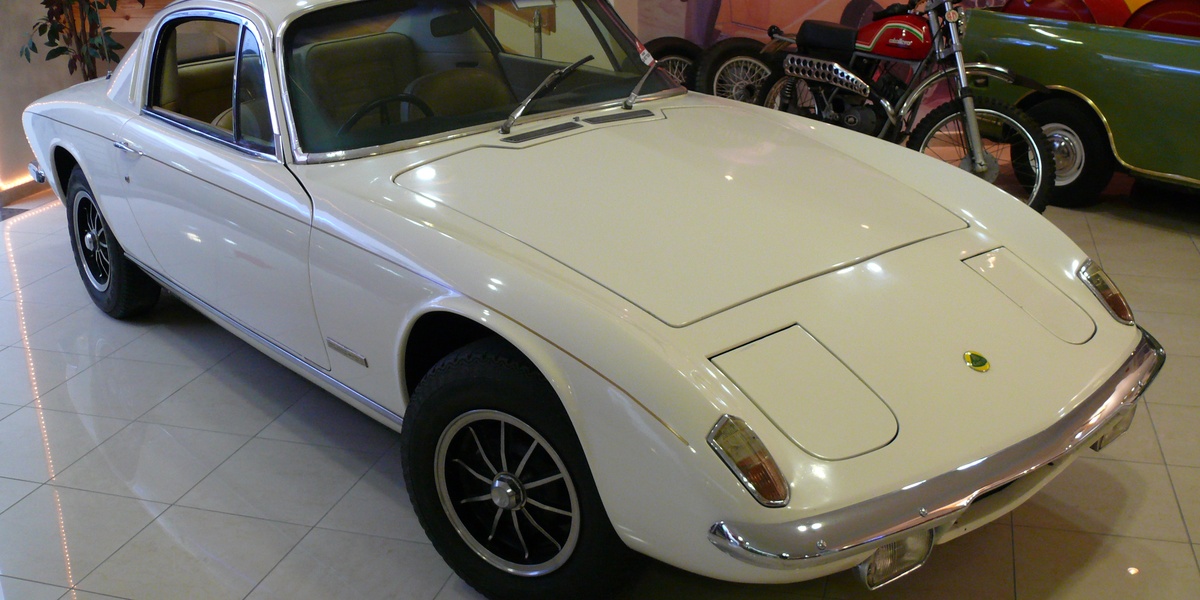
The 1960s were a defining decade for lightweight British sports cars, and Lotus led the way with a string of nimble, race-inspired models that still attract enthusiasts and restorers today. Whether you’re browsing a classic car show or planning a restoration, knowing the model lineup helps you spot rare variants and original specification details.
There are 22 1960s Lotus Car Models, ranging from 18 to Super Seven (factory variants). Each entry below lists Years produced,Type,Engine (cc/cyl) so you can quickly compare production spans, body or chassis type, and original powerplants — you’ll find below.
Which Lotus models from the 1960s are most valuable to collectors?
Values vary by rarity and originality, but early Elans, the Elite, and specific Elan Sprint or Europa variants typically command higher prices; race-prepared versions and low-production specials like the Eleven or early Elan S1 with verified provenance also stand out. Condition, matching numbers, and documented history usually matter more than minor option differences.
How reliable are the years and engine specifications in this list?
The table compiles commonly accepted production years and factory engine specs from period catalogs and marque histories, but restoration updates, later engine swaps, and regional production differences can affect any individual car’s details — always verify with VIN/chassis records or expert appraisal for purchase or restoration work.
1960s Lotus Car Models
| Model | Years produced | Type | Engine (cc/cyl) |
|---|---|---|---|
| Elite (Type 14) | 1960–1963 | Road | 1,216cc I4 |
| Seven | 1960–1969 | Road/Sport | Various I4s, commonly 1,172–1,558cc |
| Elan (Type 26) | 1962–1969 | Road/Sport | 1,558cc I4 |
| Elan +2 | 1967–1969 | Road | 1,558cc I4 |
| Europa (Type 46) | 1966–1969 | Road/Sport | 1,557cc I4 |
| Super Seven (factory variants) | 1960–1969 | Road/Sport | Various I4s, commonly 1,172–1,558cc |
| 47 (Type 47) | 1966–1969 | Race/Group 4 | 1,588cc I4 |
| 18 | 1960–1961 | Race (F1/Junior) | 2,497cc I4 (typical F1 fit) |
| 21 | 1961–1963 | Race (F1) | 1,500cc I4 |
| 24 | 1962–1965 | Race (customer F1) | 1,500cc I4 |
| 25 | 1962–1967 | Race (F1) | 1,494cc V8 |
| 29 | 1963–1963 | Race (Indy) | 4,240cc V8 |
| 32 | 1964–1964 | Race (F2) | 1,500cc I4 |
| 33 | 1964–1967 | Race (F1) | 1,494cc V8 |
| 35 | 1965–1967 | Race (F2/F3) | 1,000–1,600cc I4 range |
| 38 | 1965–1967 | Race (Indy) | 4,240cc V8 |
| 43 | 1966–1967 | Race (F1) | 3,000cc 16‑cyl (BRM H16) |
| 48 | 1967–1968 | Race (F2) | 1,598cc I4 |
| 49 | 1967–1969 | Race (F1) | 3,011cc V8 |
| 56 | 1968–1969 | Race (Indy/Turbine) | Allison gas turbine (turbine) |
| 63 | 1969–1969 | Race (F1/4WD) | 3,011cc V8 |
| 62 (prototype) | 1969–1969 | Prototype/Sports Racer | 2,997cc V8 (typical) |
Images and Descriptions

Elite (Type 14)
Elegant fiberglass-bodied GT introduced in the late 1950s and built into the early 1960s; noted for its lightweight monocoque, refined handling and competition wins in Europe, sold to enthusiasts seeking Lotus style with grand touring comfort.

Seven
The minimalist, kit-friendly lightweight sports car that defined Lotus philosophy in the 1960s; sold worldwide in multiple tune levels and engines, it was a staple of club racing and roadgoing fun with razor-sharp handling.
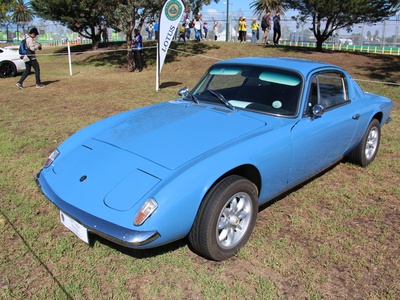
Elan (Type 26)
A breakthrough two-seater roadster launched in 1962, the Elan combined a lightweight backbone chassis with a Lotus‑Ford twin‑cam engine; praised for brilliant handling, it influenced sports car design and sold strongly in Europe and North America.

Elan +2
A four-seat stretch of the Elan introduced in 1967 to broaden Lotus’s market; added practicality while retaining nimble dynamics, aimed at buyers who wanted everyday usability with Lotus sporting character.
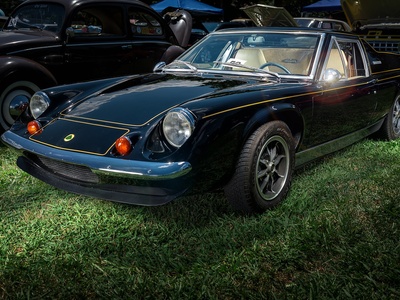
Europa (Type 46)
A mid‑engine coupé introduced in 1966 that prioritized low drag and driver engagement; the Europa offered excellent handling and economy, marketed as an affordable exotic with a distinctive flat, low body for Europe and export markets.

Super Seven (factory variants)
Factory-built and tuned versions of the Seven offered higher-spec components and dealer-supported options; they catered to buyers wanting more performance and were campaigned by privateers on club circuits worldwide.
47 (Type 47)
A homologation special derived from the Europa, the Lotus 47 was built for GT racing with a tuned Ford twin‑cam engine; about eighty were made for Group 4 and privateer racing across Europe.
18
Lotus’s first true contemporary Formula car, the 18 debuted in 1960 and brought lightweight spaceframe design to top‑level racing; used in F1 and lower formulas, it gave Team Lotus crucial early successes.
21
Introduced as Lotus’s next F1 challenger, the 21 was a spaceframe racer used by works and private teams in early 1960s Grand Prix events; it bridged development between earlier cars and monocoque experiments.
24
A customer-oriented single‑seater built alongside Lotus’s works cars, the 24 allowed private teams to race Lotus technology; conservative design made it reliable and widely campaigned in early 1960s formula races.
25
The revolutionary monocoque F1 car that gave Jim Clark and Team Lotus major competitive advantage; introduced in 1962, its lightweight structure and mid‑mounted 1.5‑litre V8 set new standards in Grand Prix design.
29
Lotus’s first dedicated Indy car, the 29 brought lightweight British design to the Indianapolis 500 with a big Ford V8; it helped establish Lotus as a serious player in American open‑wheel racing.
32
A compact Formula 2 design used in the mid‑1960s that demonstrated Lotus’s engineering for lower formulas; campaigned by privateers and works drivers as a nimble, competitive single‑seater.
33
An evolution of Lotus monocoque practice, the 33 was a successful Grand Prix car delivering multiple wins for Team Lotus and helping secure drivers’ championships in the mid‑1960s.
35
A versatile formula car family that covered F3, F2 and even sports car duties with different engines; the 35 platform was widely used by private teams across European championships.
38
A bespoke Indianapolis 500 car that scored Lotus’s famous victory at Indy, the 38 used a low, monocoque layout and a large Ford V8, showing Lotus innovation on America’s biggest oval stage.
43
An experimental F1 car powered by BRM’s complex H‑16 engine; notable for ambition rather than success, it reflected Lotus’s willingness to try radical powertrains in the tough 1966 season.
48
A brief F2 challenger featuring a Cosworth‑based engine, the 48 aimed at the European secondary single‑seater series; it showcased Lotus’s rapid adaptation to changing formula rules in the late 1960s.
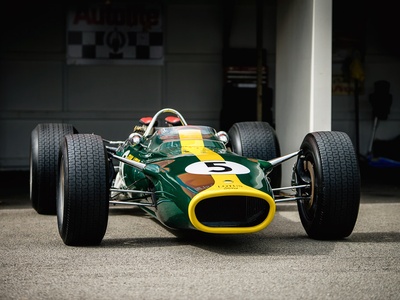
49
One of Lotus’s most influential F1 cars, the 49 debuted the Cosworth DFV as a stressed member of the chassis; it delivered immediate success and a new template for F1 engineering worldwide.
56
A bold turbine‑powered Indy prototype built for high‑speed ovals, the 56 challenged conventions with gas‑turbine drive and four‑wheel aerodynamics; notable for technical daring though hampered by rule changes and reliability.
63
A late‑decade experiment in four‑wheel drive for Grand Prix racing, the 63 tested novel drivetrains using the Cosworth DFV V8; influential as an engineering exercise though not a long‑term competitor.
62 (prototype)
A small‑run sports‑prototype tested by Lotus at the end of the decade; it explored larger‑engine sports racing concepts and appeared in limited private events and development trials.