Classic car culture still centers on a few pivotal years, and 1953 is one of them — you see it in museum halls, auction catalogs, and weekend shows where lines and chrome tell a story about postwar design and performance. If you enjoy comparing makers or hunting a particular model, a compact, ordered list makes that search much easier.
There are 30 1953 Car Models, ranging from 150 to the XK120 Roadster. For each entry you’ll find below Manufacturer,Body style(s),Production (1953 units) so you can quickly scan who built what, which body styles were offered, and how many were made — you’ll find below.
How reliable are the listed production numbers?
Production figures come from factory records, marque registries, and respected reference books; they’re generally accurate but sometimes vary by source due to differing counting methods (coachbuilt variations, exports, or incomplete archives). Treat the numbers as authoritative but expect occasional small discrepancies.
Can I use this list to find a specific model for purchase or restoration?
Yes — the Manufacturer and Body style(s) columns help narrow candidates, and the Production (1953 units) figure gives a sense of rarity; for buying or restoring, cross-check chassis numbers, restoration history, and provenance with marque clubs or specialist sellers after identifying candidates from the list below.
1953 Car Models
| Model | Manufacturer | Body style(s) | Production (1953 units) |
|---|---|---|---|
| Bel Air | Chevrolet | sedan,coupe,convertible,wagon | Unknown |
| 210 | Chevrolet | sedan,coupe,convertible,wagon | Unknown |
| 150 | Chevrolet | sedan,coupe,sedan delivery | Unknown |
| Corvette | Chevrolet | convertible | 300 |
| Customline | Ford | sedan,coupe,station wagon | Unknown |
| Mainline | Ford | sedan,coupe | Unknown |
| Crestline | Ford | sedan,coupe,convertible,station wagon | Unknown |
| New Yorker | Chrysler | sedan,coupe,convertible | Unknown |
| Windsor | Ford | sedan,coupe | Unknown |
| Monarch | Mercury | sedan,coupe,station wagon | Unknown |
| Monterey | Mercury | sedan,coupe,convertible,station wagon | Unknown |
| Newport | Plymouth | sedan,coupe,station wagon | Unknown |
| Belvedere | Plymouth | sedan,coupe,convertible,station wagon | Unknown |
| Special | Buick | sedan,coupe,convertible,station wagon | Unknown |
| Roadmaster | Buick | sedan,coupe,convertible | Unknown |
| Series 62 | Cadillac | sedan,coupe,convertible | Unknown |
| Eldorado | Cadillac | convertible | 532 |
| Hornet | Hudson | sedan,coupe | Unknown |
| Ambassador | Nash | sedan,coupe | Unknown |
| Champion | Studebaker | sedan,coupe,convertible | Unknown |
| Commander | Studebaker | sedan,coupe | Unknown |
| XK120 | Jaguar | coupe,convertible | Unknown |
| MkVII | Jaguar | sedan | Unknown |
| XK120 Roadster | Jaguar | convertible | Unknown |
| 356 | Porsche | coupe,convertible | Unknown |
| 2CV | Citroën | sedan | Unknown |
| Cigma | Fiat | sedan | Unknown |
| TF | MG | roadster | Unknown |
| TR2 | Triumph | roadster | Unknown |
| Beetle | Volkswagen | sedan,commercial variants | Unknown |
Images and Descriptions
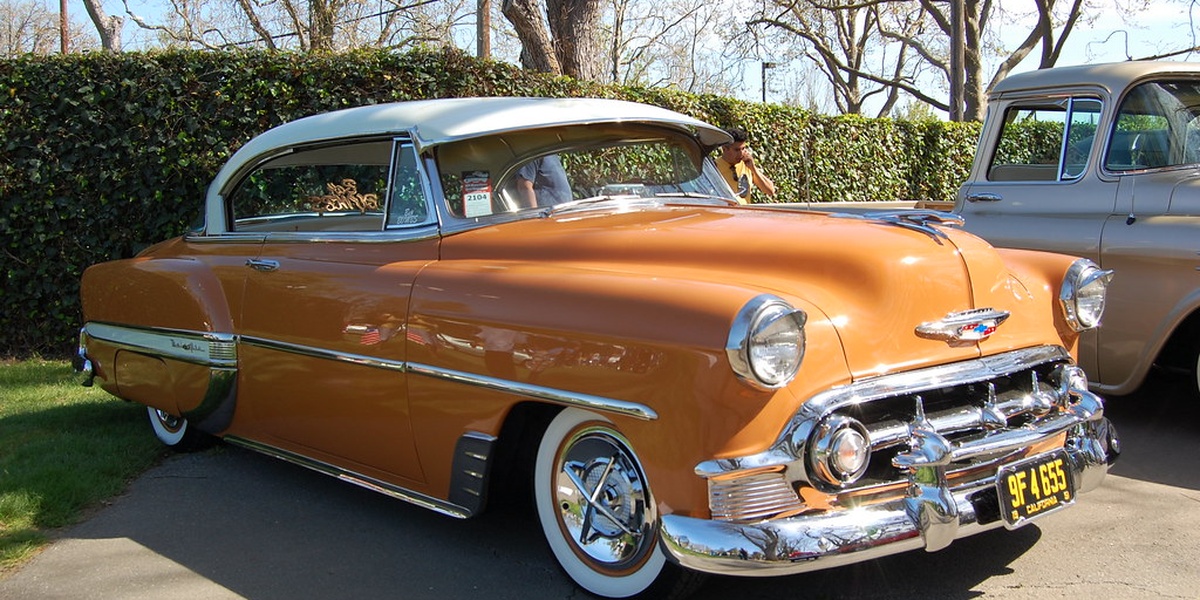
Bel Air
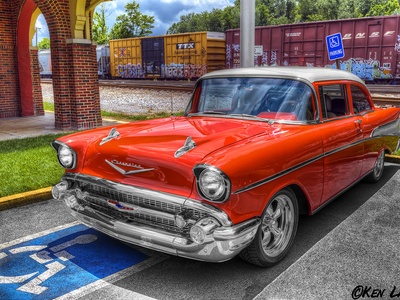
The Bel Air was Chevrolet’s upscale mid-range model sold across North America in 1953, known for roomy interiors and chrome trim; a popular postwar family car and a future classic, notable for solid sales and broad appeal among collectors and restorers.
210
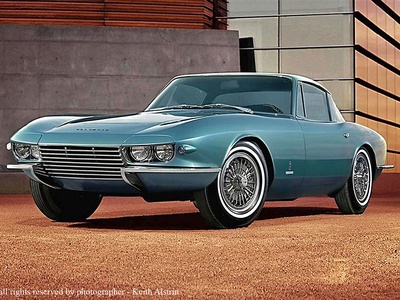
The Chevrolet 210 filled the mid-price slot in 1953, sold widely in the U.S. and exports; offered practical trim and engine choices, making it a common workhorse of the era and a frequent restoration project for period-correct builds.

150
The Chevrolet 150 (also called 1500/Styleline 150 in some markets) was the entry-level 1953 model sold primarily in North America; minimal trim and value pricing made it a common everyday car, appreciated now for affordability and authenticity in restorations.
Corvette
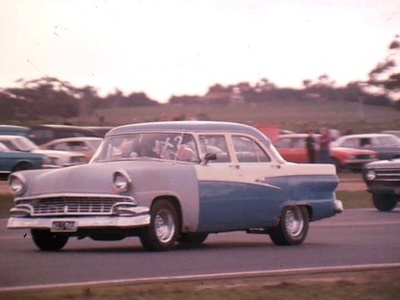
The 1953 Chevrolet Corvette was introduced as a limited-production American sports convertible with only 300 built, sold primarily in the U.S.; notable for its fiberglass body, pioneering the Corvette legend and highly prized by collectors worldwide.
Customline
Ford’s Customline in 1953 sat between Mainline and Crestline as a mid-range family car sold across the U.S.; known for conservative styling and dependable V8/inline-six engines, it remains popular among collectors of everyday 1950s Fords.
Mainline
The Mainline was Ford’s entry-level 1953 model for the U.S. market, with basic trim and practical engineering; its affordability and ubiquity make surviving examples valued for period restorations and budget-friendly classic ownership.
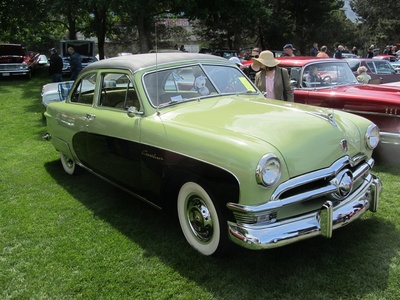
Crestline
Ford’s top-line Crestline in 1953 offered premium trim, more chrome, and optional V8 power, sold across North America; its higher-spec appointments make it notable for enthusiasts seeking early-1950s luxury without premium-badge costs.
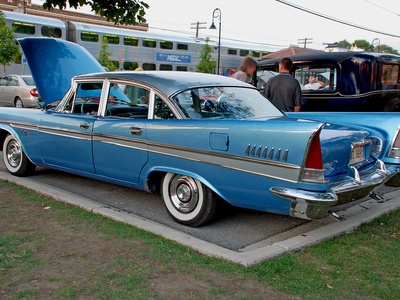
New Yorker
Chrysler’s New Yorker was a premium model in 1953, sold in North America with a smooth inline-eight V8 alternative; known for plush interiors and distinctive styling, it appealed to buyers wanting near-luxury without stepping up to Cadillac.
Windsor
Ford Windsor was a Canadian-market model name in 1953 (not to be confused with later engines), sold primarily in Canada with local trim variations; it’s of interest to North American collectors tracking regional variants and coachbuilt examples.
Monarch
Mercury’s 1953 models, including the Monterey and shorter Monarch-derived lines, were sold across North America offering bridged Ford and Lincoln features; Mercury’s mid-luxury positioning makes 1953 examples collectible for period styling and V8 options.
Monterey
The Monterey was Mercury’s full-size offering in 1953, sold in the U.S. and Canada with higher trim than Ford equivalents; known for distinctive grille styling and comfortable interiors, it appeals to buyers seeking stylish ’50s Americana.
Newport
Plymouth’s Newport line (branded Cranbrook/Plaza variations in 1953) was sold broadly in North America as a value-oriented full-size car; practical, simple mechanicals and availability make it a frequent restoration candidate.
Belvedere
Plymouth Belvedere models in 1953 were positioned above entry-level trims, sold widely in the U.S.; they offered nicer upholstery and options, and their 1950s styling attracts collectors focused on period-correct restorations.
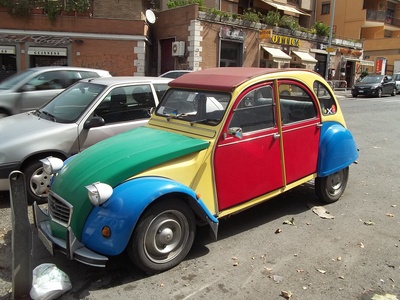
Special
The Buick Special in 1953 served as Buick’s more affordable line, sold across the U.S. with the brand’s signature “Dynaflow” automatic option; its combination of smooth V8 derivatives and mid-level luxury appeals to classic Buick enthusiasts.
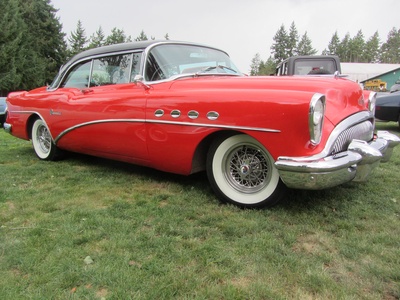
Roadmaster
The Buick Roadmaster in 1953 was Buick’s flagship offering, sold in North America with upscale trim and powerful engines; notable for its large, comfortable cabins and period chrome, it’s prized by collectors of high-end early-50s American cars.
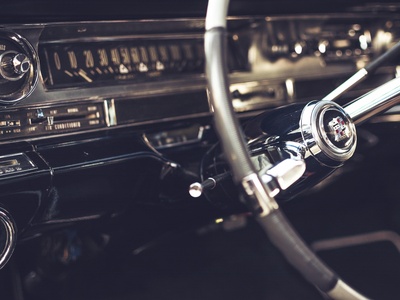
Series 62
Cadillac’s Series 62 was a mainstream luxury model in 1953, sold throughout North America and select export markets; known for refined V8 power and high-quality interiors, it represents classic postwar American luxury.
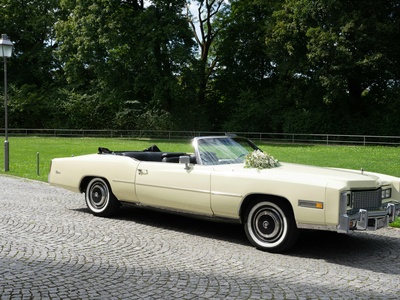
Eldorado
The 1953 Cadillac Eldorado was an exclusive, limited-production convertible sold in the U.S. to celebrate Cadillac styling, with 532 units built; trimmed with unique appointments and options, it’s a highly desirable collectible and icon of luxury Motoring.
Hornet
Hudson’s Hornet line in 1953 was known for its low center of gravity and straight-six “shooting brake” performance in earlier years, sold primarily in North America; notable for handling advantages and its pre-merger identity among collectors.
Ambassador
The Nash Ambassador of 1953 offered modern styling and unitary construction, sold mainly in the U.S.; valued for its advanced engineering for the time and early adoption of integrated design, it’s a point of interest for American independent marque historians.

Champion
Studebaker’s Champion was a compact, economical car sold in 1953 across North America and some export markets; its unique postwar styling and light weight make survivors popular among restomod and budget-restoration communities.
Commander
The Studebaker Commander in 1953 was the company’s mid-level model with distinctive design cues, sold domestically and abroad; known for unusual styling and efficient packaging, it interests collectors of independent American marques.
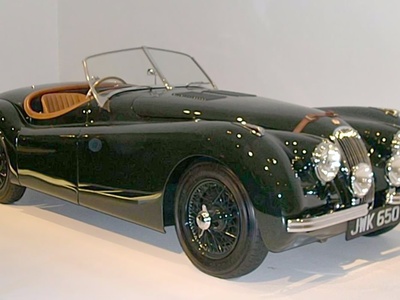
XK120
Jaguar’s XK120 was produced in 1953 and sold internationally as a fast, elegant sports car; famous for its performance and aerodynamic styling, it’s one of the era’s most desirable British sports cars and a frequent concours contender.
MkVII
The Jaguar Mark VII saloon was Jaguar’s executive car in 1953, sold across Europe and in export markets; combining straight-six performance with luxury appointments, it helped establish Jaguar’s reputation for sporty executive transport.
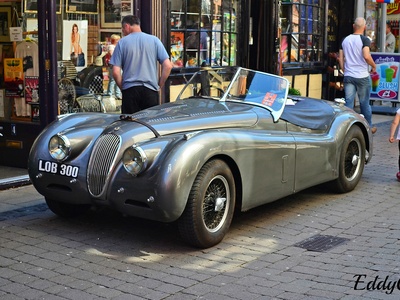
XK120 Roadster
The XK120 roadster sold in 1953 worldwide as Jaguar’s open two-seat sports car offering; celebrated for high-speed capability and graceful coachwork, it’s especially prized in early postwar sports-car collections.
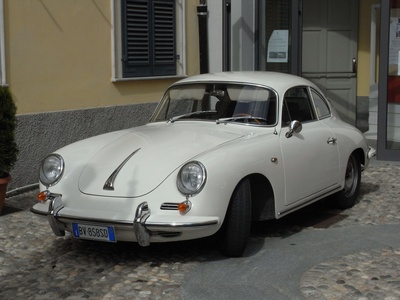
356
Porsche’s 356 series was in production in 1953 and sold in Europe and beginning exports to North America; lightweight, rear-engined, and sporty, the 356 laid the groundwork for Porsche’s sports-car reputation and attracts avid collectors.
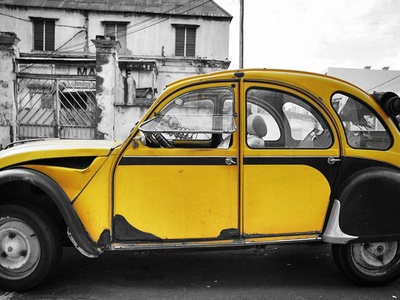
2CV
The Citroën 2CV continued production in 1953 and was sold broadly across Western Europe as an ultra-economical, utilitarian car; famed for simplicity and durability, it’s a cultural icon and popular among European vintage-car hobbyists.
Cigma
Fiat’s mainstream sedans in 1953 (such as the Fiat 1400 evolution) were sold across Italy and European markets; known for practical engineering and postwar modernization, these models represent accessible European family motoring of the era.
TF
The MG TF was introduced in 1953 as the successor to the TD, sold in the U.K. and exported to the U.S.; a classic small British roadster with improved styling and options, it’s popular among clubs and weekend drivers today.
TR2
Triumph TR2 production continued into 1953, sold in Britain and the U.S. as an affordable, sporty roadster; known for lively performance and simple mechanics, it’s sought-after by vintage rally and restoration enthusiasts.
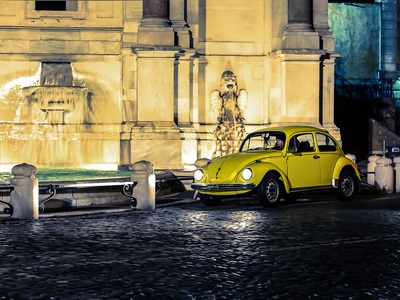
Beetle
The Volkswagen Beetle was produced in large numbers in 1953 and sold internationally, especially in Europe and beginning widespread exports; its reliable air-cooled engine and distinctive silhouette made it one of the era’s most ubiquitous cars.