Table of contents
- TLDR
- Why 1950s Moto Guzzi matters
- The major 1950s Moto Guzzi models
- How to identify a 1950s Moto Guzzi
- Specs and purpose by model
- What collectors look for
- Legacy of 1950s Moto Guzzi motorcycles
TLDR
1950s Moto Guzzi motorcycles were sturdy, practical Italian machines built around the company’s famous horizontal single-cylinder engines and military-tested engineering. The big names to know are the Falcone, Airone, and smaller-capacity commuter and utility models. If you want the short version: the Falcone is the iconic heavyweight single, the Airone is the lighter all-rounder, and the decade as a whole shows Moto Guzzi perfecting the formula that made it one of Italy’s most respected motorcycle makers.
Why 1950s Moto Guzzi matters
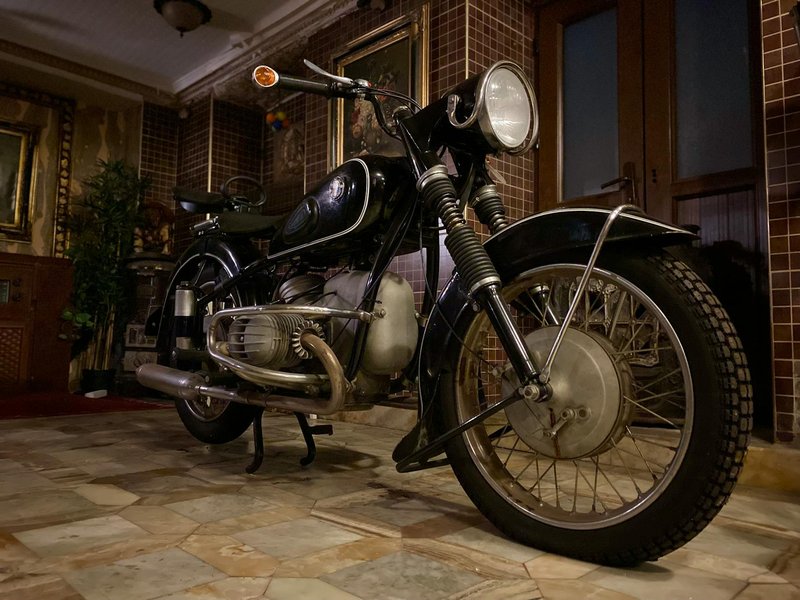
The 1950s were a defining decade for Moto Guzzi. Italy was rebuilding, roads were improving, and motorcycles had to do more than look good in a catalog. They had to commute, haul, tour, and survive rough use without constantly begging for attention.
Moto Guzzi answered with machines that were conservative in the best possible way. The brand didn’t chase fashion. It refined an architecture that had already proven itself: air-cooled singles, shaft drive on some models, strong frames, and a layout that made maintenance less painful than it had any right to be in that era.
That’s why 1950s Moto Guzzi motorcycles still matter today. They aren’t just pretty old Italians. They’re usable pieces of engineering history from a company that understood that reliability sells long after the styling fades. For a broader look at classic Italian motorcycles, see Top 15 Classic Italian Motorcycles.
The major 1950s Moto Guzzi models
Moto Guzzi Falcone
The Falcone is the motorcycle most people picture when they think of a 1950s Moto Guzzi. It used a large horizontal single-cylinder engine and had the kind of old-world presence that makes modern bikes look overcomplicated. The Falcone was never trying to be a lightweight or a racer. It was the big, dependable one.
This model became famous for its military and civil service credentials, but in the 1950s it also stood as Moto Guzzi’s prestige single. The engine’s layout made it distinctive immediately, and the bike’s proportions told you it was built for real-world duty rather than café-hopping.
Moto Guzzi Airone
If the Falcone was the heavyweight, the Airone was the more approachable all-rounder. Smaller, lighter, and easier to live with, the Airone made sense for riders who wanted Italian character without the bulk of the larger single. It was a practical road bike with enough personality to keep enthusiasts interested decades later.
The Airone also reflects the 1950s Italian market nicely: motorcycles were everyday transport, not just toys. A model like this had to be economical, durable, and simple enough for local mechanics to keep going.
Moto Guzzi Galletto
The Galletto sits in that wonderfully odd space Moto Guzzi occupied so well — part scooter, part motorcycle, all practicality. It used a step-through style and was aimed at riders who wanted weather protection and easy mounting without giving up the feel of a proper machine.
In the 1950s, the Galletto mattered because it showed Moto Guzzi wasn’t locked into one idea of motorcycling. It could build a refined utility vehicle and make it feel distinctly Italian. For a broader view of era favorites, see The 10 Best Motorcycles of the 1950s.
Smaller commuter and utility models
Moto Guzzi also produced smaller-capacity motorcycles and variants that served urban riders, commuters, and riders on tighter budgets. These are less famous than the Falcone and Airone, but they’re important if you’re trying to understand the decade as a whole.
A lot of 1950s Moto Guzzi production was about filling real transportation needs. That meant sensible displacement figures, straightforward mechanicals, and bodywork that prioritized function over flair.
How to identify a 1950s Moto Guzzi
Look for the horizontal single
The easiest visual clue is the engine layout. Moto Guzzi’s horizontal single-cylinder engines are the signature. On many models, the cylinder points forward in a way that looks almost absurd the first time you see it. That’s not a styling gimmick. It’s the company’s identity.
If you spot that engine orientation, you’re already in Moto Guzzi territory.
Check the frame, tank, and guard details
1950s Guzzis tend to have upright proportions, simple painted steel tanks, and hardware that looks designed by people who expected the bike to be repaired rather than retired. Fenders, exhaust routing, and luggage racks often reveal more than the badge.
Restorations can muddy the waters, so original frame numbers and model-specific details matter. The wrong seat, tank badge, or exhaust can make a bike look like something it isn’t.
Don’t trust paint alone
These bikes have been restored and repainted so many times that color is a weak clue by itself. Period-correct finishes help, but they don’t substitute for engine, frame, and component identification.
If you’re comparing candidates, check mechanical architecture first and cosmetics second. That’ll save you from a shiny fake-out.
Specs and purpose by model
| Model | Engine | Typical role | Character |
|---|---|---|---|
| Falcone | Large horizontal single | Touring, police, utility, prestige | Heavy, torquey, authoritative |
| Airone | Mid-size single | Commuting, general road use | Lighter, practical, adaptable |
| Galletto | Small motorcycle/scooter hybrid | Urban transport | Quirky, handy, weather-friendly |
| Smaller utility models | Varies | Everyday transport | Simple, economical, work-focused |
Moto Guzzi’s 1950s lineup wasn’t built around one “halo” machine in the modern sense. It was built around usefulness. The company was excellent at making motorcycles that solved a problem first and looked handsome second.
That’s why the specs matter less as bragging rights and more as evidence of intent. A Falcone wasn’t supposed to be a race replica. An Airone wasn’t supposed to be a heavyweight tourer. Each one was honest about its job, and that honesty is part of the appeal.
What collectors look for
Originality beats polish
A beautifully restored bike is nice. A correctly restored bike is better. But for serious collectors, originality still carries weight. Correct engine cases, carburetion, badging, and period hardware can matter more than a mirror finish. For broader context on classic motorcycle brands, see The Complete List of Classic Motorcycle Brands.
Matching numbers matter
As with most vintage motorcycles, matching frame and engine numbers can make a real difference in value and desirability. Documentation helps too, especially for bikes that crossed borders or changed hands multiple times.
Watch for missing oddball parts
Moto Guzzi’s vintage models often use parts that aren’t sitting on every shelf. The weird little brackets, badges, toolboxes, and switchgear pieces are where restorations get expensive. That’s where the “cheap project” turns into a parts-hunting hobby.
Service history is gold
A 1950s Moto Guzzi that has been ridden and maintained by people who understood it is often a better buy than a dormant museum piece with no records. Old Italian bikes can be wonderfully durable, but neglect is still neglect.
According to the Moto Guzzi historical archives, the brand’s identity was built around practical engineering and long-running model families. That legacy is visible in the 1950s lineup more clearly than in almost any later decade.
Legacy of 1950s Moto Guzzi motorcycles
The 1950s were the bridge between Moto Guzzi’s prewar engineering roots and the more famous later era that enthusiasts often jump to first. The company’s reputation for durable singles, sensible layout, and mechanical character was forged here.
These motorcycles also helped define what an Italian utility bike could be. Not fragile. Not decorative. Not disposable. Just clever, sturdy, and a little stubborn in the best sense.
That’s why collectors still chase them. A 1950s Moto Guzzi doesn’t just represent a badge from the past — it represents a whole philosophy of building motorcycles for people who had places to go and work to do. That philosophy aged better than chrome trim ever could.
If you’re comparing classic European machines, the 1950s Moto Guzzi motorcycles are worth a close look. They’re one of the clearest examples of mid-century motorcycle design done with purpose, and they still have enough mechanical honesty to make modern bikes seem a bit overprocessed by comparison.